
Hiring a Guide and Porter in Nepal
If you are planning a trek in Nepal, you might be wondering whether to hire a guide, a porter, or both.
You are not alone. Many first-time trekkers have the same questions before starting their journey: How much does a guide cost? Do I need a porter? Can a Guide speak English? Is it safe to trek without a guide? Where can I hire a reliable local guide?
Don’t worry, hiring a guide and porter in Nepal can make your trek much easier, especially if you are heading to high-altitude destinations such as Everest Base Camp, Annapurna Base Camp, Manaslu Circuit, Langtang Valley, or other remote trekking regions.
A guide assists with your travel itinerary, lodging, food, local culture, trekking pace, permits, and altitude sickness along the trek. A porter carries your luggage, so you can walk with a lighter daypack and stay well-rested on the trail.
You do not always need both. If you are experienced trekkers, you may prefer only a guide. Others choose a porter to reduce the physical load.
But if you are trekking on a longer or more difficult trek, you may hire a guide and porter for extra comfort and support.
This expert guide covers how to hire a guide & porter in Nepal, what they do, their prices, whether you should hire only a guide or both, and what to check before hiring trekking support in Nepal’s Himalayas.
Do You Need a Guide and Porter in Nepal?
It all depends on your trek route, experience, fitness level, luggage, and whether you would like to travel independently, all of which can affect whether you require a guide or porter on your trek.
A guide offers a lot when it comes to navigating the trail, local knowledge, where to stay, managing permits, trekking pace, and altitude-related situations.
However, A porter carries your luggage so that you can travel with a lighter daypack. When trekking on remote, constrained, or elevated trails, an indigenous guide can help make the excursion easier and less surprising.
Some trekking agencies, like us at Eco Nepal Trekkers, can provide both guiding and porter services, but trekkers should confirm their responsibilities before hiring. A guided trek offers more support and organization, while an independent trek gives you greater freedom but requires you to manage navigation, accommodation, meals, permits, and other arrangements yourself.
What Does a Trekking Guide Do?
A trekking guide in Nepal does much more than simply lead you along the trail. An expert guide helps manage the trek route, accommodation along the trek, communication with teahouses, trekking pace, altitude, permits, and daily logistics throughout the journey.
They can also provide local and cultural information and assist in unexpected situations. For trekkers who are unfamiliar with the route or are travelling at high altitude on adventures such as Everest Base Camp, Annapurna Circuit, Kanchenjunga, Manaslu, or others, having an experienced local guide can make the trek more comfortable and supportive.
What Does a Porter Do?
In Nepal, a porter carries your main trekking luggage and equipment, so you can walk with a very light daypack.
This can be useful on long, arduous routes where carrying a pack all day for several days in a row can be exhausting.
Typically, porters carry the heavy luggage, while trekkers carry their essential personal items such as water, food, important documents or certificates, a camera, medicine and valuables.
They are responsible for safely transporting the agreed luggage from one trekking destination to another, helping make short, steep days of trekking more bearable for the traveller.
Guide vs Porter: What Is the Difference?
As you can see, a guide and a porter have two different jobs, so how do you know which is best for you on your trek? A guide is for navigation, safety, logistics, local-side knowledge and trekking support, whereas a porter is mainly for carrying your bags and gear.
It can be an economical option for budget trekkers, as some local trekking pros offer a combination guide-porter service. To offer more comprehensive support for families, groups of friends or longer and tougher treks, hiring a separate guide and porter can be the most appropriate approach.
| Service | Main Role | Best For |
| Guide | Navigation, safety, logistics, and local knowledge | Trekkers who want full trekking support |
| Porter | Carries trekking luggage and equipment | Trekkers carrying heavy gear |
| Guide-Porter | Combines guiding and luggage-carrying duties | Budget-conscious trekkers |
| Guide + Porter | Separate specialist roles | Families, private groups, and longer treks |
Which Option Should You Choose?
If you want help with luggage, a porter is the best option.
A guide is better if you are not familiar with the area or need assistance with route finding, elevation gain, lodging and local knowledge.
A guide-porter provides both at a reduced total cost; however, separate guide and porter provide the most thorough support and are advantageous for family, private or difficult high-altitude treks.
How Much Does a Guide Cost in Nepal?
The price of hiring a trekking guide in Nepal mainly depends on the region, the trek length, the guide’s experience level, the language skills offered, group size, and trekking season.
Generally, a guide would cost USD 25 to $40 per day, whereas if the guides have specialized skills or extra language qualifications, they charge more.
When planning how many trekking days you should pay an overall guide cost for longer or more strenuous treks, the simple trick is to calculate based on the number of days spent trekking.
| Factor | How It Can Affect the Cost |
| Trek region | Remote and restricted areas may cost more |
| Trek duration | Longer treks increase the total guide fee |
| Experience | Experienced and senior guides may charge more |
| Language skills | Additional language skills can increase the rate |
| Group size | Larger groups may require different guide arrangements |
| Season | Peak trekking seasons can affect availability and rates |
What Is Usually Included in the Guide Fee?
Typically, the daily fee for a guide covers their guiding service, route expertise, local experience, and basic trekking support and communication with teahouses.
However, trekkers should check what is included before hiring, especially regarding food, accommodation, transport, permits, insurance, and other costs that are added separately as per the contract or trekking proposal.
How Much Does a Porter Cost in Nepal?
Porter costs are around USD 20 to 25 per day when hiring a porter in Nepal. It depends on your trekking area, duration, route difficulty, season, and included services.
On most of the guided treks, the porter will carry about 15 to 20 kg of combined bags, while the trekker carries a small daypack. As the trekker might have to pay some of these expenses separately from the trekking package, it is better to ask for this information before hiring the specific porter: food preparation, accommodation costs, transportation expenses and insurance.
How Much Does a Guide and Porter Cost Together?
Generally, hiring both a guide and a porter in Nepal is more expensive than hiring either, but it provides more comprehensive support throughout the trek.
For instance, in a realistic formulation of trekking cost, you can sum the daily guide fee and the porter’s price, then multiply by the number of trekking days, and add any applicable costs, such as accommodation, transport, permits, and insurance, when these are not included in the cost.
Let’s say USD 25 per day for a trekking guide and USD 20 per day for a porter. If we were hiring both for a 10-day trek in Nepal,
- Guide: $25 × 10 days = $250
- Porter : $20 × 10 days = $200
NOTE: Based on 3 pax. Guide + Porter = USD 450, before any incurrable costs.
A budget option can mean heading out with a guide-porter, while the standard private trek will have one guide and one porter.
In a group trek, you can split the cost of the guide among trekkers, and that way reduce the guide cost per person.
Naturally, longer treks will have a more extensive total budget; guide and porter services are worked out on a per-working-day basis.
Where Can You Hire a Guide and Porter in Nepal?
You can hire a Guide and porter through local trekking companies based in Kathmandu or Pokhara, or arrange directly with an individual guide or porter.
Generally, hiring through an accredited agency offers better organized support. Where you get help with permits, transport, accommodation arrangements and often insurance and emergency assistance as well.
Hiring directly may provide greater flexibility, but could sometimes be a more costly option in the long run.
But independently, when hiring someone, you will want to check a number of things about this person’s experience, what insurance they have, references, whether they perform the responsibilities required for your project, and how much their daily rate is or what expenses are included.
For those trekking remote areas or on high-altitude trails, an experienced local trekking company or licensed guide is usually the more orderly option.
How to Choose a Good Trekking Guide
Choosing a professional trekking guide in Nepal is important because your guide can influence safety, comfort, and the overall experience during the trek.
Check to see if the guide is properly licensed and has experience on your specific route prior to hiring. An ideal guide ought to know the trail, know how to handle matters related to altitude and have clear communication skills along with basic first-aid training.
Before making your choice, you should also check the reviews, references, language skills, insurance and professional standards. It is better to go for a guide who has real experience on the route you are planning.
Someone who has just trekked elsewhere in Nepal will be less useful than one with real history.
How to Choose a Reliable Porter
You must select a trustworthy porter, as the ideal choice for this remains to be carrying your main luggage across steep, rocky and immense mountain expeditions. Choose someone with prior trekking experience, an appropriate fitness level, and a good command of the language you or your guide speaks.
Verify that maximum luggage weight, insurance, accommodation and food provisions, as well as the full welfare arrangements, are confirmed before hiring them. Check the verification and porter policies of the agency you are hiring; when hiring directly, always ask for references or previous trekking experience to narrow down who you can trust.
Should You Hire a Guide and Porter Before Arriving in Nepal?
If travelling to Nepal, you can book a guide and porter in advance or locally, if you prefer and depending on your trekking itinerary/ travel dates.
Booking in advance allows for time to select an experienced team, finalise services & costs, and arrange permits & other trekking logistics prior to arrival.
Local hiring in your destination may offer additional flexibility, and you can often meet a guide or porter before hiring them. Experienced guides and dependable porters can be in higher demand at peak trekking seasons, so booking earlier is beneficial during this time.
Hiring at the last minute can limit your options, especially for popular routes or private treks or make it more challenging to thoroughly verify experience, roles, insurance and price quote before departure.
Guide and Porter Requirements for Popular Nepal Treks
It really depends on the trekking region, path difficulty, altitude, remoteness, and the latest regulations in Nepal regarding the need for a guide or porter.
Teahouse networks and heavily trafficked routes such as Everest Base Camp and Annapurna Base Camp are the easier options, whereas less-visited areas like Manaslu, Upper Mustang, and Kanchenjunga are more involved, requiring planning, though local support can be sourced.
Before setting off on any trek, the most important thing is to verify in advance what permits and guides are required for your route.
Guide and Porter for Restricted-Area Treks
Restricted-area treks in Nepal are stricter and have a more limited access system compared to regular trekking routes.
Permits are required, and trekkers need to abide by group arrangements as well as use an authorized trekking agency and a licensed guide for areas deemed necessary.
Since these locations tend to be fairly far away with limited facilities, preparing involves travel logistics such as lodging and permitting.
So it is often easier to book a restricted-area trek through an established trekking company, as opposed to trying to arrange everything independently.
Hiring a Guide and Porter for Different Types of Trekkers
The best assistance for trekking is determined by your experience level, along with the group size, fitness level, framework matching, and the funding & form of trek you plan.
Having a guide and porter is generally more useful for beginners, solo travellers, families with children aged over 10 years old, and senior trekkers because they assist you with navigation, accommodations, logistics of getting supplies every day, as well as carrying some of your luggage.
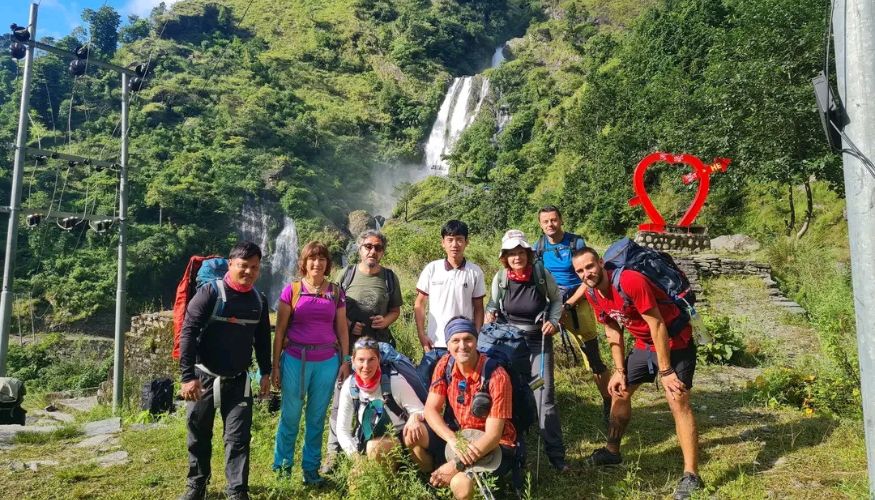
Many experienced trekkers will travel with just a guide or simply using porters, or even travelling independently in areas where regulations permit.
Private guides and porters may also be an option for couples looking for more flexibility; families, on the other hand, might prefer to have some extra hands.
A porter can be recommended to lighten our backpacks for senior trekkers, and a guide is important to help us walk steadily as we are used to and to take care of altitude problems. For large groups, there may be one or even more porters and extra guides depending on the team size, luggage, and trekking path.
Guide and Porter for High-Altitude Treks
On high-altitude treks, above 4,000 metres, the difference an experienced guide makes is that, ultimately, conditions can change rapidly, with serious altitude effects as well.
An experienced guide can spot early symptoms of altitude sickness, slow down their pace, recommend rest or descent when needed and even make decisions if a trekker’s condition worsens. Guides also monitor weather, trail conditions and any route changes that can be critical in remote mountain terrain.
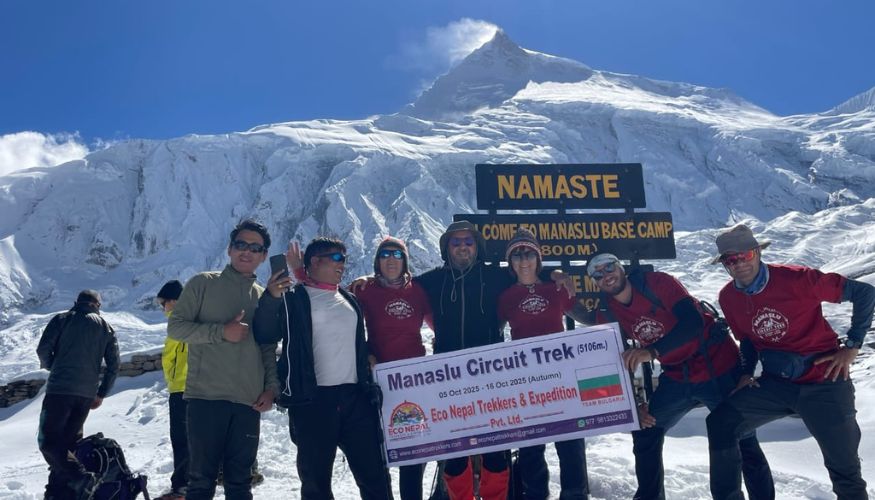
In case of emergency, they can assist Peter in talking with the trekking agency, local authorities, rescue teams, or any other necessary help available to coordinate his next steps. These difficult ones help to support your local experiences, for example, Everest Base Camp, Manaslu Circuit, and Kanchenjunga. These treks offer you safety and logistical support.
What Should a Guide or Porter Carry?
Your equipment needed to keep the trek systematic, hassle-free and emergency-enabled must be carried by a guide or porter.
Typically, the guide will carry critical gear like navigation, permits, maps, communication devices and first-aid supplies, while porters are there mainly to haul your primary luggage plus all shared group equipment.
Trekkers should store personal belongings such as water, snacks, medication, documents, valuables and electronics in their daypack so that they are easily accessible throughout the walk. What you carry depends on the trekking route, altitude, whether you have a guide or are in an independent trekking group and what exactly the trekking company provides.
How Much Weight Can a Porter Carry?
In Nepal, the weight limit for trekking luggage carried by a porter is roughly 15–20 kg, and the appropriate load will vary depending on local factors such as working standards, climate, altitude and type of terrain.
Porters cover a few hours each day, tramping steep, rocky, high-altitude trails while carrying a sensible load.
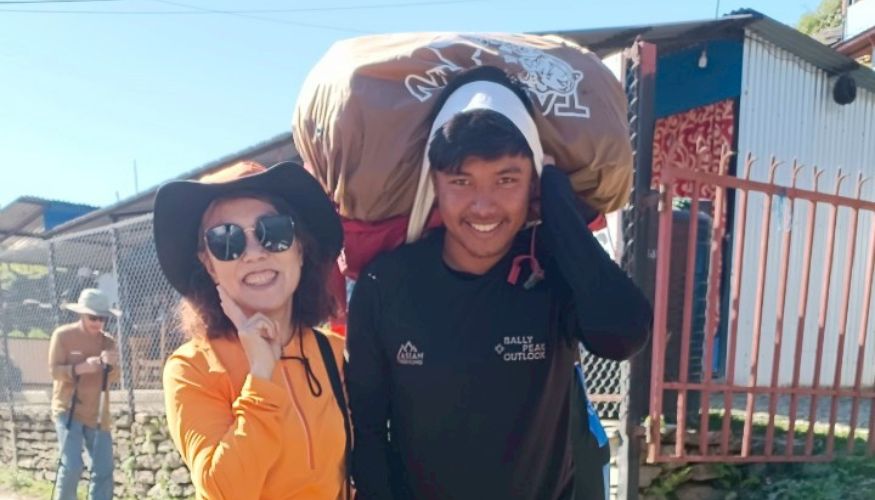
If you have a large group, or your luggage will be heavy, rather than carrying so much weight on one person, the load should be divided between well-balanced porters.
Another crucial aspect of responsible trekking is treating porters in a manner that gives them fair wages, adequate shelter and food during the trek, insurance, and working conditions safeguarding their rights.
Guide and Porter Tipping in Nepal
Although there is no set fee for tipping porters and guides in Nepal, tips are customary, and methods of calculating these range widely amongst trekkers.
The tip will depend primarily on the standard of service, days and difficulty level of your trek, degree of assistance you required during that long journey and total number of people in your team.
High-altitude treks can involve longer days and a more strenuous trek to achieve; thus, they may encourage greater tipping, as the trek contributes to victory from start to finish, particularly by a polite high-person guiding or taking.
Tipping is primarily based on gratitude for the work of the guide or porter and is always done at the end of treks.
What Is Included When You Hire Through a Trekking Agency?
There is a lot more than just guiding and carrying luggage when you hire a guide and porter using trekking services in Nepal. Depending on the package, it involves guide and porter service, their food and accommodation, transportation, permits for trekking or climbing routes, costs, staff insurance and emergency support. Depending on the agency, services vary; therefore, always check package inclusions before you book.
| Included Service | What It Usually Covers |
| Guide | Route navigation, trekking support, teahouse communication, altitude assistance, and local information |
| Porter | Carrying your main trekking luggage within the agreed weight limit |
| Staff Accommodation | Lodging for the guide and porter during the trek |
| Staff Meals | Food and meals for trekking staff during the journey |
| Staff Insurance | Appropriate insurance or welfare coverage arranged by the agency |
| Transportation | Required transportation for trekking staff according to the itinerary |
| Permits & Documentation | Trekking permits, registrations, and required paperwork |
| Emergency Support | Assistance with communication, rescue coordination, and evacuation arrangements when necessary |
Tip: Before confirming your booking, ask the agency to provide a clear list of what is included and what costs are excluded so there are no unexpected expenses during the trek.
Questions to Ask Before Hiring a Guide or Porter
Ask these questions before you hire a guide or porter in Nepal so that you are clear about their experience, responsibilities, payment and safety arrangements.
Check whether the guide is qualified and experienced on your trekking route, what is included in the agreed-upon fee, how many people they will be looking after, and what backup you can expect in an emergency.
For porters, if any, make sure to clear the maximum weight of luggage they can carry. In addition, ask before starting the trek about insurance, accommodation, meals, transportation and all other related expenses.
Common Mistakes When Hiring a Guide and Porter In Nepal
While seeking guides and porters, numerous trekkers commit avoidable mistakes by simply settling for the cheapest option and failing to check for experience, knowledge of routes, insurance coverage, roles and payment terms.
You should also clarify what is included in the price agreed upon, talk about the itinerary before starting the trek and ensure that porters are not carrying more weight than is reasonable.
Reserving a few minutes to reaffirm these details handled well ahead of time can keep misunderstandings, unplanned expenses and trekking problems at bay.
Benefits of Hiring Local Guides and Porters
Choosing a local guide and porter in Nepal isn’t just about having some assistance on the trek. A local expert knows the routes, villages, weather conditions, people and cultural aspects of the mountains, making your trek easier to acclimatize and more meaningful.
You can still get a taste of the local culture outside typical tourist spots while also getting an occasional helping hand in case something does not go according to plan.
Simultaneously, employing local trekking support helps to directly aid the local families and communities who rely on tourism for their income.
Is Hiring a Guide and Porter Worth It?
If you trek for the first time or if you are heading to a high-altitude destination, travelling with family, older trekkers or reducing physical and logistical workload are among the good reasons to hire a guide and porter.
A Guide can help in navigation, finding accommodation along the way, as well as managing your altitude and providing local knowledge, whereas a Porter will carry your main luggage whilst you walk with a much lighter daypack. If you are an experienced trekker who is sensible with routes and arrangements, then it may not be necessary to hire both; however, a porter can lighten heavy trekking days.
FAQs
How much does it cost to hire a guide in Nepal?
A trekking guide generally costs around USD 25–40 per day, depending on the trekking region, experience, language skills, duration, season, and services included.
How much does a porter cost in Nepal?
A porter generally costs around USD 20–30 per day, depending on the route, duration, season, luggage weight, transportation, and whether food and accommodation are included.
Do I need a guide for trekking in Nepal?
It depends on the trekking route and current regulations. A guide is particularly useful for high-altitude, remote, and restricted-area treks, while experienced trekkers may prefer more independent arrangements where permitted.
Can I hire a guide and porter separately?
Yes. You can hire a guide and porter separately, allowing you to choose the right person for each role.
Can one person be both guide and porter?
Yes, some trekking professionals provide a guide-porter service, combining basic guiding and luggage-carrying responsibilities.
Where is the best place to hire a trekking guide in Nepal?
You can hire guides through a licensed trekking agency, a local trekking company, or directly in Kathmandu or Pokhara.
Should I book a guide before arriving in Nepal?
Booking in advance can be the best option during peak trekking seasons because you have more time to check experience, licensing, pricing, insurance, and route knowledge.
How much weight can a porter carry?
A porter commonly carries around 15–20 kg of trekking luggage, although the appropriate load depends on the route, porter, weather, altitude, and working conditions.
How much should I tip my guide and porter?
There is no fixed tipping amount. Consider the quality of service, trek duration, difficulty, level of support, and group size.
Are guides and porters insured?
Insurance arrangements vary between trekking agencies and individual agreements. Before hiring, ask whether guide and porter insurance, emergency support, food, accommodation, and transportation are included.
What is the difference between a guide and a porter?
A guide focuses on navigation, route management, local knowledge, accommodation, logistics, and trekking support. A porter mainly carries your luggage and equipment so you can trek with a lighter daypack.
Is hiring a guide worth the money?
For first-time trekkers, high-altitude routes, remote areas, families, and senior travellers, a guide can provide valuable support with navigation, altitude management, accommodation, and emergencies.
Conclusion
Both a guide and a porter serve different purposes; thus, the optimal option will depend on your trekking path, determining factors such as experience, health, number of group members, baggage volume & weight and lastly budget.
When trekking at high altitudes, especially through more remote areas, reliable local support services also make the trek safer, more comfortable and easier to manage.
Do not just compare prices on trekking poles when selecting. When making your decision, consider factors like experience, licensing, knowledge of the route, insurance, added services provided by the porter rights charter & total value.