
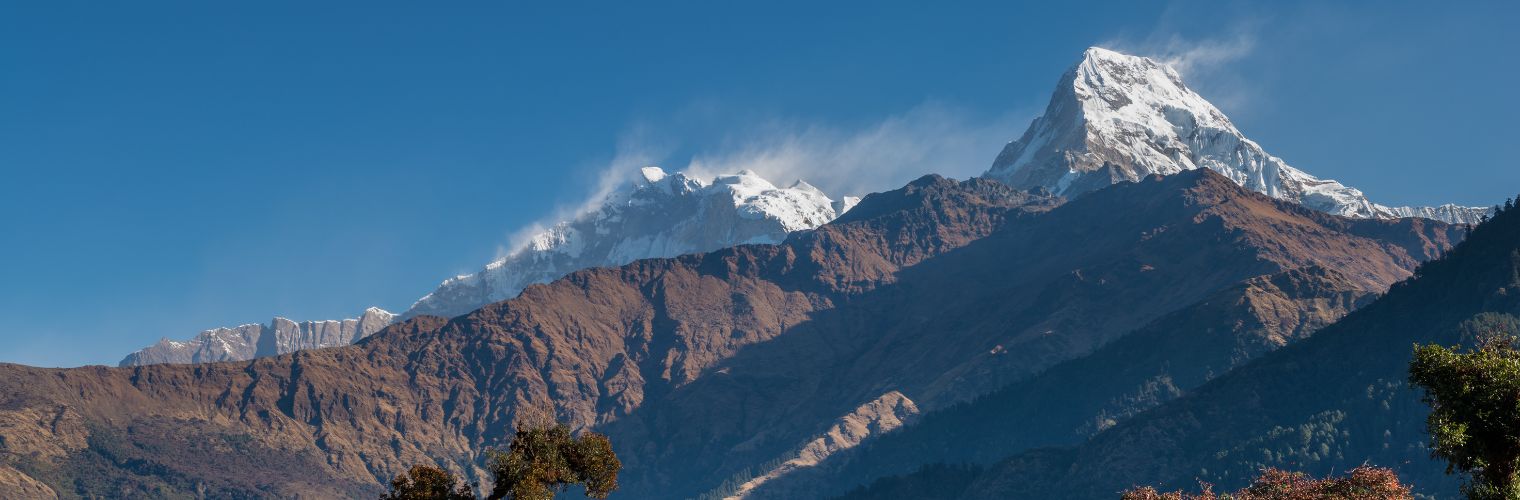
Annapurna Himalaya Nepal
The Annapurna Himalaya of Central Nepal is one of the most well-known Annapurna mountain ranges in Nepal, and part of the central Himalayan mountain range.
It is Home to a number of high peaks, including the world’s 10th highest mountain, Annapurna I (8,091 m). This range is located in north-central Nepal, and the majority of it is protected in the Annapurna Conservation Area, with different types of climate zones and mountain ecosystems.
The Annapurna Himalaya is one of the best-known mountain ranges in the world, renowned for its spectacular scenery, towering Himalayan giants and accessible trekking trails.
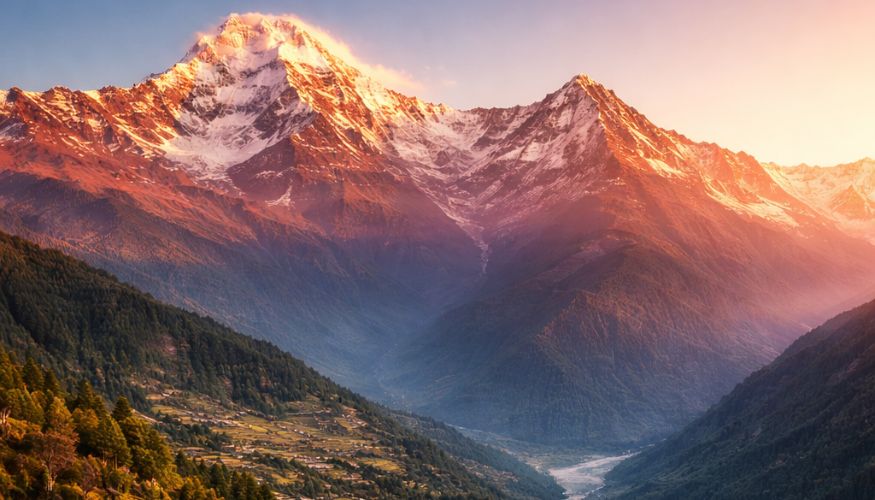
It takes trekkers, climbers and nature travellers from across the globe. Popular treks in this area include the Annapurna Base Camp Trek, Ghorepani Poon Hill, Mardi Himal, and the Annapurna Circuit Trek, which navigate forested areas, alpine land, and traditional Himalayan settlements.
The Annapurna Himalaya, through its wide combination of mountains, trekking trails and paths leading through cultural village habitats and natural beauty, has become one of the key areas for some of Nepal’s most important trekking, climbing, and Adventure Tourism.
Quick Summary
- The Annapurna Himalaya is located in north-central Nepal within the Annapurna Conservation Area of Gandaki Province
- The range includes Annapurna I (8,091 m), the 10th highest mountain in the world and one of the fourteen mountains above 8,000 meters.
- Annapurna Himalaya offers the most famous trekking areas with routes such as the Annapurna Base Camp Trek, Annapurna Circuit Trek, Ghorepani Poon Hill Trek, and Mardi Himal Trek.
- It’s known for wildlife such as snow leopards, Himalayan tahr, musk deer, and Himalayan monal.
- The region features glaciers, alpine valleys, deep river gorges, forests, and traditional villages and culture of the Gurung, Magar, and Thakali.
- The best time to visit the Annapurna Himalaya is spring and autumn when weather conditions are stable, and mountain visibility is clear.
Where Is Annapurna Himalaya Located?
The Annapurna Himalaya is located in north-central Nepal, which is part of the larger Himalayan mountain system. The range consists of a number of major peaks; Annapurna I, with its height of 8,091 m, ranks as the tenth-highest mountain on Earth.
Spanning several districts of Gandaki Province, the Annapurna massif lies within the Annapurna Conservation Area, a large protected mountainous area. This area not only preserves the natural ecosystem of the Himalayas, but also traditional settlements throughout the Annapurna region.
The Annapurna Himalaya is most commonly accessed by trekkers through Pokhara, the region’s main trekking gateway. International visitors generally arrive in Kathmandu first before heading on to Pokhara and then toward the Annapurna trekking routes.
| Location Detail | Information |
| Country | Nepal |
| Province | Gandaki Province |
| Region | Annapurna Region |
| Mountain System | Himalayas of Nepal |
| Protected Area | Annapurna Conservation Area |
| Highest Peak | Annapurna I (8,091 m) |
| Main Gateway City | Pokhara |
| International Entry & Departure City | Kathmandu |
Major Peaks of the Annapurna Himalaya
The Annapurna Himalaya is a part of the Himalayan mountain range, which includes several of its highest peaks that form the Annapurna mountain massif in central Nepal. One of them, Annapurna I, is the highest and also most popular peak; however, there are surrounding mountains that complete the breathtaking landscape in the Annapurna region.
Annapurna I
Annapurna I is the highest point of the Annapurna range and has an elevation of 8,091 meters (26,545 feet) above sea level. It is one of the 14 highest peaks on Earth, over 8,000 meters high.
Apart from Annapurna I, the Annapurna Himalaya contains a range of notable peaks that make up the Annapurna massif.
| Peak | Height |
| Annapurna II | 7,937 m |
| Annapurna III | 7,555 m |
| Annapurna IV | 7,525 m |
| Gangapurna | 7,455 m |
| Machapuchare | 6,993 m |
Meaning and Cultural Significance of Annapurna
Annapurna is a name of great cultural and religious significance in the Annapurna region. It is derived from the Sanskrit (well-formed) words Anna, which means food, and Purna, meaning full or abundance.
Annapurna is the goddess of nourishment and prosperity in Hindu belief, who is also depicted as providing food. Due to this meaning, the Annapurna mountains are of great spiritual value and cultural significance to local communities in Nepal.
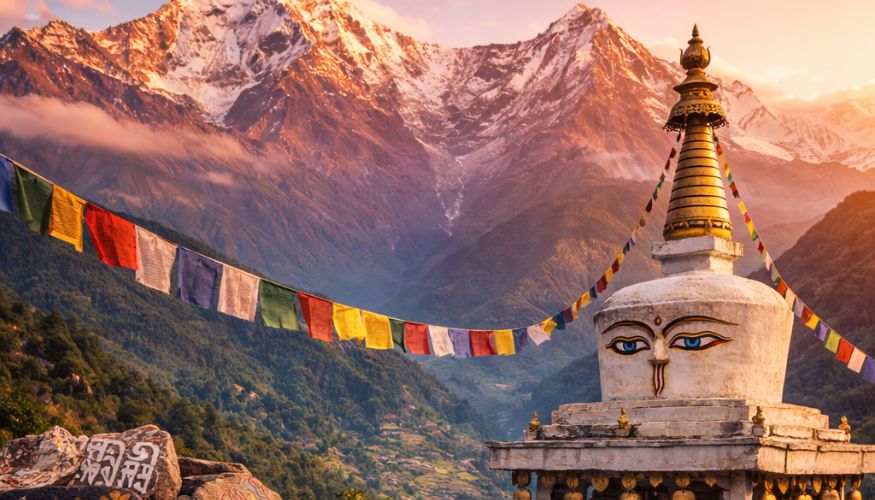
For many people residing in the slopes of the Himalayan region, these places are not only natural beauty but also traditional beliefs and cultural heritage.
Annapurna Himalaya History
The Annapurna Himalaya holds a historic place in the annals of mountaineering, as Annapurna I (8,091 meters) was the first 8,000-meter mountain ever successfully reached.
Climbers from France, Louis Lachenal and Maurice Herzog, were the first to reach the summit in 1950, a groundbreaking achievement for Himalayan exploration. This iconic climb, which attracted worldwide attention to the Annapurna area and paved the way for subsequent climbs of other high Himalayan peaks.
Now, Annapurna is still an important and prominent mountain for modern-day mountaineering, attracting capable climbers as well, and it is famous for being one of the hardest 8000ers on Earth.
Famous Trekking Routes in the Annapurna Himalaya
Known as one of Nepal’s most popular trekking areas, the Annapurna Himalaya offers many famous trekking trails that wind through mountain scenery, forests and traditional villages.
Annapurna Base Camp Trek
| Category | Details |
| Trek Starting Point | Nayapul, Jhinu Danda |
| Duration | 7-12 Days |
| Difficulty | Moderate |
| Highlights | Annapurna Sanctuary, Gurung Villages, Machhapuchhre Base Camp, 360-degree sunrise mountain views |
| Who It’s For | Trekkers want amazing Himalayan scenery with a moderate altitude challenge. |
Annapurna Base Camp Trek takes trekkers to the base camp of Annapurna I at an altitude of 4,130 meters. It is one of the most popular treks in Nepal and provides up-close views of the Annapurna massif along with diverse landscapes and cultural villages, as well as 360-degree mountain views from base camp.

Annapurna Base Camp Trek
The Annapurna Base Camp Trek is one of the most famous Himalayan trekking adventures in Nepal. It leads trekkers to 4,130 meters at the base of Annapurna I (8,091 m).
Annapurna Circuit Trek
| Category | Details |
| Trek Starting Point | Besisahar, Jagat |
| Duration | 13-18 Days |
| Difficulty | Moderate to Challenging |
| Highlights | Manang Village, Thorong La Pass (5,416m), diverse landscapes, and monasteries |
| Who It’s For | Experienced trekkers who want high passes trekking |
The Annapurna circuit trek is a famous classic Himalayan trekking trail that goes around the Annapurna mountain Range. The trek is known for crossing the high Thorong La Pass (5,416 meters), as well as its diverse landscape that goes from subtropical forests to high alpine areas.
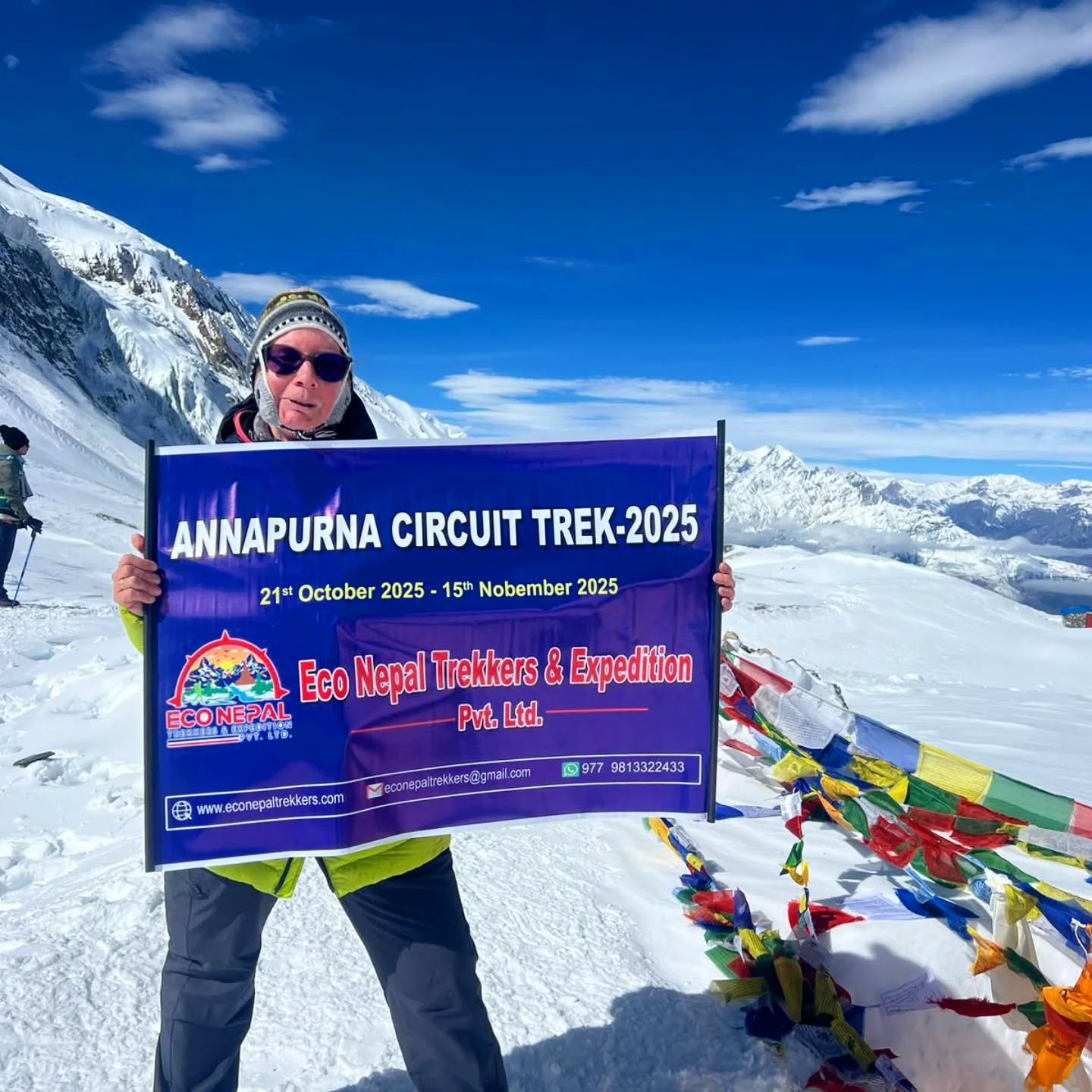
Annapurna Circuit Trek
The Annapurna Circuit trek is a great classic in Nepal’s northwest region. It’s one of Nepal’s most famous treks, located within the Annapurna conservation region.
Ghorepani Poon Hill Trek
| Category | Details |
| Trek Starting Point | Nayapul |
| Duration | 6-10 Days |
| Difficulty | Easy to Moderate |
| Highlights | Sunrise View over Annapurna and Dhaulagiri, rhododendron forests, Gurung village trails. |
| Who It’s For | Perfect for Beginners, families, and short-term travellers. |
The Ghorepani Poon Hill trek is short and one of the most famous treks in the Annapurna Himalaya Region. It is popular for the sunrise viewpoint on Poon Hill, where one can see panoramic views of the Annapurna and Dhaulagiri mountain ranges.
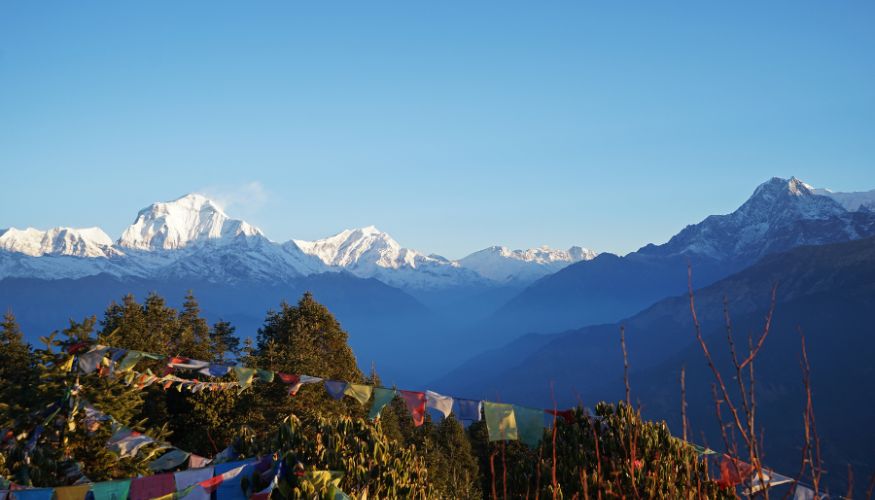
Ghorepani Poon Hill Trek
Ghorepani Poon Hill Trek is known for being one of the easiest and one of the most famous trek routes of Nepal. The trek starts from Pokhara to Poon Hill, which is our main destination.
Mardi Himal Trek
| Category | Details |
| Trek Starting Point | Pothana |
| Duration | 7-12 Days |
| Difficulty | Easy to Moderate |
| Highlights | Close views of Machhapuchhre, ridge walking, and peaceful trails |
| Who It’s For | Trekkers wanting short and less crowded treks |
The Mardi Himal trek is a less crowded high ridge walk in the Annapurna region that allows close-up views of Machhapuchhre (Fishtail Mountain). 6-7 days journey, moderate trek combining with forested trails and ridge line views. With fewer crowds and spectacular mountain scenery, it is an ideal circuit for trekkers who have a relatively short period but wish to get to a proper Himalayan region.

Mardi Himal Trek
This trek is peaceful and not so crowded, so this trek is going to be easy and well-managed. This trek provides beautiful scenery of mountains and different wild animals.
Annapurna Conservation Area Facts
The Annapurna Conservation Area represents the largest protected land in Nepal, spanning over 7,600 sq km of the Annapurna Himalaya.
The area was created to preserve the native environment, fauna and expression of traditional mountain communities. It has various ecosystems from lower altitude rhododendron forests and bamboo forests to alpine vegetation and high-mountain landscapes at higher elevations.
The conservation area is one of the most important biodiversity regions in Nepal as it harbours many wildlife species found in the Himalayas, such as snow leopard, Himalayan tahr, musk deer and Himalayan monal.
Landscapes and Natural Beauty of the Annapurna Himalaya
The Annapurna Himalaya features a wide variety of natural landscapes. It comprises glaciers at high altitudes, alpine valleys, river gorges and views of the Himalayas with a wide panorama.
Among its most impressive traits is the Kali Gandaki Gorge, perched between two mountain ranges, the Annapurna and Dhaulagiri, known as one of the deepest gorges globally.
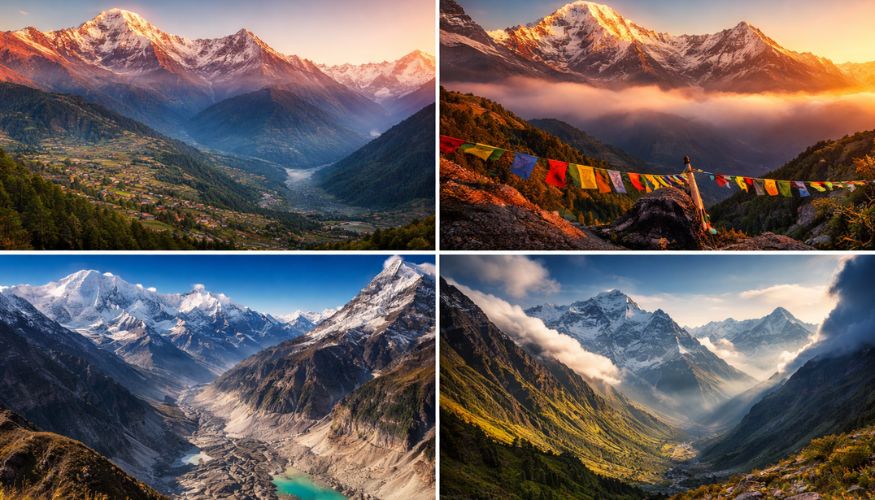
Apart from the diverse landscapes, there are majestic views of significant Himalayan peaks, including Annapurna I, Annapurna South, Machapuchare and Hiunchuli in the area that makes the Annapurna region one of the most picturesque mountain terrains of Nepal.
Annapurna Himalaya trekking, the best season is based on seasonal weather and trekking preferences. Most trekkers usually prefer the spring and autumn seasons, as they have stable weather, clear mountain views, and comfortable trekking temperatures.
In spring, flourishing rhododendron forests along the trekking routes provide a riot of colour. The autumn trekking season is also the most popular, and clear skies and visibility of the Himalaya are more favourable.
In Winter, on the other hand, it has cold weather and snow at higher elevations; the rainy season features heavy rain, muddy trails and occasional regional landslides.
Seasonal Overview of the Annapurna Himalaya
| Season | Months | Conditions |
| Spring | March to May | Rhododendron forests, stable weather, and clear mountain views on the way. |
| Summer / Monsoon | June to August | Heavy rainfall, cloudy skies, muddy trails, and possible landslides |
| Autumn | September to November | Clear skies and excellent visibility |
| Winter | December to February | Cold temperatures and heavy snowfall at higher elevations |
Culture and Communities in the Annapurna Himalaya
Numerous ethnic communities that have been living in the Himalayan mountains for generations are native to the Annapurna region. The culture of the region is closely related to the mountain environment, traditional agriculture, and local customs. Annapurna Himalaya villages retain their traditional lifestyle, architecture and culture that reflect the people of their region.
Ethnic Groups
Ethnic people like Gurung, Magar and Thakali communities are living in the Annapurna area. Each group of people has its language, culture and tradition, which creates enormous cultural diversity in the Annapurna Himalaya.
Local Lifestyle
The Annapurna people’s livelihood is primarily centred around mountain agriculture and livestock farming. Most villages engage in terrace farming and have traditional stone houses designed to fit the hilly region. People in these communities live a daily life tied to nature and seasonal agriculture.
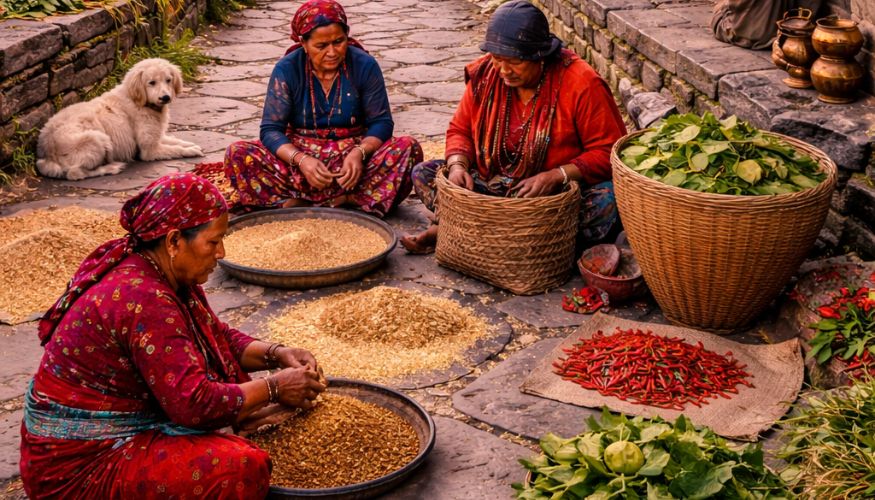
Festivals and Traditions
There are many occasions for the local people in the Annapurna region to celebrate their religious festivals and also cultural traditions. Traditionally, these rural Himalayan villages have their own festivals which would involve music, dance and gatherings that showcase the lifestyle of the people.
Travel Tips for Visiting Annapurna Himalaya
There is a need for adequate preparations for trekking conditions in the Annapurna Himalaya for visitors preparing to visit.
Before entering the trekking area, trekkers are required to obtain permits like the Annapurna Conservation Area Permit (ACAP) and a TIMS card. Warm clothes, Trekking boots, and a sleeping bag designed for cold mountain conditions are essential trekking equipment as well. Navigating through the rugged terrain and high altitudes can be challenging, so many adventurers opt to hire local guides and porters for assistance by carrying equipment, sharing insight on local knowledge, and helping to make the trekking experience more secure as well as comfortable.
FAQs
Where is Annapurna Himalaya located?
The Annapurna Himalaya is located in north-central Nepal and is part of the Himalayan mountain range, primarily within the Annapurna Conservation Area, northwest of Pokhara.
How tall is Annapurna I?
The Annapurna is at an elevation of 8,091 metres above sea level, and it is the 10th-highest mountain in the world.
What is the best trek in the Annapurna region?
Some of the most popular treks in the Annapurna region are the Annapurna Base Camp Trek, Annapurna Circuit Trek, Ghorepani Poon Hill Trek, and Mardi Himal Trek.
How to Plan Your Best Trip to Annapurna: When to Visit?
The most suitable seasons to trek in Annapurna are spring and autumn, when temperatures are relatively stable, and mountain views are clear.
Can beginner hikers do the Annapurna trek?
Yes, there are a few trekking routes in the Annapurna region that are beginner-friendly; shorter treks such as Ghorepani Poon Hill and Mardi Himal offer mountain views with moderate difficulty.
Conclusion
One of the most spectacular mountain areas in Nepal, the Annapurna Himalaya, Nepal, boasts some of the highest Himalayan snow peaks as well as great trekking trails and cultural attractions. The collective area includes diverse landscapes, from forests and valleys to alpine terrain and glaciers.
The region remains one of the most visited trekking places in the Himalayas because of its popular trekking routes like the Annapurna Base Camp Trek and the Annapurna Circuit. When it is combined with the natural beauty, cultural traditions and adventure of this particular region, trekker travelling to Annapurna have formed their own world in travelling through the unique landscapes of the Nepalese Himalaya.