
How Much Cash Should You Carry for ABC Trek?
If you are trekking to Annapurna Base Camp, you might be confused or curious about how much cash you should carry, right?.
Most trekkers should spend around USD $300 to $500 in cash on average for a 7-12 day trek; however, this can vary greatly depending on individual spending habits and comfort levels.
Cash is the only way to pay for your personal daily expenses on the trail, including good meals, Mobile or device charging, hot showers, and WiFi, since no trusted ATMs exist after Pokhara.
Why You Need Cash on Annapurna Base Camp Trek
Essentially, you need to bring enough cash when trekking to Annapurna Base Camp. Because there are no reliable ATMs or banks along the trail, and once you leave Pokhara. So any cash you bring from Kathmandu or Pokhara has to last until you return from the trek.
Most of the teahouses and local lodges along the ABC trek route do not accept credit or debit cards. Poor internet connectivity and the region’s remoteness limit its access to digital payment systems compared to the other trekking regions.
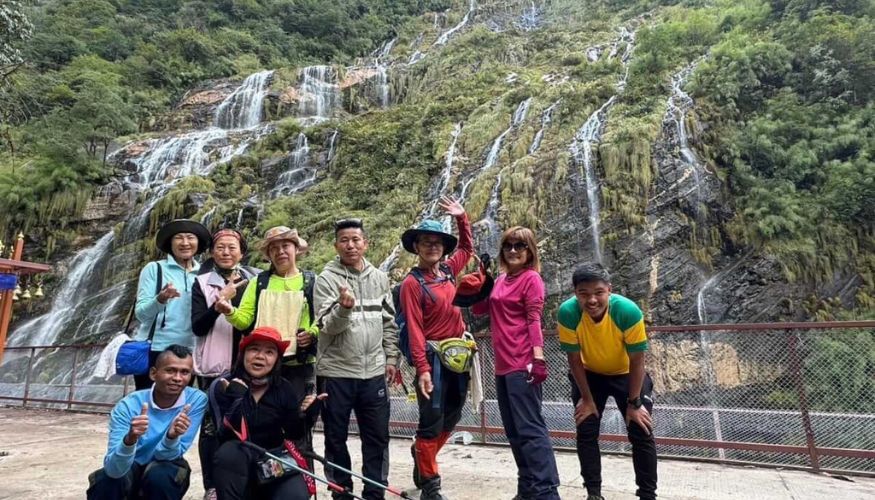
Even though some lodges offer mobile payment options, network issues can make transactions impossible. That’s why carrying enough cash can be a smart trek for you.
The Annapurna region constitutes a traditional mountain exchange system, based on cash payment. Your Everything else, food, lodging, charging electronics, hot showers, WiFi access, and small purchases in cash. Before your big trip, make sure you carry enough Nepali local currency for your daily transactions and to avoid unnecessary stress at high altitudes.
On the trek to Annapurna Base Camp, your daily costs will depend on how much comfort you require. As you climb higher, prices go up just like that, usually due to transportation and supply issues for remote mountain areas. In general, trekkers should budget $40-$80 per day for a moderate level of comfort.
Here’s a realistic daily cost breakdown Table which helps you to carry cash:
| Expense | Cost Per Day (USD) |
| Accommodation | $5-15 |
| Meals (per day) | $25-40 |
| Drinks (per day) | $5-10 |
| Snacks | $5-10 |
| Charging Devices | $2-5 |
| Hot Shower | $3-5 |
| WiFi access | $2-5 |
| Total Daily Cost | $40-80 |
What About Permits? Do You Pay Cash?
Trekkers will also need to obtain entry permits for the Annapurna Conservation Area and Tims Card Permit to start the trek to Annapurna Base Camp. These permits are generally arranged in Pokhara or Kathmandu by a Registered Trekking Agency.
If you want to trek independently, you can obtain a permit by yourself. But you should visit the Nepal Tourism Board Office in Kathmandu or Pokhara. And don’t forget to carry a copy of your passport and a passport-sized photo. And if dont want to go through any hassle, just want to hire a Guide and permit, you can contact a trekking agency in Kathmandu or Pokhara. But make sure the company is registered like us, Eco Nepal Trekkers.
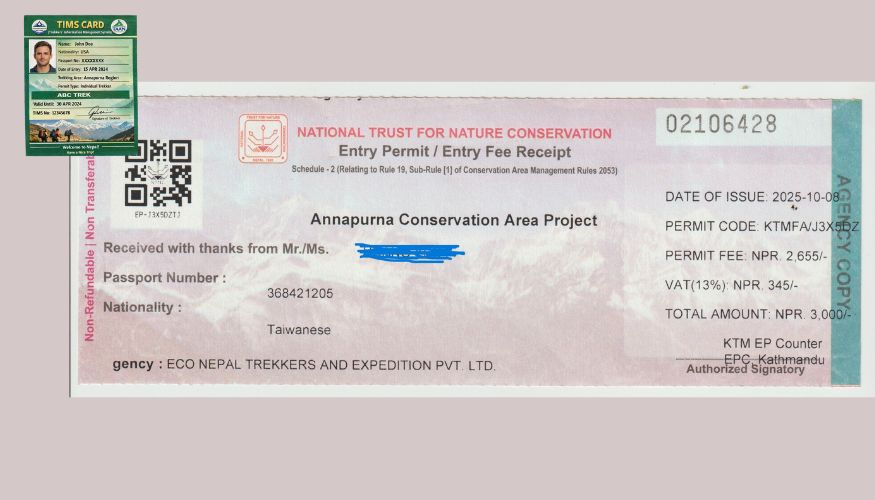
Most of the time, permit fees are paid in the city before starting any trekking and are paid in Nepali rupees. You’re not likely to arrange or pay for these once you’re already on the trail, so it’s best to plan ahead.
Want to know more details about the Annapurna Base Camp Trek permit Cost? Read Our Blog: Anapurna Base Camp Trek Permit Cost
Hidden Costs Many Trekkers Forget
Many trekkers only consider their meals and accommodation while budgeting for the Annapurna Base Camp trek. But a few small daily expenses can add up to higher overall spending, especially at higher altitudes, where transporting goods becomes more difficult.
The higher you go, the more expensive the bottled water gets. Charge phones or cameras for an additional fee per device. Additional tea and coffee are also cumulative over days. In some rare cases, such as emergency transportation, which means a jeep ride from Pokhara to Pokhara, may require pre-coordination fees.
Tipping for guides and porters is another important consideration in Nepal. Although not required, it is traditional and welcomed in Nepal’s trekking culture.
Here’s a Common Hidden Expenses daily cost breakdown Table:
| Expense | Cost Per Day (USD) |
| Mineral Water Bottled (per bottle) | $2-5 |
| Battery Charging | $2-5 |
| Emergency Transport | $150-250 (depending on distance) |
| Guide Tip | $8-15 |
| Porter Tip | $5-10 |
Planning your trek wth these additional costs helps you avoid cash shortages on the trail and ensures a smoother trekking experience.
Are There ATMs on the ABC Trek?
No, if you head to Annapurna Base Camp, there are no ATMs along the way. The only Multiple ATMs are in Kathmandu and Pokhara. Once you exit the city and start trekking into the Annapurna region, banking facilities are few and far between.
There may be a small ATM in Ghandruk Village at times, but do not count on it. Many mountain villages suffer regular power cuts, weak internet connectivity, and cash shortages. Machines can be out of service for days at a time.
Tips: Take out enough cash in Kathmandu or Pokhara before starting your trek.
Should You Carry USD or Nepali Rupees?
During trekking, you need to carry Nepali Rupees (NPR) for your daily expenses. Teahouses, small shops, and lodges accept only Nepali local currency and do not accept USD for everyday payments.
Exchange money in Kathmandu or Pokhara before heading to the trek. Banks and authorized exchange counters are far better than the rates in remote villages.
It is easier to make a payment in smaller denominations, particularly in villages that might not have the change.
We suggest you carry notes in denominations of NPR 50, 100, 500, and 1000 rupees.
Budget Traveler vs Comfort Trekker Comparison
Spending Cash on the Annapurna Base Camp trek depends on travel style and comfort. Some trekkers overview on food and share rooms, while others seek more comfort in the form of private rooms, regular hot showers, snacks, and upgraded services. Knowing your travel style helps you know how much cash to carry.
Here is a simple budget table for an average 12-day Annapurna Base Camp Trek:
| Type | Daily Cost (USD) | Total 12-Day Trek Cost (USD) |
| Budget Trekkers | $35 | $420 |
| Mid-range Travellers | $55 | $660 |
| Luxury-style Travellers | $80+ | $960 |
Budget trekkers mostly cut out extras and civvy up with basic meals and accommodation. What that room for added comfort and services looks like depends on whether you’re in the budget, mid-range, or high-end terrain. Luxury-type trekkers can opt for better rooms, more pots, extra snacks, and preferences that increase daily expenditure.
Why Is Emergency Cash So Important
Having emergency cash in the mountains is not a luxury; it’s an insurance policy. Weather delays may require you to spend an additional night in a village. If you have a slower acclimatization response, ask for an extra acclimatization day. Even minor medical issues can lead to additional accommodation and food-related expenses.
In some more serious cases, helicopter evacuation may require an upfront payment to be processed through the insurance before they even begin loading the patient into the helicopter. Even if you have insurance, the initial coordination can come at an up-front cost.
It’s also wise to maintain an extra $100-200 as reserve cash separate from your daily budgeting. In mountain wilderness areas, the financial room for maneuver directly supports decisions over safety.
Conclusion
A normal 12-day trek to Annapurna Base Camp requires around $400-600 in cash, which should be enough for your daily basis for accommodation, food, little extras, and tips for the guide and Porter.
It is highly recommended to carry extra emergency funds for the eventuality of weather delays, additional acclimatization days, or unforeseen expenses. A smart budget helps prevent stress and allows for making safer decisions in a high-altitude environment.
Prepare appropriately, bring enough local currency, and hike financially empowered.
FAQs
Can I pay with a credit card on the ABC trek?
No. you cant. Due to limited internet and banking access, most teahouses cannot take cards; they only accept Nepali cash.
How much money should I bring to spend on food only?
You can bring between $30 and $35 per day for food, depending on appetite and altitude.
$300 is the ABC trek enough?
It’s likely enough for a short budget trek, but it doesn’t leave much room for extras or emergencies.
Can I get cash on the treks?
No. There are no reliable ATMs beyond Pokhara. Always withdraw before starting the trek.
Do teahouses accept digital payments?
Rarely. Digital systems are working, but unreliable due to a poor connection.
How much do I tip on the ABC trek?
You can tip the Guide $8–15 per day and the Porter $5–10 per day.