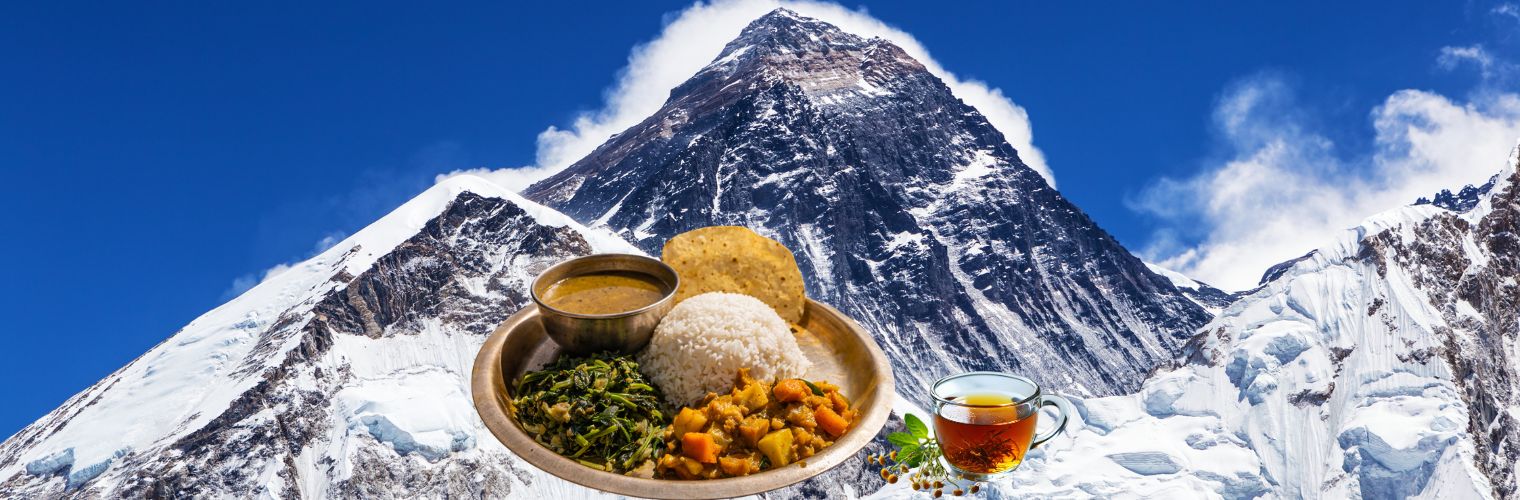
What Do You Actually Eat While Trekking in Nepal?
Before trekking in Nepal, many travellers from around the world imagine survival-style meals or extreme mountain food. What they will actually find is much simpler and repetitive.
Trekking food in Nepal is not about variety. It’s about energy, digestion, and dependability at high altitude.
What you eat on the trail is determined by geography, fuel availability, altitude, and the need to keep your body working every day.
Quick Summary
- Trekking food in Nepal is easy, repetitive, and intended for energy and digestion rather than variety.
- Dal bhat is the primary staple on almost all treks because it is filling, fresh, easy to digest, and often refillable.
- Breakfasts emphasize warm, high-carb foods to sustain trekkers through long days of trekking.
- Lunch is typically eaten at teahouses along the route and becomes more restricted at higher altitudes.
- Dinner emphasizes recovery, warmth, and hydration, with soups becoming increasingly popular at higher altitudes.
- Snacks are primarily carried by trekkers and are a crucial way to sustain energy levels between meals.
- Many trekkers cut back on meat at higher altitudes due to digestive issues and food safety concerns.
- Hydration from tea, soup, and hot water is as essential as consuming solid foods.
The Basis Of Trekking Food: Dal Bhat
If there’s one dish that compresses the soul of trekking in Nepal, it has to be dal bhat.
Dal bhat consists of rice, lentil soup, vegetables, and sometimes potatoes or pickles. It’s found on almost every menu in the teahouses and lodges, ranging from the low valleys to the mountain villages.
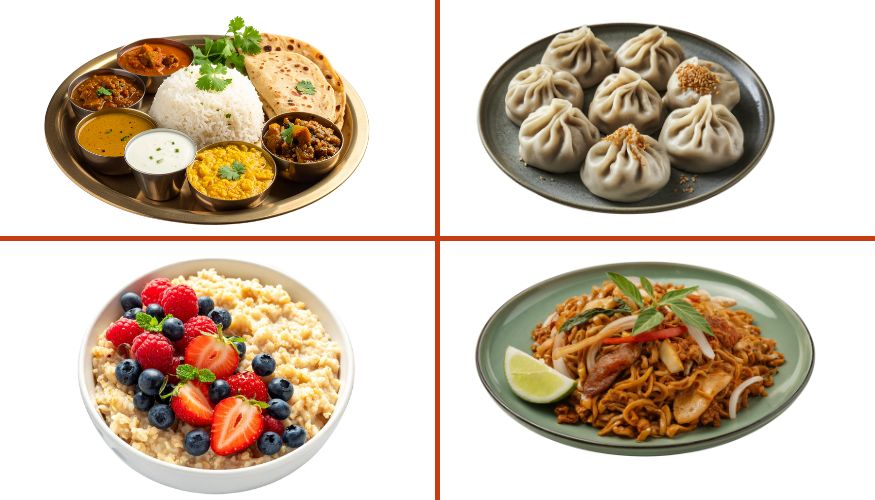
Trekking cuisine consists of dal bhat, not because it’s exotic, but because it’s effective:
- It’s rich in carbohydrates, which provide high energy for walking in mountain
- warm and can be digested easily
- It’s often refillable
- It’s always made fresh
Appetite is reduced at high altitudes. Heavy or oily food is difficult to digest. However, dal bhat remains tolerable even when nothing else is.
Breakfasts are simple and expected
Morning breakfast on the trail is designed to fuel walking, not impress.
Typical trek breakfasts include:
- Porridge (oat, corn, or mixed grain)
- Tibetan or chapati-style bread with jam or honey
- Eggs (boiled, omelette, or fried)
- Pancakes (plain, apple, or banana if available)
- Tea or instant coffee
Breakfasts are warm, carbohydrate-dense, and repetitive. This is important for digestion, which is already being challenged by altitude and activity.
Lunch, depending on where you stop along the Trek
Lunch is typically taken at a teahouse along the way, rather than at the place where you overnight stay.
Typical lunch items:
- Fried rice or fried noodles
- Vegetable or egg noodles
- Soup and bread
- Momos (dumplings) are more common in the lower regions
- Tea or Coffee
The higher you climb, the fewer choices you have. Fresh ingredients are more difficult to carry, and the cuisine is geared towards dishes that are simple to prepare with minimal fuel.
Dinner is all about recovery, not variety
Dinner is the most crucial meal of the day during trekking.
The most common meals that trekkers have are:
- Dal bhat
- Noodle soup, also known as thukpa
- Pasta or macaroni with vegetables
- Rice with curry
As one climbs higher, soups become more attractive than other foods. This is because hot liquids are essential for maintaining body temperature.
Snacks are mostly carried, not cooked
During the time between meals, most trekkers will depend on snacks that they have carried along or purchased at the start of the trek.
Some common snacks for trekking:
- Chocolate and energy bars
- Biscuits and cookies
- Nuts and trail mix
- Dry fruits
- Instant noodles
At higher elevations, your body will require more calories just to stay still. Snacking will become a necessity, particularly on long days of climbing.
What about meat?
Meat is found on many treks, but experienced trekkers will eat less of it at higher altitudes.
The reasons for this are:
- Slower digestion at high altitudes
- Less refrigeration available
- Stomach problems are more likely
Chicken is the most popular choice. Yak meat is found on some menus at higher altitudes, but many trekkers opt for vegetarian meals for ease and digestion.
Drinking is as important as eating
Eating alone won’t keep you healthy. Drinking is a big factor in how you feel.
What trekkers drink:
- Hot tea (black, ginger, lemon, or masala)
- Hot water
- Soup broths
- Cold beverages are less desirable as altitude increases.
Why trekking food is repetitive
First-time trekkers are often surprised by how similar meals are from day to day.
This is not a problem:
- Your digestive system likes what it knows at high altitude
- Consistent food means fewer stomach issues
- Your energy levels remain the same
Trekking in Nepal is not a foodie adventure. It’s a physical adventure where food is a tool to help you move, recover, and stay safe.
What trekkers will remember later?
First-time trekkers won’t remember the food. They’ll remember:
- How much better does food taste after a long hike
- How good a hot meal felt in the cold
- How reassuring simple meals were
On the trek, food stops being fun. It becomes a reliable fuel source.
Final thought
What you’ll actually be eating on your trekking adventure in Nepal is simple, repetitive, and actually pretty great. The food isn’t meant to wow you; it’s meant to keep you trekking, sleeping, and recovering in tough conditions.