10 Days Spiritual Tour In Nepal

TripAdvisor Reviews Recommended by 99.99% travelers

Price

USD 2300

Country

Nepal

Trip Duration

10 Days

Trip Grade

Easy

Highest Altitude

1,750m / 5,741 ft at Namo Buddha

Accommodation

Hotel

Transportation

Private vehicle/Bus

Group Size

1-50

Best Season

Spring

Highlights of 10 Days Spiritual Tour In Nepal
  • Begin in Kathmandu with Hindu and Buddhist sacred sites and closing puja traditions
  • Travel from Kathmandu to Pharping for sacred meditation caves and monasteries
  • Visit Vajrayogini and Guru Rinpoche caves in Pharping’s living tantric landscape
  • Continue to Namo Buddha for hillside monastery and bodhisattva compassion teachings
  • Journey south to Lumbini, birthplace of Buddha and Maya Devi Temple
  • Walk the Sacred Garden and Ashoka Pillar at Lumbini with international monasteries
  • Drive across the Terai plains to Janakpur, the Ram–Sita pilgrimage center
  • Experience Janaki Temple and Ram Mandir linked to the Ramayana tradition
  • Return to Kathmandu Valley for Patan and Bhaktapur UNESCO heritage cities
  • Balanced 10-day journey with gentle walks, road travel, and cultural immersion without ritual pressure

10 Days Spiritual Tour In Nepal Brief Insight

A 10 day spiritual tour in Nepal is a pilgrimage-focused travel plan that visits major Hindu and Buddhist sacred sites across Nepal within a fixed, balanced schedule. It is designed for travelers who want structured spiritual exposure without trekking, retreat programs, or physical strain.

In this spiritual tour in Nepal, we have combined the Kathmandu Valley, Pharping, Namobuddha, Lumbini, and selected low-altitude destinations, moving logically by road. In fact, you will spend the majority of your time at active temples, monasteries, and pilgrimage sites where daily rituals, prayers, and monks from different religions continue life as usual.

The tour begins in Kathmandu, where Hindu and Buddhist traditions coexist at sites like Pashupatinath, Boudhanath, and Swayambhunath. From there, it expands outward to quieter spiritual centers such as Pharping and Namobuddha, known for meditation caves and monastery life. 

Then we move on to Lumbini, the birthplace of the Buddha, which serves as the spiritual anchor of the itinerary, offering space for reflection across multiple traditions within a single sacred zone.

Rather than structured meditation courses, the focus stays on observation, participation in daily prayers, mindful walking, and personal reflection. The pace is calm, intentional, and respectful, allowing travelers to engage with living spiritual traditions while maintaining comfort, clarity, and continuity throughout the 10 days.

Why Eco Nepal Trekkers for a 10-Day Spiritual Tour of Nepal

A spiritual tour needs local understanding, patience, and respect for living traditions. It also needs an operator who treats sacred places as active religious spaces, not sightseeing stops. This is where Eco Nepal Trekkers’ approach matters.

Eco Nepal Trekkers is a locally owned Nepali company, legally registered and licensed, with guides who come from mountain and cultural communities themselves. While the company was formally established in 2023, the guiding team carries more than 16 years of combined experience across Nepal. 

This background allows guides to explain not only what you see, but why rituals matter in daily life, how Hindu and Buddhist practices coexist, and how pilgrims traditionally behave at each site.
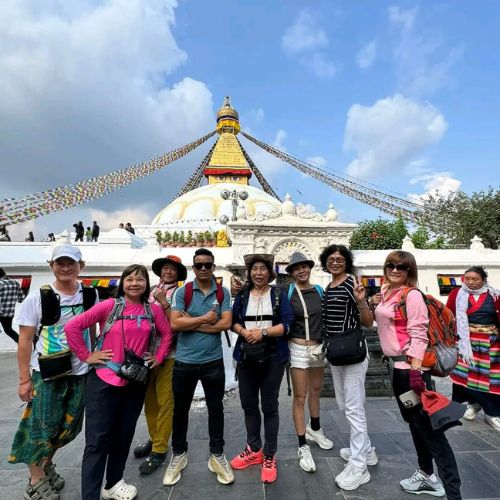
Spiritual Tour In Nepal With Guide

Furthermore, as a team, we handle cultural respect very carefully. Guides explain temple etiquette, prayer customs, and appropriate behavior before visits, which helps guests to participate respectfully rather than observe from a distance. Visits are timed around real daily rituals, not staged demonstrations.

For us, maintaining ethics in our day-to-day matters always comes first. As a company opened by a former porter, we take pride in ourselves by paying  Guides and porters fairly. Besides that, all of our staffs are properly insured, and work under safe conditions. This matters to travelers who want their presence to support communities, not burden them.

Besides that, we also work on a personalized basis. Itineraries are adjusted to individual pace, interest, and comfort, allowing space for reflection without rushing between sites. Communication is clear, expectations are realistic, and decisions are explained calmly.

For travelers seeking a grounded, respectful 10-day spiritual tour in Nepal, Eco Nepal Trekkers offers experience without exaggeration and care without pressure.

Destinations Covered in the 10-Day Spiritual Tour in Nepal 

Each destination included in this tour serves a different purpose within Hindu and Buddhist traditions. Some mark historical events, while others support ongoing monastic practice, and some exist mainly for personal reflection. The focus is not on seeing many places quickly, but on spending meaningful time in locations where spiritual practice continues naturally, without being staged for visitors.

Kathmandu Valley

Our tour starts from Kathmandu Valley, as it gives you the perfect introduction to how Hindu and Buddhist co-exist in Nepal. 

At first, we visit the Pashupatinath Temple ,  where pilgrims (mainly Hindus) come to witness Shiva devotion in its most active form. It is not quiet, and it is not staged. Rituals happen all day along the Bagmati River, and the atmosphere teaches one clear truth: in Nepal, spiritual practice includes life, death, and duty in the same space.

Then we move on to the famous Boudhanath Stupa, which was built for the purpose of repetition. People come to walk clockwise, spin prayer wheels, and keep their minds steady through simple action. Early mornings are especially focused, when monks chant, and local families do their rounds without rushing.
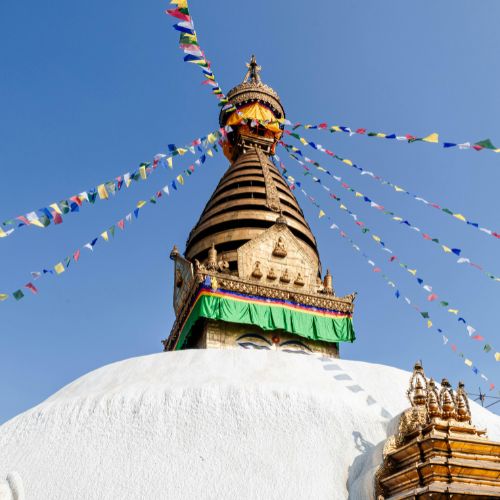
Stupa with colorful prayer flags

Aftwards, we visit Swayambhunath Stupa for perspective. It sits above the valley, and pilgrims climb up even when the stairs feel long. Buddhists and Hindus both worship here, which quietly explains Nepal’s shared spiritual culture better than any lecture.

Now, to understand Buddhist monks, we visit the Kopan Monastery, which gives a different feeling. It is structured and disciplined, but welcoming to visitors who want to observe. People come here to understand how monastic life works. Furthermore, you will get a brief idea of how they schedule, study, and chant, without needing to join a modern society. 

Pharping

Pharping is small, but spiritually dense. People come to the Asura Cave (Yanglesho) because it is linked with Guru Rinpoche and Vajrayana practice. The caves are not about views or comfort. They are about stillness, short visits, and respectful silence in a place pilgrims consider powerful.

Namo Buddha

Namo Buddha is visited for one main reason: the story of compassion linked with Prince Mahasattva. The stupa and nearby monasteries make this idea tangible. It is also a good place for quiet walking and simple reflection because the space is open and less crowded than central Kathmandu.

Lumbini

Lumbini is not symbolic. It is literal. People come because this is recognized as the birthplace of Siddhartha Gautama, marked by the Maya Devi Temple area and the Ashoka Pillar. The feeling here is calm and spacious. Visitors move slowly through the Sacred Garden and then visit the international monasteries, where different Buddhist countries express one shared respect in different styles.
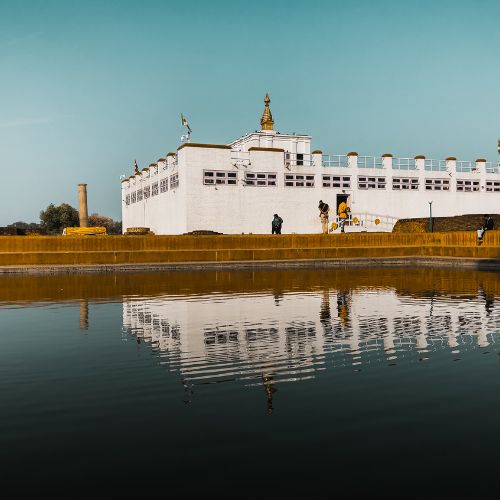
Lumbini Spiritual Tour In Nepal

Janakpur

Janakpur draws Hindu pilgrims who want a connection to the Sita’s birthplace tradition. The focus is on Janaki Mandir and the surrounding sacred spaces. People come for worship, family blessings, and ritual continuity tied to the Ramayana story. It is especially meaningful for devotees from the Mithila region and beyond.
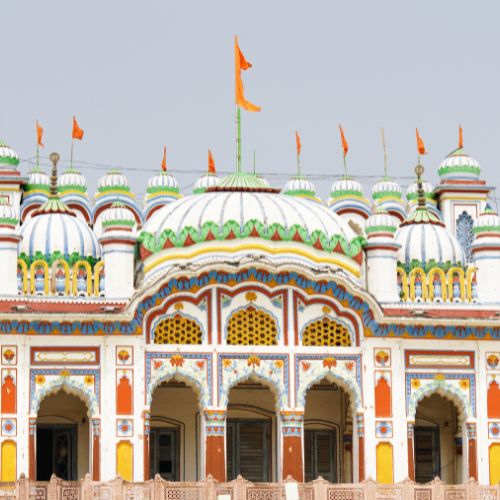
Janaki Temple of Janakpur

Bhaktapur and Patan

Bhaktapur is spiritual because worship is built into the city’s old squares and temples. People come to see the Newar tradition functioning in real time. In this place, you will find shrines, festivals, and temple courtyards that are still used, not just preserved.

Patan (Lalitpur) adds a strong Buddhist layer through its monasteries and bahals. Places like the Golden Temple (Hiranya Varna Mahavihar) show how Newar Buddhism lives alongside Hindu temples in one compact heritage area. It is a practical reminder that, in Nepal, faith is often shared space, shared streets, and shared daily rhythm.

  • Day 1: Arrival in Kathmandu
  • Day 2: Visiting Spiritual Places in Kathmandu (Kathmandu Valley)
  • Day 3: Visiting Sacred Caves and Temples of Pharping (Yangleshö)
  • Day 4: Visiting Monasteries and Stupa at Namo Buddha
  • Day 5: Drive from Namo Buddha to Janakpur (Birthplace of Goddess Sita)
  • Day 6: Visiting the Famous Janaki Temple of Janakpur
  • Day 7: Drive from Janakpur to Lumbini
  • Day 8: Visiting The Birthplace Of Lumbini then drive to Kathmandu
  • Day 9: Spiritual Heritage Walk in Patan and Bhaktapur Durbar Squares
  • Day 10: Farewell Puja and Departure from Kathmandu

Detailed Itinerary

Day 1: Arrival in Kathmandu

Trek Distance :

N/A

Highest Altitude :

1,350m (4,429 ft) at Kathmandu

Trek Duration :

N/A

Meals :

Breakfast

You arrive in Nepal through Tribhuvan International Airport, the country’s main international airport. After immigration formalities and luggage collection, you are transferred to your hotel in Thamel. The drive usually takes 20 to 40 minutes, depending on traffic and hotel location.

This first day is kept deliberately light. Long international flights, time-zone changes, and the shift in altitude require rest rather than activity. Kathmandu’s altitude of 1,350 m is moderate and safe, but hydration and quiet recovery help the body settle naturally.

After check-in, the rest of the day is left open for a shower, rest, and a short walk at the local Shree Gha Vihar if you feel comfortable. A brief orientation by your tour guide will be provided in the evening. The intention is simple: arrive, slow down, and allow the surroundings to settle before the spiritual visits begin.

Day 2: Visiting Spiritual Places in Kathmandu (Kathmandu Valley)

Trek Distance :

18–22 km

Highest Altitude :

1,414m (4,639 ft) at Swoyambhu Nath

Trek Duration :

8-9 hours

Meals :

Breakfast

Day 2 is a full, practical spiritual day in Kathmandu Valley, covering four core sacred sites: one royal square, two major Buddhist stupas, and the country’s most important Shiva temple. It is planned in such a way that you spend more time inside the sites and less time stuck in traffic. 

Most days run roughly from 8:30 AM to 5:30 PM, depending on road conditions.

You usually begin in Kathmandu Durbar Square, where temples sit inside everyday life, not behind a gate. Then you move to Swayambhunath (Swayambhu). The climb is real (365 stone steps), but the rhythm of prayer wheels and quiet kora makes the effort feel purposeful.

By midday, you reach Pashupatinath beside the Bagmati River. It is a place of worship and also where funerals take place. You observe respectfully from the public areas, with no photos near cremations.

After a simple lunch, the day slows again at Boudhanath Stupa. Late afternoon is the right time here because steady circumambulation and soft chanting from nearby monasteries begin, and butter lamps start to glow as the light drops. You return with the day complete, not rushed.

Day 3: Visiting Sacred Caves and Temples of Pharping (Yangleshö)

Trek Distance :

20 km

Highest Altitude :

1,520m/4,987 feet at Pharping

Trek Duration :

5-6 hours

Meals :

Breakfast

On day 3, we visit Pharping, a small Newar town on the southern edge of the Kathmandu Valley (about 1,600 m). It is visited for one clear reason: this is where Vajrayana Buddhists come to remember Guru Padmasambhava’s meditation caves, and where Hindu and Buddhist worship still sit side by side in daily life.

After breakfast, you take the south road from Kathmandu via Taudaha to Pharping. The drive is usually 30–45 minutes (traffic can stretch it). The day moves through three layers of meaning. 

First, Shesh Narayan Temple, where spring water and stone cliffs are treated as part of the shrine, not separate from it. Then the lower Yanglesho Cave, a quieter place linked to Guru Rinpoche’s early practice, and the small monastery beside it.

Later, you go up to Asura Cave (Upper Yanglesho), where pilgrims focus on discipline and protection practices connected to Vajrakilaya. 

If time allows, we will also stop briefly at Phamting Vajrayogini Temple, then continue to Dakshinkali for a direct view of living Hindu ritual tradition.

Walking today is mostly easy, suitable for all age groups, with gentle pacing on short uphill sections. You return to Kathmandu on the same route in about 45–60 minutes, with your mind feeling calmer and more settled than yesterday.

Day 4: Visiting Monasteries and Stupa at Namo Buddha

Trek Distance :

45–50 km

Highest Altitude :

1,800m / 5,741 ft at Namo Buddha

Trek Duration :

5-6 hours

Meals :

Breakfast

The drive to Namo Buddha feels like leaving the city behind. You head east from Kathmandu via Bhaktapur, then continue toward Banepa and Dhulikhel. From Dhulikhel, the route typically turns onto the Sindhuli Highway toward Kavre Bhanjyang, then follows Namo Buddha Road through Phulbari village up to the hilltop. The distance is roughly 40–45 km, and the travel time is usually 1–1.5 hours, depending on road conditions.

Namo Buddha sits around 1,800 m, so the air often feels cooler and cleaner than central Kathmandu. The center is the Namo Buddha Stupa, where pilgrims circle clockwise and place prayer flags as a simple form of devotion. People come here because the site is linked to the cultural belief in Prince Mahasattva’s compassion story, which is treated as a teaching example rather than a dramatic legend.

Nearby, Thrangu Tashi Yangtse Monastery gives the place a lived-in feel. You may hear chanting, see young monks moving between study and prayer, and notice how the monastery is designed for routine rather than display. That quiet structure is what many travelers remember most.

By late afternoon, the hilltop views open over the valleys. It’s a gentle day, less about “doing,” more about being present in a place that still practices what it represents.

You will spend a day at Namobuddha and prepare for a long drive to Janakpur. 

Day 5: Drive from Namo Buddha to Janakpur (Birthplace of Goddess Sita)

Trek Distance :

270–290 km

Highest Altitude :

1,750m / 5,741 ft at Namo Buddha

Trek Duration :

9-10 hours

Meals :

Breakfast

Today is mostly travel, and it is long. You descend from the hills near 1,750–1,800 m down to the Terai plains near 70–90 m, and you will feel the climate change from cooler air to warmer, flatter lowlands.

The usual route begins by dropping back toward Dhulikhel, then exits Kathmandu valley via Banepa and Sindhuli.  From there, you continue toward the southern regions of the Terai, crossing rivers and forests of Dhanusha District, and finally, you reach Janakpur.  In total, it is commonly 8 to 10 hours of driving with breaks, and road conditions can vary, especially in the monsoon season.

In fact, the whole spiritual change will feel drastic, as you have now moved from a Buddhist heritage to an important Hindu Pilgrimage site. By evening, you arrive in Janakpur, check in, and settle. The real walking starts tomorrow.

Day 6: Visiting the Famous Janaki Temple of Janakpur

Trek Distance :

N/A

Highest Altitude :

74m/243 ft at Janakpur

Trek Duration :

4-5 hours

Meals :

Breakfast

Day 6 stays within Janakpur and moves at a gentle, walkable pace. This is a day of devotion, not distance. Our main focus today will be the Janaki Mandir, the spiritual heart of Mithila, and the place Hindus believe marks the birth of Goddess Sita, daughter of King Janak.

The day usually begins at Janaki Mandir, a white, palace-like temple that feels different from most temples in Nepal. Its scale, open courtyards, and calm rhythm reflect Janakpur’s long association with family life, marriage, and dharma. 

In fact, pilgrims come here quietly. Many are couples or parents, offering prayers connected to harmony, commitment, and responsibility. The temple visit is unhurried, allowing time to observe rituals, architecture, and the steady flow of devotees.

From the temple complex, the walk continues naturally to the nearby Ram–Sita Vivah Mandap. And in case you didn’t know, this pavilion marks the traditional site of Rama and Sita’s marriage. The space feels symbolic rather than dramatic, reminding visitors why Janakpur holds such emotional weight in the Ramayana tradition.

Later, the route moves toward Dhanush Sagar and Ganga Sagar, sacred ponds linked to the marriage story and ritual purification. These areas are quieter, offering space to pause and observe daily worship around the water.

The entire day is compact, mostly flat, and easy to walk. More than movement, it is about presence. Janakpur does not rush pilgrims. It invites them to slow down and understand why this city remains central to Hindu faith and family life.

Day 7: Drive from Janakpur to Lumbini

Trek Distance :

300-330 km

Highest Altitude :

150 m/ 490 ft at Lumbini

Trek Duration :

7–8 hours

Meals :

Breakfast

Day 7 is a long travel day, but it carries quite a meaning.

You leave Janakpur early, driving west across Nepal’s Terai plains, following long stretches of the Mahendra (East–West) Highway. The road remains flat for the most part, passing through towns such as Bardibas, Hetauda, Narayanghat, and Butwal, before continuing toward Bhairahawa and finally Lumbini.

The total distance is roughly 300–330 kilometers. In ideal conditions, the drive can take about 6 hours, but in reality it usually takes 7–8 hours with breaks for meals and tea, depending on traffic and road conditions.

The landscape unfolds slowly: vast agricultural fields, rivers, market towns, and open countryside dominate the journey. Furthermore, the air feels warm and heavy, very different from the hills, grounding you firmly in the Terai. There is typically one longer lunch stop along the highway and a few short tea breaks. And hey, nothing is rushed as this day is about the journey itself rather than arriving early.

Spiritually, the movement is significant. You are traveling from Janakpur, the heart of the ancient Mithila kingdom and the birthplace of Goddess Sita, toward Lumbini, the sacred birthplace of Siddhartha Gautama, the Buddha. The road quietly connects two origins (one Hindu, one Buddhist) without asking for comparison.

By late afternoon or early evening, you arrive in Lumbini, check into your hotel, and settle in. The pace softens here. Tomorrow, walking begins, and the focus turns inward.

Day 8: Visiting The Birthplace Of Lumbini then drive to Kathmandu

Trek Distance :

320 km

Highest Altitude :

150 m/ 490 ft at Lumbini

Trek Duration :

2-3 hours

Meals :

Breakfast

Walking around Lumbini feels spacious and slow. It sits in the Terai plains at around 150–200 m, and the flat land changes the whole atmosphere after the hills. You start early, because mornings are cooler and calmer.

Your first focus is the Sacred Garden, the core area where the birthplace is marked. The paths are mostly flat and walkable, and you can cover the key points without rushing. 

Inside the garden, you visit the Maya Devi Temple, built to protect the exact birthplace zone. The space is quiet and controlled, and the meaning comes from the fact that everything points to one location, not a big display.

Just outside, you see the Ashoka Pillar, placed after Emperor Ashoka’s visit in 249 BCE. It matters because it connects belief with history. Nearby is the Puskarini Pond, traditionally linked with Queen Maya Devi’s bathing and the newborn’s first cleansing. Even if you don’t take the legends literally, you can still understand why people pause there.

After lunch, you move into the Monastic Zone, split into east and west areas. This is where Lumbini becomes global. You might step into a few monasteries and simply observe different architecture, different styles of worship, and the same respect for the Buddha’s life. The walking distances between monasteries are easy, and the whole area is built for slow movement.

If time is open, you finish with a short visit to a museum or a final walk back through the garden as the light softens. However, we would like to remind you that Lumbini is not a place you “finish.” So, if you are only interested in Lumbini, you have to go on a focused 3-day Lumbini tour.  You leave it gently, like you would leave a library, quiet, and carrying the meaning without forcing it.

However, the spiritual tour in Lumbini ends by 1:00 pm, so we then proceed with our journey back to Kathmandu. During the 320 km drive, we will pass through popular towns such as Bhairahawa, Butwal, Narayanghat, and Mugling, then return to Kathmandu. After 8 hours of driving, your body will feel a little tired, so after a quick dinner at your hotel, we call it a day. 

Note: If you want more imersive journey then you can choose to take a flight back to Kathmandu for an additional cost.

Day 9: Spiritual Heritage Walk in Patan and Bhaktapur Durbar Squares

Trek Distance :

5–6 km

Highest Altitude :

1350m at Kathmandu

Trek Duration :

3-4 hours

Meals :

Breakfast

This day feels different. It is not about travelling far, but about walking slowly through places where faith has never left daily life.

The morning begins in Patan Durbar Square, just 5–6 km south of Kathmandu. Here, Hindu temples and Buddhist monasteries stand side by side without boundaries. You notice priests ringing bells at Krishna Mandir, butter lamps glowing inside hidden bahals, and locals stopping briefly to offer flowers before continuing their routines. 

Patan does not feel performative. It feels practiced. Refined. Spiritual harmony lives quietly in its courtyards, stone carvings, and prayer wheels.

After lunch, the journey continues east across the valley to Bhaktapur, about 12–15 km from Kathmandu. The drive usually takes 45 minutes to one hour, depending on traffic. As you enter the old city, time slows down. Bhaktapur feels deeply devotional, almost preserved by belief itself. Red brick streets, narrow lanes, and temple squares create a sense of continuity that survived earthquakes and centuries.

Walking through Bhaktapur Durbar Square, you hear bells echoing, smell incense drifting from shrines, and see devotees circling temples in quiet rhythm. Climbing the steps of Nyatapola Temple is steady and symbolic, while nearby squares feel intimate and lived-in, not staged.

This day closes gently, not with conclusions, but with understanding. You don’t just see heritage here; instead, you walk through living faith, preparing the mind to return, complete and grounded.

Day 10: Farewell Puja and Departure from Kathmandu

Trek Distance :

N/A

Highest Altitude :

1350m at Kathmandu

Trek Duration :

N/A

Meals :

Breakfast

The journey closes quietly today, with gratitude rather than movement. 

In the morning, a farewell puja is arranged in Kathmandu. It is a simple blessing ritual asking for good health, protection, and a safe journey home. This ceremony is not about learning something new. It is about acknowledging what has already been received. A few prayers are offered, a blessing is given, and the pilgrimage is gently brought to completion.

After the puja, there is time to return to the hotel, pack calmly, and prepare for departure. Kathmandu’s Tribhuvan International Airport lies around 6 kilometers from Thamel, and the drive usually takes 20–30 minutes, depending on traffic. For international flights, departure from the hotel is scheduled 3.5 to 4 hours before takeoff, ensuring a relaxed check-in.

As you leave Nepal, the places remain behind, but the meaning of the journey travels with you.

Cost Includes

  • Airport pick-up and drop-off by private car/hiace/, or bus, depending on group size.
  • Professional and well-trained English-speaking tour guide for the Tour.
  • 9 nights hotel stay, bed & breakfast included.
  • All Entrance Fees for tour
  • Comfortable private transportation for whole trip.
  • Mineral water during the tour
  • Temple and cultural site orientation and guided cultural walks
  • Photography assistance and cultural storytelling throughout the day
  • Government taxes and service charges

Cost Excludes

  • International Airfare
  • Nepal Entry Visa Fee
  • Lunch & Dinner for whole trip.
  • Personal Expenses
  • Special temple rituals/pujas
  • Gratuities for guides & drivers.

Spiritual Significance of the 10-Day Spiritual Journey in Nepal

A spiritual tour in Nepal works best when it follows a clear inner logic, not just geography. This 10-day spiritual journey is designed to deepen your understanding at each stop, rather than repeating the same idea in different places.

The journey begins in Kathmandu, where Hindu and Buddhist traditions exist side by side in daily life. This sets the foundation: spirituality is lived here, not separated. 

Moving through Pharping and Namo Buddha, the focus shifts inward, first toward transformation, then toward compassion as action. These are not abstract ideas; they are shown through stories, rituals, and landscapes.

Traveling next to Lumbini and Janakpur adds balance. Lumbini grounds the journey in historical truth and discipline, while Janakpur brings devotion, relationships, and duty into focus. The final days in Patan and Bhaktapur show how these beliefs survive through art, community, and routine life.

Together, this 10 days spiritual tour in Nepal form a complete Hindu and Buddhist pilgrimage. It is structured, intentional, and meaningful through sequence, not speed.

Day RangePlace FocusSpiritual Significance
1–3Kathmandu–PharpingFoundation and transformation
4–6Namo Buddha–LumbiniCompassion and awakening
7–10Janakpur–Valley citiesDevotion and continuity

Who This 10-Day Spiritual Tour in Nepal Is Best For

This journey is for people who value meaning over movement.

A 10-day spiritual tour in Nepal suits travelers who want to understand belief through place, not theory, and who are comfortable moving slowly through temples, monasteries, and heritage cities.

It fits Hindu pilgrims seeking Ram–Sita devotion in Janakpur, Shiva worship in Kathmandu, and living ritual rather than symbolic storytelling. Furthermore, it also fits Buddhist practitioners who want to connect Buddha’s life in Lumbini with compassion teachings at Namo Buddha and Vajrayana influence in Pharping, without committing to retreats.

However, one needs to remember that this is not a yoga retreat or silent meditation program. It is a Nepal pilgrimage tour focused on living Hindu and Buddhist sacred sites.

For whomWhy
Hindu pilgrimsSacred darshan-based route
Buddhist practitionersBuddha life sites
Spiritual seekersMulti-tradition exposure
CouplesRam–Sita symbolism
FamiliesMulti-generation friendly
Older travelersNo altitude strain
Solo travelersStructured yet flexible
Cultural travelersLiving heritage cities

Best Time to Join the 10-Day Spiritual Tour in Nepal (Festival-Focused)

The best time for a spiritual tour in Nepal is when sacred places are alive with ritual, not just open for visits. For this 10-day journey, festival timing shapes the depth of the experience more than weather alone.

Late April to early May is ideal if your focus is on Buddhist pilgrimage. Arriving in Lumbini during Buddha Jayanti allows you to witness real devotional flow: monks chanting, pilgrims circumambulating, and collective rituals that cannot be recreated outside the festival period.

Mid-October to late November suits Hindu pilgrimage seekers. Vivah Panchami in Janakpur brings Ram–Sita devotion into daily life, while Patan and Bhaktapur still carry post-monsoon ritual energy.

Monsoon months are avoided not for rain alone, but because long road transfers, muddy temple grounds, and disrupted rituals break the pilgrimage rhythm.

Best PeriodsFestivals and Focus
Apr–MayBuddha Jayanti, Buddhist focus
Oct–NovVivah Panchami, Hindu devotion

Travel Pace During This Tour

The pace of this 10-day spiritual tour in Nepal is gentle. Days are planned around short site visits, road transfers, and unhurried walking inside temple complexes, monasteries, and heritage squares. There are no early alpine starts, long hikes, or physically demanding activities.

Most travel between destinations happens by private vehicle, with regular breaks for rest, meals, and reflection.

This slower rhythm allows travelers to stay present rather than rushed. Time is built in to sit, observe rituals, absorb surroundings, and move on calmly. The journey is designed for spiritual attention, not endurance.

Safety on the Journey

Nepal is generally safe for spiritual and cultural travel, especially on well-established pilgrimage routes like Kathmandu, Lumbini, Janakpur, Patan, and Bhaktapur. These places receive pilgrims daily, locals, families, elders, monks, and international visitors.

Activities are mostly daytime-based and take place in populated areas. Guides and drivers are familiar with the routes, temple customs, and local conditions, which reduces confusion and stress. Safety here feels ordinary, not heightened.

Travel Insurance (Why It’s Practical)

Travel insurance is recommended, not because this journey is risky, but because it protects peace of mind. A simple policy covering medical care, trip delays, and unexpected changes is sufficient.

Even for a slow spiritual tour, insurance helps if flights are delayed, luggage is misplaced, or minor health issues arise. Having it means you don’t have to worry—and worrying less is part of traveling well on a spiritual journey.

Packing List for the 10-Day Spiritual Tour in Nepal

This journey moves slowly, through temples, monasteries, heritage streets, and quiet courtyards. You are not trekking, camping, or rushing between extremes. Comfort, respect, and simplicity matter more than gear. 

Packing well helps you stay present instead of distracted by discomfort. Think modest clothing, layers for changing temperatures, and a few personal items that help you feel settled. If something is forgotten, Kathmandu has good shops, but arriving prepared keeps the experience calm and uninterrupted. 

Here is the list that you need to pack: 

Clothing (Modest & Comfortable)

  • Lightweight long-sleeve shirts (cover shoulders)
  • Comfortable trousers or long skirts
  • One warmer layer (light jacket or fleece)
  • Shawl or scarf (temples, mornings, women’s use)
  • Comfortable walking shoes (easy to remove)
  • Sandals or slip-on footwear
  • Sleepwear
  • Undergarments and socks

Personal Essentials

  • Passport and photocopies
  • Travel insurance documents
  • Small daypack
  • Reusable water bottle
  • Sunglasses and sun hat
  • Sunscreen
  • Personal toiletries
  • Hand sanitizer and wet wipes

Health & Practical Items

  • Basic personal medications
  • Simple first-aid kit (pain relief, plasters)
  • Motion sickness tablets (for long drives)
  • Lip balm and moisturizer (dry air)
  • Insect repellent (especially Terai region)

Spiritual & Personal Items (Optional)

  • Small prayer beads or mala
  • Journal and pen
  • Lightweight offering scarf (khata)
  • Compact book or reading material

Electronics & Documents

  • Phone and charger
  • Power bank
  • Universal travel adapter
  • Camera (optional)

This list keeps you comfortable, respectful, and focused on the journey, not on what you forgot.

Come and Begin Your Spiritual Journey With Us

After 10 days on Nepal’s sacred paths, something quiet settles within you. You’ve walked through Kathmandu’s living temples, stood at Buddha’s birthplace in Lumbini, felt devotion in Janakpur, and paused in silence at Namo Buddha and Pharping. 

The journey stays below 1,500 m, moves gently by road, and gives space to reflect, not rush. What remains is not a checklist, but an understanding of belief, culture, and yourself.

If you choose to travel with us, we walk as guides, not directors. In the end, Nepal doesn’t change who you are. It helps you remember.

Dates of Trip

PRICE
DEPARTURE DATE
TRIP STATUS
$2500

$2300Save $200

10 Days
March 3, 2026 - March 12, 2026
Guaranteed
Enquire Now
$2500

$2300Save $300

10 Days
March 10, 2026 - March 19, 2026
Guaranteed
Enquire Now
$2500

$2300Save $300

10 Days
April 8, 2026 - April 17, 2026
Guaranteed
Enquire Now
$2500

$2300Save $300

10 Days
April 14, 2026 - April 23, 2026
Guaranteed
Enquire Now

Group Discount Prices

No. of Persons
Price per Person
1 Pax
$2500
2 Pax
$2300
3-5 Pax
$2000
6+ Pax
$1800

Frequently Asked Questions

Is this 10-day spiritual tour in Nepal suitable for beginners?
Yes. This journey is designed for first-time spiritual travelers. It involves 10 days of low-altitude travel (below 1,500 m), short walks inside temples, and comfortable road transfers between Kathmandu, Pharping, Namo Buddha, Lumbini, and Janakpur. There is no trekking, no physical training required, and the pace stays gentle throughout.
Do I need to be Hindu or Buddhist to join this spiritual tour?
No. You do not need to follow any religion. This 10 days spiritual tour in Nepal focuses on visiting living sacred places, not converting beliefs. Travelers observe rituals, understand traditions, and reflect quietly. Respect matters more than faith identity.
How physically demanding is this spiritual journey?
It is easy to moderate. Most days include 2–4 hours of walking, spread across temple complexes and heritage squares, with regular breaks. Longer travel days (Kathmandu–Lumbini or Lumbini–Janakpur) are done by private vehicle, not on foot.
Is this tour suitable for elderly travelers (60+ years)?
Yes, many travelers aged 60–75 complete this route comfortably. The itinerary avoids altitude, includes seated temple visits, and allows rest every afternoon. Stairs are optional at places like Nyatapola Temple, with alternatives always available.
Is Nepal safe for this kind of spiritual tour?
Yes. This route is considered safe and well-established. The tour passes through populated cultural centers and pilgrimage cities, not remote regions. Guides, private transport, and planned schedules reduce uncertainty and keep the experience calm and predictable.
Is travel insurance required for this trip?
Yes, it is strongly recommended. Insurance should cover medical care, trip delays, and emergency evacuation, even though risks are low. Think of insurance as protection for peace of mind, not because the journey is dangerous.
What kind of accommodation is provided during the tour?
Comfortable 3–4 star hotels in cities and clean guesthouses near monasteries. All rooms have private bathrooms, hot water, and electricity. This is not a trekking lodge experience; comfort and rest are prioritized every night.
What food will be available during the journey?
Meals are simple, fresh, and nourishing. Expect Nepali dal bhat, vegetarian curries, rice, bread, soups, and some international dishes in cities. Vegetarian food is common, especially near temples. Bottled water is used throughout the trip.
Is this tour a meditation retreat or yoga program?
No. This is a spiritual pilgrimage tour, not a silent retreat. You may sit quietly at monasteries or observe rituals, but there are no long meditation sessions or yoga classes included.
Can solo travelers join this 10-day spiritual tour in Nepal?
Yes. Solo travelers join regularly. The group structure provides safety and companionship, while still allowing personal space. Many solo travelers value the balance between guided support and quiet reflection.
What makes this spiritual tour different from a regular Nepal tour?
This journey is slow, intentional, and meaning-focused. Instead of sightseeing quickly, you spend time in Lumbini, Namo Buddha, Pharping, and Janakpur, where spiritual life is active. The focus is understanding, not ticking places off a list.
Will I experience real rituals or just historical monuments?
You will see active worship, not museums. Priests perform daily rituals at Janaki Mandir, monks chant at Namo Buddha, and pilgrims circle stupas in Lumbini. You observe quietly, sometimes participate, and always remain respectful.