Bhairav Kunda Trek
TripAdvisor Reviews Recommended by 99.99% travelers
USD 750
Nepal
6 Days
Moderate
4,250m at Bhairav Kunda
Homestay/Tea house/Guest house
Private vehicle/Bus
2-15
Spring Season
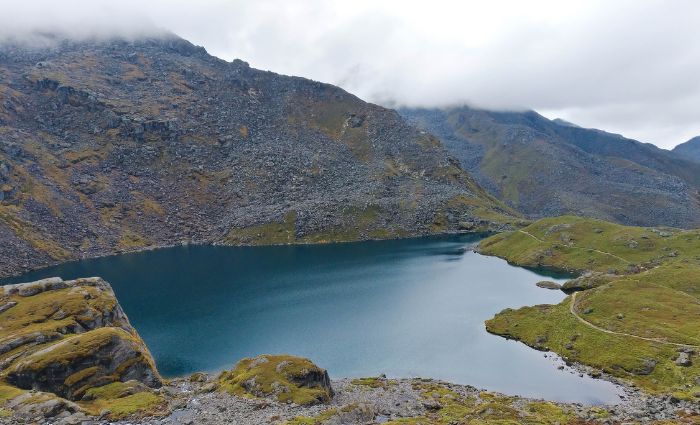
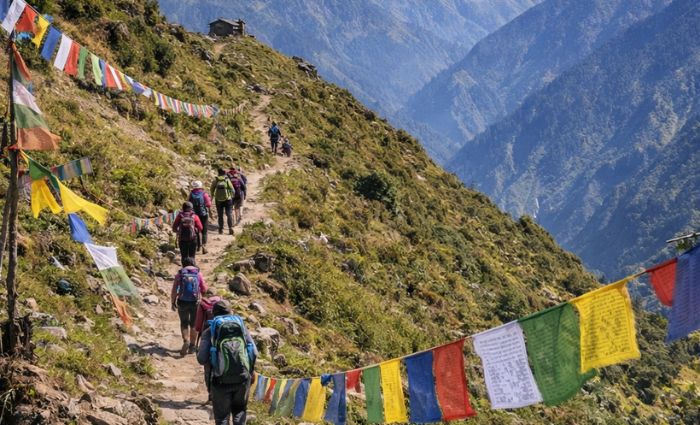
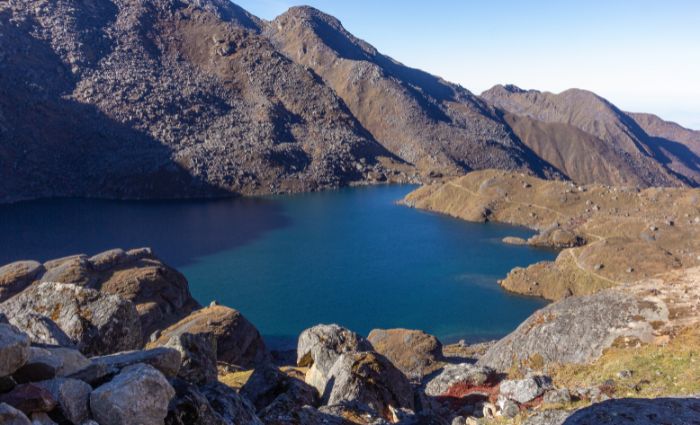
- Pristine glacial lake is considered sacred by Hindu and Buddhist devotees and adorned with prayer flags.
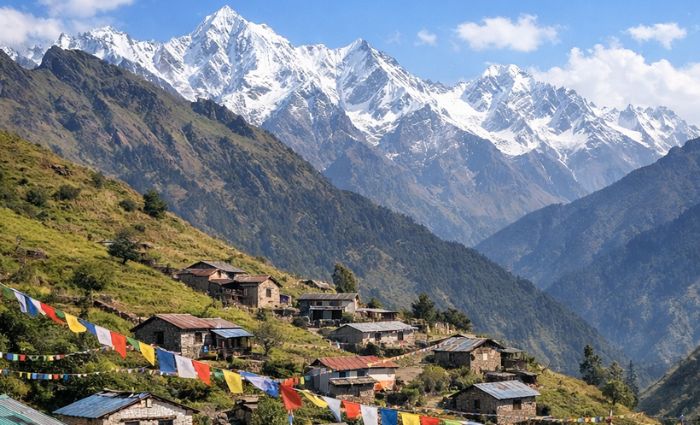
- Beautiful views of Langtang Lirung (7,227m), Dorje Lakpa (6,966m), Jugal Himal, and distant Everest on clear days.
- Escape crowded trails, experience real solitude, on one of Nepal’s least traveled routes
- Experience the traditional Tamang and Sherpa cultures in remote villages untouched by mass tourism.
- Thousands of Hindu pilgrims can be seen undergoing ritual bathing at this sacred festival of the full moon
- Hike through terraced farmlands and rhododendron forests.
- Viewing red pandas, Himalayan black bears, and various birds in Langtang National Park.
- Capture breathtaking photographs of the Himalayas reflected in the serene waters at dawn.
- Explore the traditional paths worshippers have used over the centuries to seek spiritual blessings.
- You can experience unspoiled natural beauty in the mountains with minimal man-made interference on trekking trails.
Bhairav Kunda Trek Overview
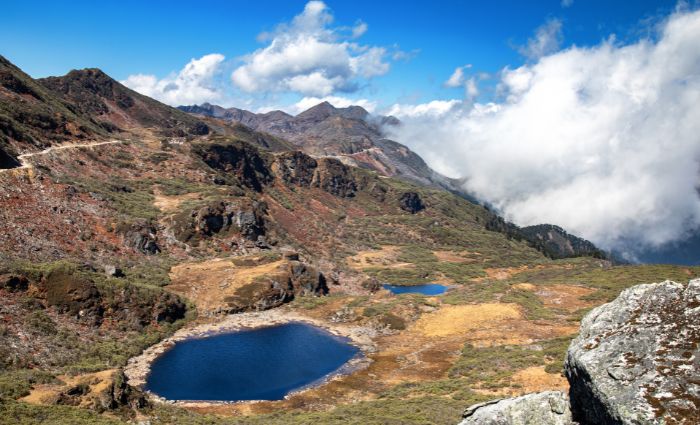
Bhairav Kunda Trek is one of Nepal’s hidden gems, a spiritually important yet unexplored trekking trail that passes through high-altitude alpine lakes, offers stunning views of the Himalayas, and provides a spiritual experience. The Langtang region, northeast of Kathmandu Valley, takes trekkers to this sacred lake at an altitude of 4,250 meters, an important pilgrimage site for both Hindus and Buddhists.
Unlike other popular routes like the Everest Base Camp trek or Annapurna Circuit, the Bhairav Kunda trek is refreshingly off the beaten path. This trekking route requires 7-9 days of travel through beautiful Tamang and Sherpa ethnic villages, dense rhododendron forests, and mountain terrain, before reaching the untouched glacial lake, gifted by Lord Shiva in his Bhairav (fierce) form.
The trek offers beautiful views of Langtang Lirung (7,227m), Dorje Lakpa (6,966m), Jugal Himal, and, on extremely clear days, even a glimpse of Everest. The festival of Janai Purnima in the month of August sees Bhairav Kunda turn into a colorful hub of activity as thousands of pilgrims risk the arduous climb to bathe in the sacred waters, a festival anomaly not often witnessed by foreigners.
Who This Trek Is For and Who It’s Not?
The Bhairav Kunda trek is suitable for experienced trekkers who have already gained exposure to trails above 3,500m before. For this trek, good fitness levels are also required. The trek is recommended for those seeking a peaceful walk away from the main trail. It’s also good for those who want to experience real culture through dal bhat meals and other basic facilities.
The trek is not recommended for first-timers, those who want luxury and high-end facilities like hot showers, Internet access, a variety of foods, people who have acrophobia or health-related issues, families with small children or seniors, or those who need to rush because of time constraints, as they cannot afford delays due to weather.
Is Bhairav Kunda Trek Safe?
The trek is rated as reasonably safe for experienced trekkers but poses some danger. The main danger lies in altitude sickness while climbing to 4,250m in quick succession, with limited scope to acclimatize. In addition, there are no medical facilities nearby. While helicopter evacuation is possible, it can take hours to arrange in such a remote region.
The best seasons for trekking in the region are from March to May and October to November, when the weather is stable. During the monsoon season from June to September, heavy rainfall may trigger landslides, and trails may be slippery, making walking difficult. In addition, the winter season between December and February may be characterized by snow, especially at high altitudes of over 3,
Hiring a licensed guide is good for safety. Not only will the guide be familiar with the route, but the guide can also recognize altitude illness. Travel insurance that includes helicopter rescue services for altitudes above 4,000m is required. While the trek is feasible with sufficient preparation, acclimatization, and fitness level, it is considered more risky due to limited rescue facilities.
Bhairav Kunda Trek Short Itinerary
- Day 1: Arrival in Kathmandu (1350m)
- Day 2: Morning Drive from Kathmandu to Bagam (6-7 hrs)
- Day 3: Trek from Bagam to Chokarmokar (7 hrs trek)
- Day 4: Hike to Bhairav Kunda (2 hrs) and back to Bagam
- Day 5: Drive from Bagam to Kathmandu
- Day 6: Final Departure
Customize your trekking package in Nepal with our local experts, tailored to your time, budget, and adventure level.
Detailed Itinerary
Day 1: Arrival in Kathmandu (1350m)
Trek Distance
N/A
Highest Altitude
1350m at Kathmandu
Trek Duration
N/A
Meals
Breakfast
Upon arrival at Tribhuvan International Airport, you’ll be driven to your hotel in Kathmandu. This day can be used to relax after your overseas flight, check equipment, and meet with your trekking guide to gain detailed insights into your upcoming trek. You can also visit Thamel to buy any last-minute equipment you need for your trek.
Day 2: Morning Drive from Kathmandu to Bagam (6-7 hrs)
Trek Distance
120 km by road
Highest Altitude
2,400m at Bagam
Trek Duration
6-7 hrs
Meals
Breakfast, Lunch and Dinner
Start early morning at 6:00 AM from Jatibuti, Kathmandu, heading northeast on winding mountain roads. The roads run through beautiful scenery, farmlands, and Tamang villages. The roads usually run through the Melamchi or Helambu area, depending on road conditions. The roads are bumpy, with some sections totally undulating and unpaved, requiring robust 4-wheel-drive vehicles. The journey ends in Bagam in the afternoon, where you will be staying at a simple local lodge. The evening is spent exploring the local area.
Day 3: Trek from Bagam to Chokarmokar (7 hrs trek)
Trek Distance
12 KM
Highest Altitude
3,850m at Chokarmokar
Trek Duration
7 hrs
Meals
Breakfast, Lunch and Dinner
This is the most challenging day with significant elevation gain. Start early to give yourself ample time and avoid afternoon weather changes. The trail goes up steeply through dense rhododendron and pine forests in the lower parts, opening into alpine meadows and rocky terrain as you ascend higher. You pass yak pastures and seasonal herder settlements en route. The trail sometimes has no markings; thus, the path requires an experienced guide. Chokarmokar is a basic settlement with very limited facilities; camping or extremely rustic teahouse accommodation is about what can be expected. The rapid altitude gain begs for a slow, steady pace for proper acclimatization. Drink plenty of water and observe the development of altitude symptoms-Headache, nausea, dizziness.
Day 4: Hike to Bhairav Kunda (2 hrs) and back to Bagam
Trek Distance
4 KM
Highest Altitude
4,250m at Bhairav Kunda
Trek Duration
2 hours ascent to the lake, 1.5 hours at the lake, 6 hours descent to Bagam
Meals
Breakfast, Lunch and Dinner
Wake up early, around 4-5 AM, to start early for the sacred lake trek. The trek traverses barren alpine terrain, offering fantastic views of various parts of the Himalayas, including Langtang Lirung, Dorje Lakpa, and Jugal Himal. Finally, reach the untouched glacier lake, Bhairav Kunda, at sunrise, as it is considered the most spiritually powerful and visually attractive time for this trek. The lake is located at 4,250 meters, with prayer flags draped around it and small shrines nearby. The lake is a spectacular sight if travelers come during Janai Purnima, held during the full moon of August.
Spend 1.5-2 hours at the lake for photography, meditation, or soaking in the mountain scenery. Set off by mid-morning and descend to Chokarmokar for a bit of rest. Then, start the long descent to Bagam. The downhill is hard on the knees. Hence, trekking poles would be helpful. Estimated descent is 6-7 hours. Arrive at Bagam by late afternoon/evening for some much-needed rest.
Day 5: Drive from Bagam to Kathmandu
Trek Distance
120 km
Highest Altitude
2400 m at Bagam
Trek Duration
6-7 hrs
Meals
Breakfast and Lunch
Depart Bagam after breakfast, retracing the rough roads back to Kathmandu. The return trip is quicker as you are now familiar with the road. Arrive in Kathmandu by mid- or late-afternoon. Rest at the hotel, shower, and have a meal to celebrate the completion of your trek. Optional: farewell dinner with your trekking crew.
Day 6: Final Departure
Trek Distance
N/A
Highest Altitude
1350 m at Kathmandu
Trek Duration
N/A
Meals
Breakfast
Transfer to Tribhuvan International Airport for your international departure. Please note: arrival 3 hours prior to flight time is recommended. If you are on a late flight, optional activities include last-minute souvenir shopping in Thamel or visits to nearby UNESCO World Heritage sites such as Swayambhunath (Monkey Temple) or Pashupatinath Temple.
Cost Includes
- Airport pick-up and drop-off by private car/hiace/bus, depending on group size.
- All-around transportation from Kathmandu to and from Bagam
- 2 nights 3-star hotel accommodation in Kathmandu on twin-sharing basis with breakfast
- Three Meals a day during the trek, including Breakfast, Lunch, and Dinner.
- Three times a cup of tea or coffee along the trek.
- Every night, Seasonal fruits after dinner during the trek
- Trek permits and local entry requirements
- All accommodations will be Tea Houses and Lodges during the trek
- Licensed trekking guide for the full trek
- A porter is Available to carry your luggage during the trek. One porter assists two clients.
- All transportation as per the itinerary
- Farewell dinner in a typical Nepali restaurant
- Achievement Certificate after completing the Trek
- All expenses related to Guide and Porter (including wages, accommodation, meals, gear, insurance, and required medications will be covered.)
- First Aid Box during the trek
- Eco Nepal Trekkers’ Duffel bag is available and can be returned after the trek.
- Helicopter rescue services are available for emergencies and must be paid for by your travel insurance company.
- Government taxes, VAT, and office service charge.
Cost Excludes
- International flights and Nepal visa fees
- Travel insurance
- Lunch and dinner meals in Kathmandu
- Personal trekking gear and clothing
- Hot showers, WiFi, charging, snacks, bottled drinks
- Tips for the guide and porter
Good To Know
Best Time to Do Bhairav Kunda Trek
You must go on the Bhairav Kunda Trek at the right time, which makes all the difference in your experience, safety, and success rate. The discrete seasons of Nepal create significant differences in trekking conditions, ranging from ideal mountain visibility to dangerous monsoon landslides. Understanding seasonal patterns helps you choose the optimal window for your adventure.
Spring (March-May):
This is the peak season, from March to May. Spring trekking can be quite comfortable, as lower elevations keep temperatures around 10-20°C. It cools to -5 to 5°C at Bhairav Kunda. Weather usually stabilizes after winter, and clear skies with excellent mountain visibility are commonplace, not to mention crystal-clear mornings: rhododendron forests bloom in vibrant reds, pinks, and whites during the period from the end of March to April; partly frozen lakes become fully thawed by the start of May; and there are some afternoon clouds until late May because of pre-monsoon moisture. This is the best time for photography and hiking.
Autumn (October-November):
Autumn provides the best conditions overall: 12-18°C at lower elevations, dropping to -5 to 3°C at the lake. The post-monsoon air is crystal clear, razor-sharp in its views of the mountains, with minimal haze, deep blue skies, and exceptionally stable, dry weather with very little rainfall. The weather patterns are predictable. The trails are well-defined and free from landslides. November nights at altitude drop well below freezing, and quality sleeping bags will be required. This is Nepal’s busiest time of year, though Bhairav Kunda will still be relatively uncrowded.
Winter (December-February):
The extreme cold is accompanied by temperatures as low as -15/-5 degrees Celsius in Bhairav Kunda. The weather mostly remains stable, extremely cold, with snowfall. The lake will be frozen, presenting breathtaking sights. The snow makes it difficult to find routes, especially at altitudes over 3,500m, with the teahouses shut. Hence, winter camping is necessary. High risks involve avalanches, rescue difficulties, frostbite, etc. Only for experienced winter trekkers, as the risks are extremely high.
Monsoon (June to September):
Monsoon season brings bad weather, heavy rain, fog, and frequent cloud cover, resulting in very poor visibility. The trails are infested with leeches, and road conditions are poor due to frequent landslides along the routes. Mountains in the background remain shrouded in clouds most days. Helicopter evacuation is extremely trying. EXCEPT: The Janai Purnima festival, which falls on the full moon in August, offers great cultural significance as thousands of pilgrims trek to the site for ritual bathing.
Permits Required for Bhairav Kunda Trek
The trek requires two compulsory permits, as it is within the Langtang National Park. These permits will be checked at the point of entry to the national park. Trekkers without proper permits will be fined NPR 5,000-10,000 and restricted from the trek.
Langtang National Park
It Permit fee is NPR 3,000 (~USD 23) per person. This conservation fee helps maintain the national park, protect wildlife, and develop communities. You can obtain it either from the Nepal Tourism Board Office in Kathmandu, the park gate at Dhunche, or through a trekking agency. Required documents: a valid passport with 6 months of validity, two passport photos, and an application form. Same-day processing.
TIMS Card
It costs NPR 2,000 (~USD 15) as an independent trekker, or NPR 1,000 (~USD 8) if through an agency. TIMS is for tracking trekkers for safety and thus providing a quick rescue operation if needed. You can get it at the Nepal Tourism Board Office, the TAAN office in Kathmandu, or through your agency. The required documents you need to provide are your passport, two photos, the TIMS form, insurance details, and your itinerary.
Accommodation & Food for Bhairav Kunda Trek
Bhairav Kunda Trek provides basic, rustic facilities, as it is a remote trek. The facilities, however, can be basic.
Accommodation
Basic Teahouse Lodges in Bagam are available at NPR 300 to 800 per night, approximately 2-6 USD. Teahouses here offer twin beds with thin mattresses and shared squat toilets. These places are not heated, and electricity is scarce, too. Teahouses provide no Wi-Fi, with no hot water facilities either. The facilities at Chokarmokar are even more basic, with herder huts. This being the off-season, all teahouses are closed, and camping with 4-season gear is a must. A sleeping bag with a rating of at least -10°C
Food
Dal bhat is the staple and comes with refill options. Fried rice, noodle soup, momos, Tibetan bread, and eggs (NPR 400-800/meal, ~USD 3-6) are other food choices. Bottled water is hard to find. It is best to carry purification tablets to hydrate at the stream, or buy boiled water for NPR 100-200/liter. Snacks should be carried from Kathmandu, as there are no shops between the villages.
Note: Bring cash (no ATMs), hand sanitizer, book ahead during peak season, and lower your expectations about modern amenities. The simplicity is part of a true remote experience.
Packing List for Bhairav Kunda Trek
A packing list is essential for the Bhairav Kunda Trek, especially given its remote, high-altitude location. “Pack smart” means that all the gear one packs must be essential to the trek. Weight is another major factor to consider on a trek such as this.
Clothing
- Insulated jacket
- Waterproof jacket and trousers
- Fleece or insulating mid layer
- Trekking shirts and thermal base layers
- Trekking pants
- Warm hat and sun hat
Handwear
- Gloves and spare inner gloves
- Hiking Gloves
- Hand Warmers
- Windproof Gloves
Footwear
- Broken-in trekking boots
- Lightweight camp shoes or sandals
- Cotton socks
- Thin Socks
Gear
- Daypack with rain cover
- Sleeping bag rated for cold weather use (-10°C)
- Trekking poles
- Headlamp with spare batteries
- Water Purification Tablets or Filter
Health and Personal
- Personal medications
- Altitude sickness medication (Diamox if prescribed)
- First aid kit (bandages, blister treatment)
- Pain relievers and anti-diarrheal medication
- Water bottles
- Sunglasses
Documents and Extras
- Passport and Permits
- Travel insurance documents
- Nepali Rupees in Cash
- Power Bank and Charging Cables
- Energy bars
Dates of Trip
March 2, 2026 - March 7, 2026
$750Save $100
March 6, 2026 - March 11, 2026
$750Save $100
March 10, 2026 - March 15, 2026
$750Save $100
April 8, 2026 - April 13, 2026
$750Save $100
April 12, 2026 - April 17, 2026
$750Save $100
Frequently Asked Questions
Client Reviews
Write Review


 Top Rated Service


Similar Packages
USD 1950
06 Days
Heli Tours
Easy

USD 1280
13 Days
Trekking in Nepal
Moderate
USD 800
12 Days
Trekking in Nepal
Moderate