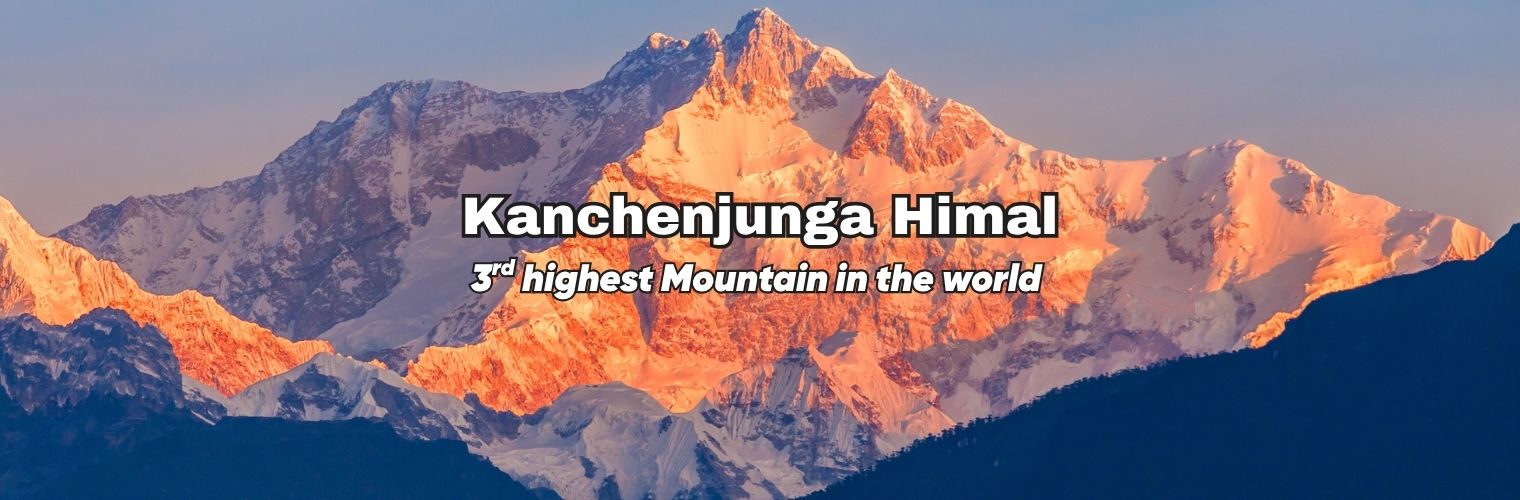
Kanchenjunga Himal
If you are planning a trek in Nepal’s eastern Himalayas, you might be wondering what makes the Kanchenjunga Himal different from other Himalayan regions. right?
Kanchenjunga Himal is 8,586 meters high, also known as the third-highest peak on Earth. It is located in the eastern Himalayas on the border with Nepal and India, making it one of the country’s most remote mountain areas.
The name Kanchenjunga itself is of Tibetan origin and is typically translated to mean “Five Treasures of the Snow,” after the five distinct peaks that form the mountain.
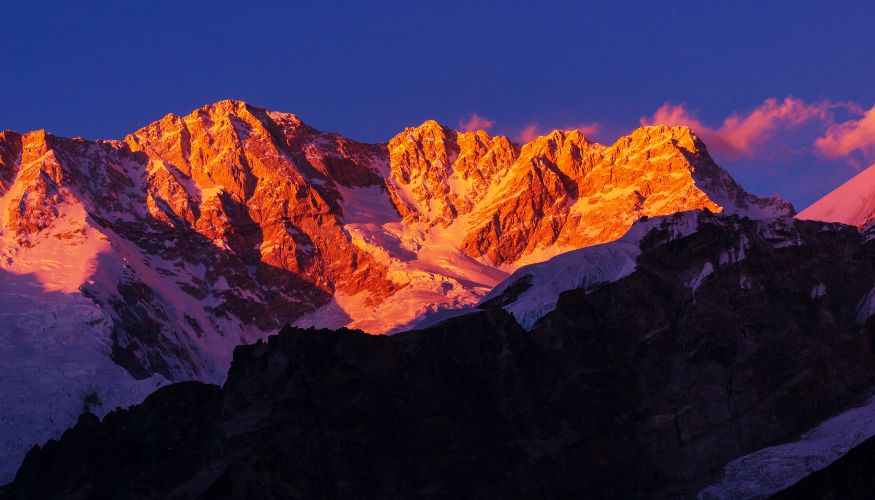
Unlike the more developed trekking areas, like Everest Base Camp or Annapurna Base Camp, Kanchenjunga is still less accessible and much quieter, with limited infrastructure and a long approach. This has led to its reputation as one of the most remote and visually unique regions in all of Nepal.
In this guide, we will share where Kanchenjunga Himal is, what it means, its geography and trekking importance, along with the uniqueness that gives Kanchenjunga a different Himalayan flavour for those looking to step off the regular trails.
Quick Summary
- Kanchenjunga Himal is the third-highest mountain in the world at 8,586 meters, located in eastern Nepal on the border with India.
- The Kanchenjunga region is one of the most remote trekking areas in Nepal, with limited infrastructure and fewer trekkers compared to Everest and Annapurna.
- The Kanchenjunga trek takes 18 to 24 days, passing through remote villages, glaciers, and high-altitude Himalayan landscapes.
- The mountain holds strong cultural and spiritual significance, with its name meaning “Five Treasures of the Snow” and being respected as a sacred peak.
- Trekking in this region requires special permits and a licensed guide because of the restricted area.
- Kanchenjunga Himal offers diverse nature and wildlife, including snow leopards, red pandas, rhododendron forests, and alpine ecosystems.
Where Is Kanchenjunga Himal Located?
Kanchenjunga is located in the eastern Himalayas and borders Nepal and India (Sikkim). It is part of one of the remotest mountain regions in the Himalayan range.
In Nepal, the mountain is located in Taplejung District in the country’s far east. Unlike other trekking regions of Nepal, this area is less developed, with few roads and long trekking approaches.
The surrounding landscape is dictated by remote valleys, glacier systems and tall mountain peaks. The terrain features steep ridgelines, river valleys and remote settlements, making for a more nature-dominated and less populous place than central Himalayan areas.
| Location Detail | Information |
| Country | Nepal and India (Sikkim border) |
| Province | Koshi Province (Nepal) |
| District | Taplejung District |
| Region | Eastern Himalayas |
| Mountain System | Himalayas |
| Protected Area | Kanchenjunga Conservation Area |
| Highest Peak | Kanchenjunga (8,586 m) |
| Main Gateway Town | Taplejung / Suketar |
| International Entry City | Kathmandu |
Height and Key Facts About Kanchenjunga Himal
Kanchenjunga is the third-highest mountain in the world, its elevation being 8,586 metres (28,169 ft).
The large glacier systems of the mountain reach into neighbouring valleys and alter the area’s topography. The terrain is rugged with high slopes, ridgelines, and complex mountain structures.
Kanchenjunga is one of the most remote areas in the Himalaya, compared with more developed regions further north, where roads and infrastructure have reached more widely; it should be noted that these remarks/shooting features relate to a large part of the trek.
| Key Detail | Information |
| Elevation | 8,586 meters (28,169 ft) |
| Global Ranking | 3rd-highest mountain in the world |
| Location | Nepal and India (Sikkim) border |
| Notable Features | Massive glaciers, rugged terrain, remote wilderness |
Meaning and Cultural Significance Of Kanchenjunga Himal
Besides its physical height and geography, Kanchenjunga has cultural and spiritual importance.
Kanchenjunga’s name is usually translated as “Five Treasures of the Great Snow” and refers to its five main peaks. These “treasures” are typically connected to symbolic components like gold, silver, gemstones, grain and religious writing.
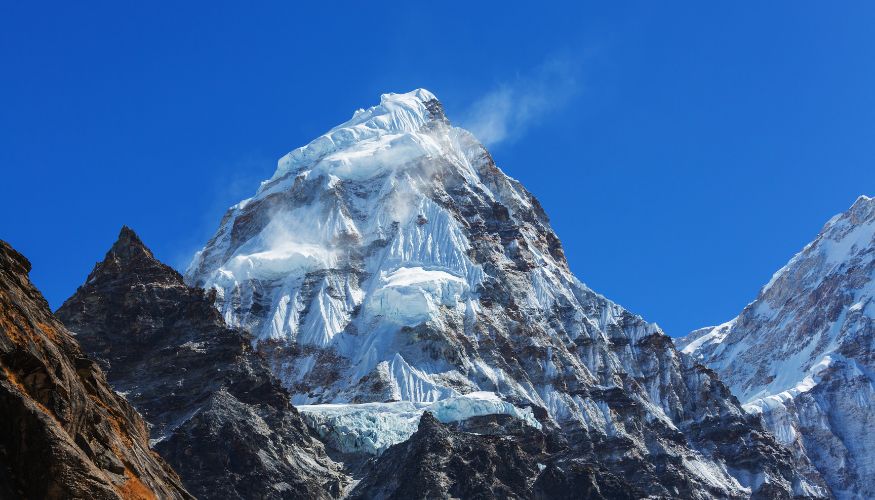
Locally, the mountain is considered sacred. In both Buddhist and local belief systems, mountains are often seen as an abode of gods or divine beings, which adds to their spiritual significance.
This has led to a deep respect for the mountain and its surroundings. Cultural traditions are all about preservation; even early climbing expeditions tended to respect local customs, which included not placing a boot directly on the true summit.
Kanchenjunga Trek – One of Nepal’s Most Remote Treks
The trekking region that surrounds Kanchenjunga is often regarded as one of the most remote and least developed trekking regions in Nepal. The Kanchenjunga trek is less commercially developed than other treks, and there are fewer trekkers on this route than you will find anywhere else in the region.
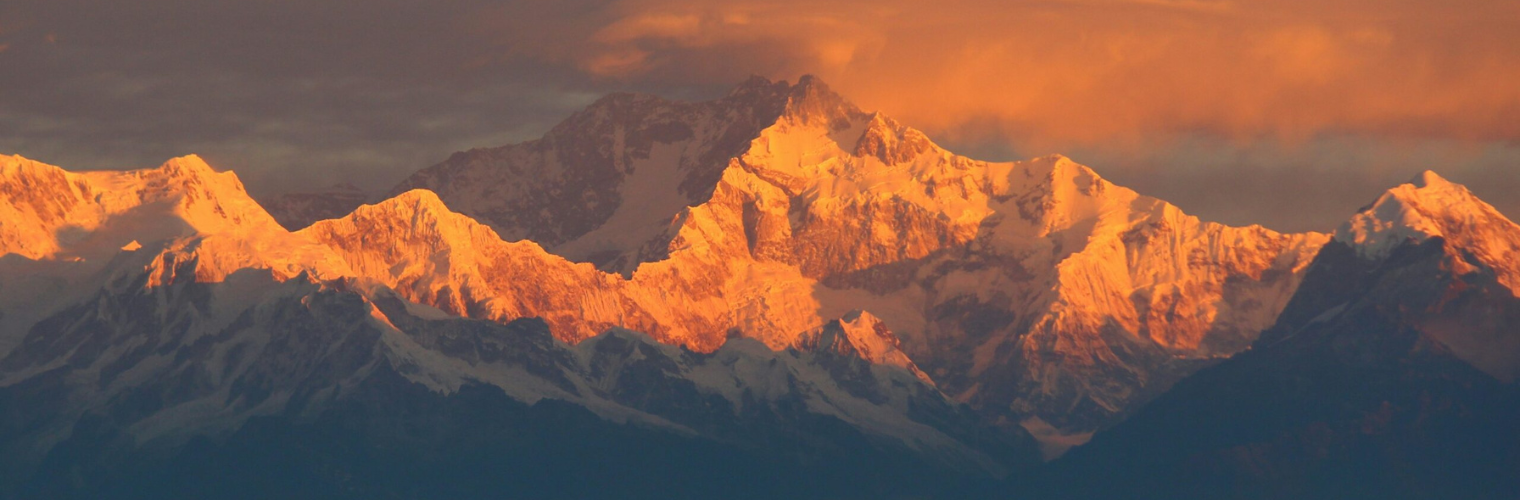
Kanchenjunga Trek
Trekking in the Kanchenjunga region offers a quieter route through glaciers, valleys, and traditional mountain villages.
The trek sees comparatively less foot traffic than the Everest Region Trekking and Annapurna Region Trekking routes since access is longer and logistics are more complicated. The result is a quieter setting with longer stretches of unspoiled path.
The average trek duration is between 18 and 24 days, depending on the itinerary, route variation and acclimatisation schedule. Distance and remoteness add to the need for a longer duration.
Passing through remote villages, natural landscapes and high mountain terrain, the trek takes almost a month to complete. Highlights are traditional settlements, preserved ecosystems and front-row views of eastern Himalayan peaks.
Kanchenjunga North and South Base Camps
The Kanchenjunga region features two primary trekking destinations, North Base Camp (Pangpema) and South Base Camp (Oktang). Both provide alternative views of the mountain and the surrounding terrain.
North Base Camp is a high glacial valley with direct views of the Kanchenjunga glacier. It is a difficult environment with proximity to ice structures and surrounding peaks.
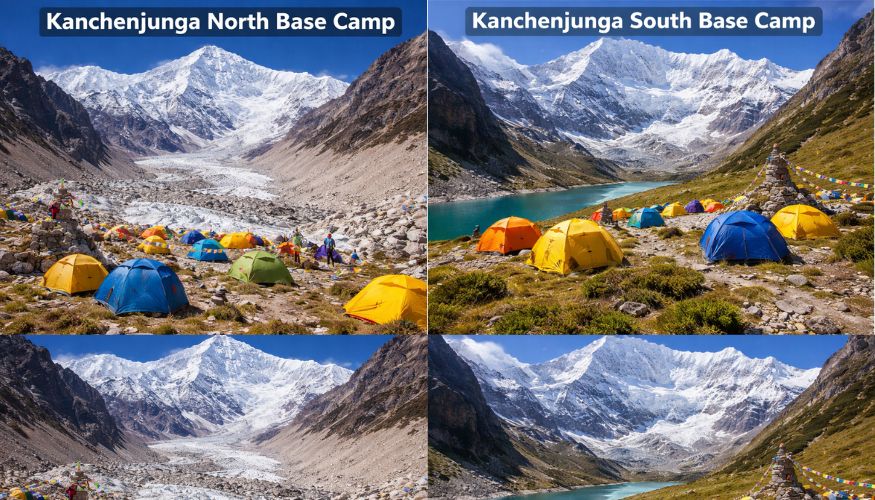
You get to see an extensive panorama of Kanchenjunga and neighbouring mountains from South Base Camp. The terrain is more open and broad, so you can see a lot of the mountain range and the surrounding valleys.
The region’s remoteness means that neither base camp is a destination in itself; one needs longer itineraries for both trekking routes.
Difficulty of Kanchenjunga Trek
The Kanchenjunga region trek is a strenuous trek that combines the remoteness of the area with long walks and little assistance.
It will take 18 to 24 days by Tentel and involves sustained physical effort over time. The course this year features steep climbs, unmarked trails and high-altitude sections.
It requires a decent level of fitness overall, with the stamina and endurance needed for multi-day trekking in remote situations.
Compared to other regions, infrastructure is sparse. There are fewer teahouses and basic facilities, so logistics, food availability and accommodation options are also more limited there.
Best Time to Visit Kanchenjunga Himal
The best time to visit the Kanchenjunga Himal depends on the seasonal weather in the eastern Himalayas.
Spring (March to May) has stable weather, mild temperatures and clearer visibility. This is a common season for trekking because of stable weather.
Autumn (September to November) offers dry conditions, clear skies, and reliable mountain vistas. This is regarded as one of the most stable trekking seasons.
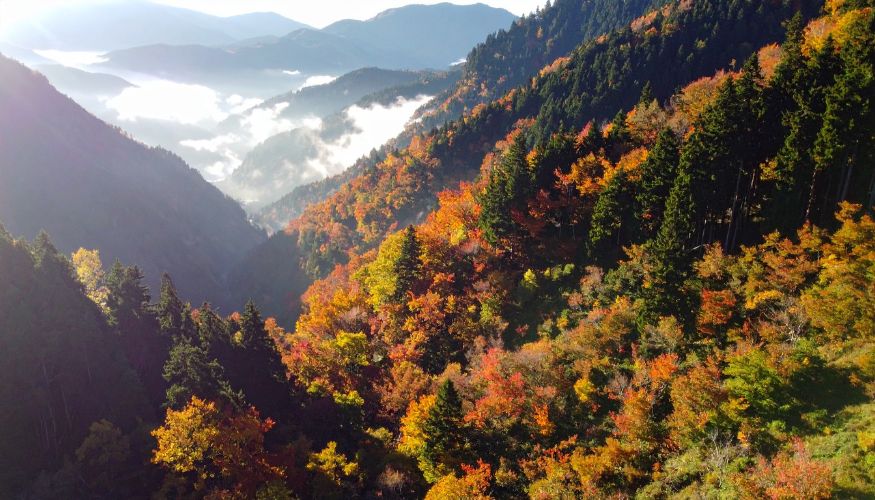
Challenges from the weather outside of these periods are increasing. Winter serves up cold temps and snow at higher elevations, while monsoon season comes with rain, cloud cover and challenging trail conditions.
In fact, spring and autumn offer the best conditions for trekking in this far-up corner of the world.
Permits Required for Kanchenjunga Himal Trek
Trekking in the Kanchenjunga Himal is definitely not the easiest trek, and it requires special permits due to its designation as a restricted and protected area.
A Restricted Area Permit (RAP) is special to the region, as they have controlled access and are close to international borders.
Also required for trekkers is the Kanchenjunga Conservation Area Permit, which grants entry into the protected area that safeguards the region’s natural environment and biodiversity.
Furthermore, you must hire a licensed guide to trek in this region. Independent trekking is not allowed, and all trekkers are required to travel with a registered agency and licensed guide.
| Permit Type | Permit Cost (USD) | Season |
| Restricted Area Permit (RAP) | USD 20 per person/ week (for the first 4 weeks) | Autumn (September to November) |
| Restricted Area Permit (RAP) | USD 25 per person /week ( beyond 4 weeks) | Spring / Other seasons (December to August) |
| Kanchenjunga Conservation Area Permit (KCAP) | $30 | All seasons |
Permit costs differ on duration and regulations, but all trekkers must carry valid permits throughout the trek.
If you want to know in detail about the permit, you can read our blog: Kanchenjunga Himal Trek Permit
Wildlife and Nature in Kanchenjunga Region
The Kanchenjunga region probably has some of the most diverse ecosystems in the world, where elevation and isolation govern everything.
It is home to rare wildlife species, including the snow leopard and red panda, which thrive in forest and high-altitude ecosystems. This is part of biodiversity protection from the regional environment.
Vegetation varies with elevation. The lower part of the area is characterized by rhododendron forests, and higher levels progressively give way to alpine vegetation with reduced plant coverage.
This temperature drop at different elevations results in some of the most biologically diverse habitats found anywhere in the Himalayas.
Culture and People of Kanchenjunga Region
The region surrounding Kanchenjunga is home to ethnic communities whose lifestyle is strongly interconnected with the mountain environment.
This reflector includes the Limbu and Rai in eastern Nepal, where these communities have been settled for hundreds of years. These Mariners define the cultural fabric of the locality.
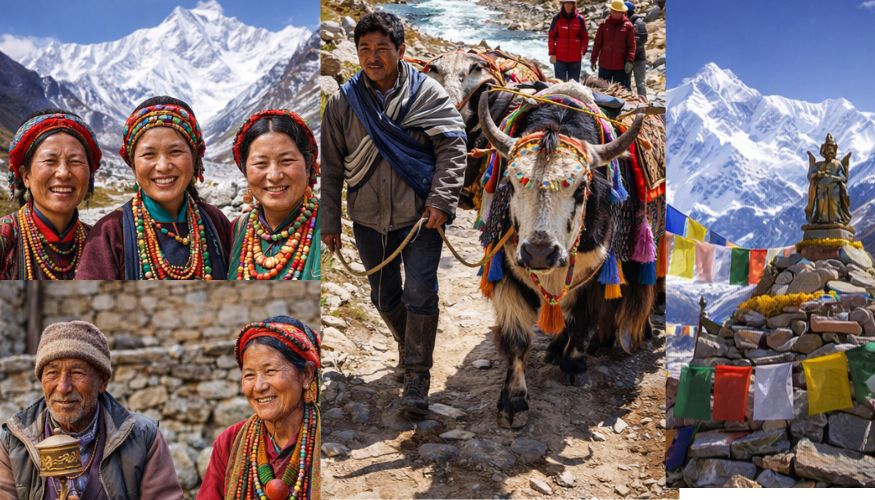
Daily life is farming and mountain living, with agriculture suited to altitude and terrain. Villages lie in valleys and on hillsides according to the local geography.
The cultural life has deep roots in local folklore, and the activities take place as a way of life that is closely related to nature and seasons.
Cost of Kanchenjunga Trek
The cost for trekking in the Kanchenjunga Himal is also mostly higher than regular treks because of its remoteness, longer duration, and prerequisite logistics.
Basic trekking packages, $1,700 to $2,500, usually include the most affordable lodgings and food, as well as permits and minimal service. Standard trekking packages run between $22,00 and $3,000, covering guide support, logistics and organized itineraries.
Factors such as the length of the trek, whether or not you use a guide and porter, transportation costs, and the remoteness of the region determine overall cost.
| Trek Type | Price Range | Included |
| Budget Trek | $1,700 to $2,500 | Basic accommodation, meals, permits, and limited support |
| Standard Trek | $22,00 to $3,000 | Guide, logistics, accommodation, meals, permits |
Longer itineraries and additional support services increase total cost, while group travel can reduce per-person expenses.
Why Choose Kanchenjunga Trek?
Trekkers looking for a remote Himalayan experience will opt for the trekking area around Kanchenjunga.
The route is remote, almost off the beaten track, as it has limited access, and other trekking facilities are also not available as in other areas. This makes for a more secluded hiking experience.
The pristine landscape comprises natural terrain, including glaciers and valleys, without much development infrastructure, which is basically forests and high mountain ridges.
The trek provides an authentic cultural experience as the towns along the route are indicative of traditional lifestyles practiced by local communities like the Limbu and Rai.
For all intents and purposes, the region has smaller numbers of tourists, leading to less crowded trails and a quieter trekking experience than those on the Everest and Annapurna routes.
FAQs
Where is Kanchenjunga Himal located?
Kanchenjunga Himal is located in the eastern Himalayas and serves the border between Nepal and India (Sikkim), within the remote Taplejung district of Nepal.
How high is Kanchenjunga Himal?
Kanchenjunga Himal, at 8,586 meters (28,169 feet), is the world’s third-tallest mountain.
Is Kanchenjunga trek difficult?
Yes. It is difficult due to comparisons with other trekking areas, because of the high altitude, remote trails, and the duration of this trek.
Do I need a guide?
Yes. A licensed guide is required since the region is considered a sealed zone, and solo trekking is not allowed.
How long does the trek take?
The trek normally takes 18 to 24 days, depending on the route, itinerary and acclimatization plan.
Final Through
One of the most remote and least explored trekking areas in Nepal is the Kanchenjunga region. Its terrain includes glaciers and valleys, high Himalayan peaks and little infrastructure, so fewer trekkers.
Made up of isolation, natural terrain, and cultural presence, the trekking experience here is diverse from more developed regions.
Discovered by trekkers seeking off-the-beaten-path routes in the Himalayas, Kanchenjunga is a world that has yet to be shaped by either geography or tradition.