
Annapurna Circuit Trek Difficulty
The Annapurna Circuit Trek Difficulty is generally a moderate-to-challenging trek. The long walking days, steep climbs and descents, high altitude, changing terrain & mountain weather make it physically demanding. However, it is not a technical trek, so you do not need mountaineering or climbing skills to complete the route.
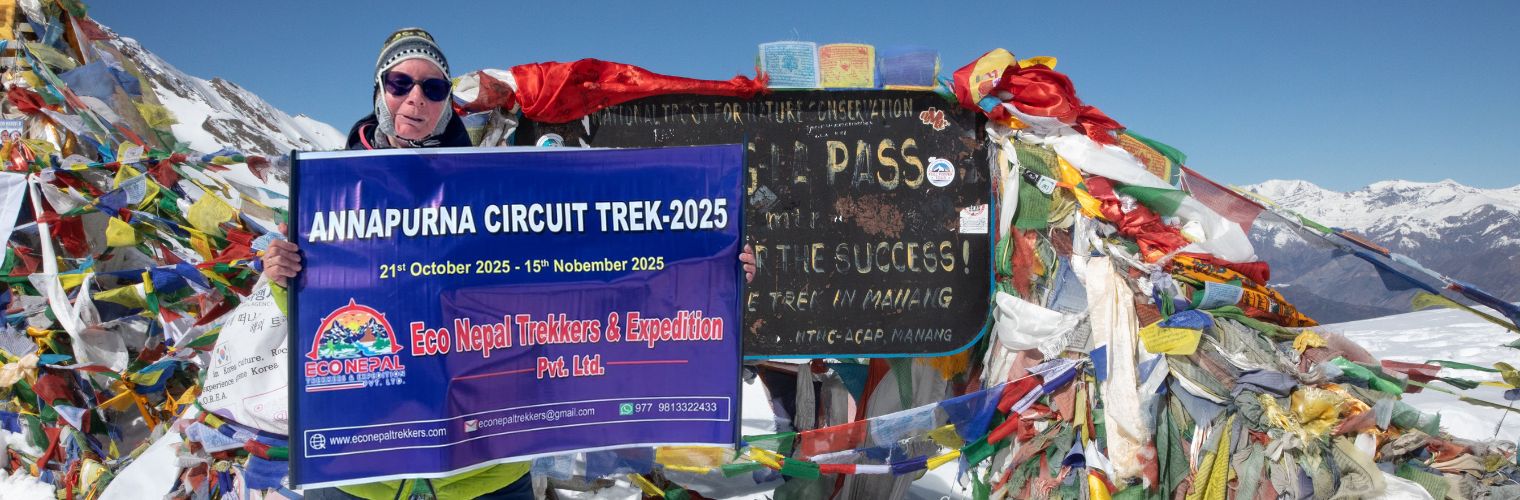
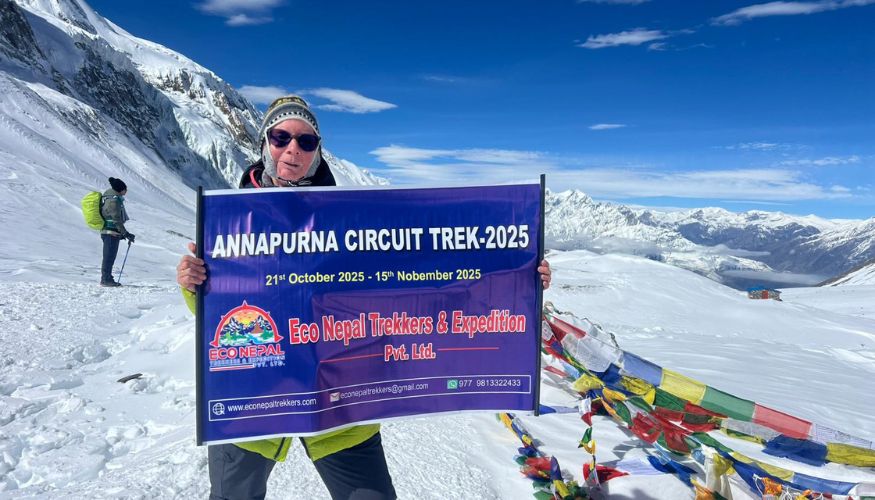
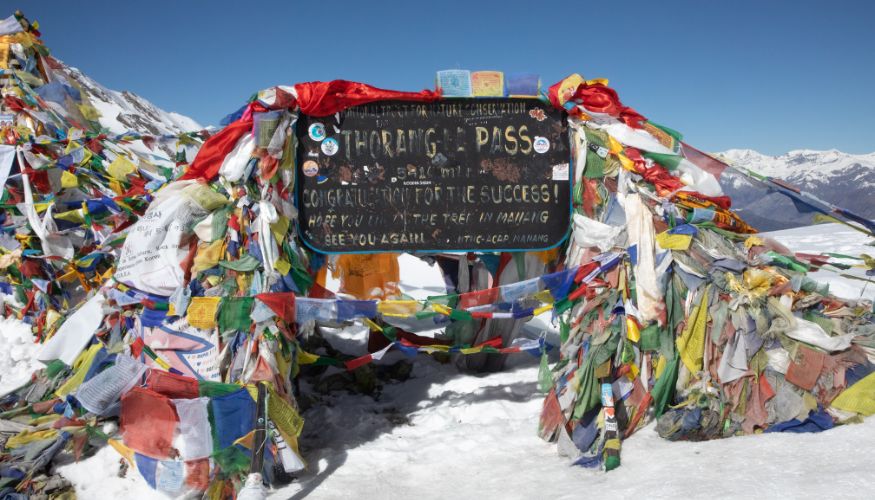
The difficulty varies depending on the conditions in different segments of the circuit. The lower sections tend to be easier with warmer weather and lower elevations. The altitude increases as your hike continues on to Manang, and the trail also becomes tougher. The day when you cross Thorong La Pass at 5,416 m (17,769 ft) is a challenge in itself, with thin air, cold and wind and also a long ascent.
Also, your experience can be very different from that of the other trekker. The difficulty of the Annapurna Circuit depends on your fitness, trekking experience, itinerary, acclimatization, weight of your rucksack, conditions and how well you cope with high altitudes. An easy-paced itinerary that allows time to acclimatize to the climbing altitude is much more sustainable than attempting it too soon.
This article covers the key considerations for the Annapurna Circuit Trek’s difficulty, such as walking distance, daily walking hours, altitude and elevation gain, and terrain and difficulty level for the sections of the trek that take you over Thorong La Pass.
Weather and road conditions during the spring and autumn seasons; suitability, fitness requirements, skills, acclimatization techniques, and pre-trekking planning.
How Difficult Is the Annapurna Circuit Trek?
Annapurna Circuit Trek is a moderately strenuous high-altitude trek. Days with longer walks, climbs, and descents, a variety of terrain types, and significant altitude gain, including the challenge at Thorong La Pass (5.416 m), are the main factors that determine its difficulty.
But it is quite a step up from shorter moderate treks and will not involve any technical climbing. The trek is manageable for most healthy, well-prepared trekkers with good fitness and proper acclimatization.
Annapurna Circuit Compared With Other Nepal Treks
| Trek | Difficulty | Highest Point | Main Challenge |
| Annapurna Circuit | Moderate to Challenging | 5,416 m | Thorong La with altitude |
| Annapurna Base Camp | Moderate | 4,130 m | Stairs with elevation |
| Everest Base Camp | Moderate to Challenging | 5,545 m | Altitude with long walking |
| Langtang Valley | Moderate | 4,984 m | Elevation gain with steep sections |
| Manaslu Circuit | Challenging | 5,106 m | Remote terrain with Larkya La |
What Makes the Annapurna Circuit Trek Difficult?
Due to its altitude, long walking days, steep ascents and descents, changeable terrain, unpredictable weather patterns, and a few road stretches, the Annapurna Circuit Trek is rated from moderate to strenuous.
The route gradually becomes more difficult as the trail ascends towards the Manang region and Thorong La Pass, at 5,416 m (17,769 ft), which is also the hardest part.
Thin air and frigid weather make uphill jaunts long climbs; the descent from the pass is only for those with the very best endurance and acclimatization. In general, it’s an arduous trekking trip but can be done for the well-prepared trekker with a good itinerary and steady pace.
Annapurna Circuit Trek Difficulty by Section
The difficulty of the Annapurna Circuit Trek varies from section to section. The lower route is usually less difficult, but as altitude increases, the trail becomes increasingly challenging as it climbs through Manang and Thorong Phedi toward Thorong La Pass. The altitude drops rapidly over the few miles from the pass, although after such a long descent there can still be a degree of physical fatigue.
Besisahar to Chame Difficulty
That is, the circuit is much higher than Besisahar to Chame, so this area’s generally an easier piece of the puzzle. The ascent is gradual, with villages, forests, rivers, and hills along the way. Your body becomes accustomed to back-to-back days of walking at this point, not high-altitude strife.
Chame to Pisang Difficulty
As the altitude increases, the walk from Chame to Pisang gets modestly more challenging. The walk involves a great deal of up and down; this part of the trail runs through forest that slowly turns to higher and higher peaks, becoming very mountainous. Though not at its harshest, altitude still takes a toll from the very first few hours of ascent, slowing both speed and endurance in equal measure.
Pisang to Manang Difficulty
Pisang to Manang is the more arduous part due to the altitude gain and the lengthy mountain walk. As you approach Manang, the scenery becomes drier and more alpine. The increased altitude means walking uphill becomes harder, so maintaining a set pace and ensuring proper acclimatization is critical.
Acclimatization in Manang
Acclimatization day in Manang is required before heading up high. Instead of just sitting there for a full day, trekkers can travel a short distance in the surrounding area, then return to Manang for another night. The idea is to get your body acclimatized and not be subjected to heavy physical work.
Manang to Yak Kharka Difficulty
Due to high altitude and cold weather, the journey from Manang to Yak Kharka is more strenuous. As you go higher, there is less oxygen available, so even short distances can get tiring at times. It is recommended to walk slowly and maintain a comfortable pace at this point.
Difficulty between Yak Kharka and Thorong Phedi
The walk from Yak Kharka to Thorong Phedi is a high-altitude trek where the dual effects of altitude and ever-increasing slope make it more strenuous. No less, trekkers are nearing the highest part of the circuit, so one should take the day slowly. Specific itineraries use Thorong Phedi, whereas others stay at High Camp for a shorter day of crossing the pass.
Thorong Phedi to Thorong La Pass Difficulties
The trek from Thorong Phedi to Thorong La Pass is usually the most difficult part of the Annapurna Circuit Trek. Trekkers rise early in the morning and continuously walk up towards the 5,416 m (17,769 ft) pass. Due to the high altitude, temperatures below 0 °C, and possible strong winds, this is a very strenuous climb. Upon reaching the pass, trekkers need to carry a large bag up towards Muktinath.
Thorong La to Muktinath Difficulty
The drop from Thorong La to Muktinath is a long and knee-killing descent. The trail ahead is dangerously steep and rocky, so be sure to choose your footing with care and take it one step at a time. While altitude issues subside as you descend, physical exhaustion can turn this into one of the hardest days of the hike.
Muktinath to Jomsom/Pokhara Difficulty
After Muktinath, the altitude-related difficulty decreases significantly as the route continues toward Jomsom and onward to Pokhara. The real surprise on this trek will be the changing environment, from the high alpine to the dry, arid Mustang, as well as the road sections. A few parts of the journey are walkable, and local transportation can be utilized by trekkers, most notably when considering their organizers.
Annapurna Circuit Trek Difficulty by Day
The difficulty of the Annapurna Circuit Trek varies from day to day as we progress from lower valleys to high-altitude mountain landscapes. Walking hours, distance covered, and altitude may vary given the exact itinerary, road conditions, walking speed, as well as when transportation is taken on different sections. There are no hard numbers here; the table below should provide a general guide.
| Day | Route | Approx. Elevation | Walking Hours | Difficulty | Main Challenge |
| Day 1 | Besisahar area | 760-1,000 m | 4-6 hrs | Easy to Moderate | Initial walking and lower trail |
| Day 2 | Besisahar to Chame | 2,670 m | 5-7 hrs | Moderate | Gradual elevation gain |
| Day 3 | Chame to Pisang | 3,200 m | 5-6 hrs | Moderate | Increasing altitude and uphill sections |
| Day 4 | Pisang to Manang | 3,540 m | 5-7 hrs | Moderate | Higher elevation and longer walking |
| Day 5 | Acclimatization in Manang | 3,540 m | 2-4 hrs | Easy to Moderate | Adapting to altitude |
| Day 6 | Manang to Yak Kharka | 4,050 m | 4-5 hrs | Moderate to Challenging | Thin air and elevation gain |
| Day 7 | Yak Kharka to Thorong Phedi | 4,450 m | 4-5 hrs | Challenging | High-altitude walking |
| Day 8 | Thorong Phedi to Thorong La to Muktinath | 5,416 m to 3,800 m | 7-10 hrs | Very Challenging | Long ascent, high altitude and descent |
| Day 9 | Muktinath to Jomsom | 2,720 m | 5-7 hrs | Moderate | Long walking and road sections |
| Day 10 | Jomsom to Pokhara | 820 m | – | Easy | Transportation rather than trekking |
To summarize, the Thorong La Pass crossing is generally the hardest day, although after Manang the trek gets gradually more difficult because of the increasing altitude. Whilst the lower sections are generally easier walking, back-to-back days will take their toll. Trekking hours, then, should be viewed as estimates at best, especially as many modern Annapurna Circuit itineraries mix walking with road travel.
How Difficult Is Thorong La Pass?
For most trekkers, the hardest section of an Annapurna Circuit Trek is over Thorong La Pass due to its high altitude of 5,416 m, with a long, steep uphill climb in thin air on a cool, granitic slope, followed by another equally perilous, rapid descent down a very steep, forested hillside.
Most trekkers start the cross from Thorong Phedi or High Camp around 4:00-5:00 AM and take, on average, 7-10 hours to reach the top of the pass and walk down to Muktinath, depending on the itinerary, your pace, weather conditions, and trail conditions.
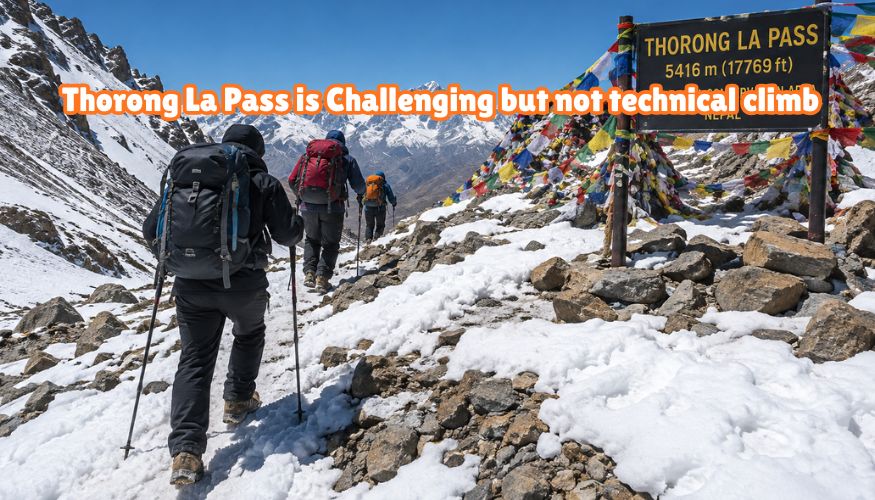
It is not technical climbing we have been doing, but a long, moderate ascent that feels much harder at altitude. Cold or snowy days can make the trail much more difficult as well, with snow and ice. Thorong La is not a technical mountaineering high mountain pass; nonetheless, it can be dangerous without prior acclimatization or in poor weather conditions.
To cross it safely and successfully, you need to ensure good endurance, wear the right clothes, wear the right shoes, set a controlled pace and start very early.
Annapurna Circuit Trek Difficulty for Different Types of Trekkers
The Annapurna Circuit Trek can be suitable for several kinds of trekkers when organized according to their health, fitness level, acclimatization and itinerary.
However, if you train for the trek and know where to slow it down, it is entirely doable for new or less experienced trekkers. While this may be easy for some seasoned trekkers, it requires adequate preparation to trek solo at high altitude.
Assessments for older trekkers, women, families and teenagers should be based on fitness and health rather than age or gender. Everyone benefits from proper acclimatization and a realistic itinerary.
If you are a first-timer and want to know full details, read our blog here: Annapurna Circuit Trek For Beginners
How Fit Do You Need to Be for the Annapurna Circuit?
The Annapurna Circuit Trek demands a moderate level of fitness but not elite-level athleticism. Above all, it will help to have good cardio endurance, strong legs, and a core that can walk for hours on consecutive days.
Have experience hiking uphill and downhill on uneven terrain with a daypack. In the lead-up to the trek, training should progressively increase walking distance, stair climbing, and uphill walking.
Although a conditioning program does not prevent altitude sickness, it is best combined with proper acclimatization and an appropriate itinerary.
How to Make the Annapurna Circuit Trek Easier
You can make the Annapurna Circuit Trek easier by choosing a suitable itinerary, allowing enough acclimatization days, walking at a steady pace, taking regular breaks, and staying hydrated and well-fed.
Also, Packing light, using trekking poles, wearing proper footwear, and hiring a guide or porter can further reduce physical strain. Stay flexible and make your plan based on your health, weather, altitude, and trail conditions.
Read More about the best season: Best Time for Annapurna Circuit Trek
What to Pack for the Annapurna Circuit Based on Difficulty
Bringing the right equipment can limit how much strain you put on your body and prepare you for when it gets cold, when you’re changing elevation, walking uneven trails, or facing changing weather patterns like rain snow/hail/lighting along the Annapurna Circuit.
Stability comes from trekking boots and poles, while layering up with clothing, sleeping wear for warmth, gloves, and a hat is needed to handle cold temperatures.
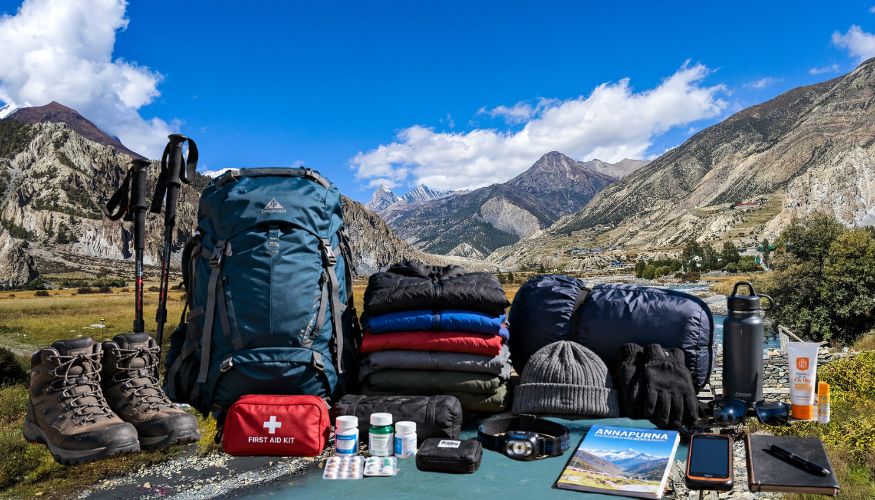
Higher altitudes call for sunglasses, sun protection, and a top hydration system. Then pack a light backpack, a headlamp, double first-aid supplies with personal medication, and safety and navigation essentials that also enhance comfort.
Bring the right items to consider for high-altitude sections, and do not rely on your gear instead of acclimatizing before you experience altitude.
Annapurna Circuit Trek Difficulty and Daily Walking Distance
Depending on your chosen itinerary, roads, and starting point, expect to walk 10-18 km per day. The duration of each day of trekking is usually around 4-8 hours, though some days may be longer at the Thorong La crossing.
Acclimatization days and the higher-altitude portions tend to be shorter, while some of the lower or pass-crossing days can be much longer. Distance doesn’t define difficulty, however: there are many other aspects, such as elevation gain, steepness of the tracks, terrain type, and total number of footfalls.
Distance walked high above sea level may dry you out in ways that a longer hike will never come close to. Elevation gain and terrain need to be factored in; rocky trails, stone steps, snow and steep climbs or descents all slow you down.
| Factor | Typical Impact on Difficulty |
| Average Daily Distance | About 10-18 km, depending on itinerary and transport |
| Average Walking Hours | Around 4-8 hours per day |
| Longest Walking Days | Thorong La crossing and some longer itinerary days |
| Shortest Walking Days | Acclimatization and selected higher-altitude days |
| Distance Alone | Does not fully indicate difficulty |
| Elevation Gain | Higher gains generally require more physical effort |
| Terrain | Rocky, steep, uneven, or snowy trails slow walking speed |
| Altitude | Thin air makes walking more difficult at higher elevations |
Is the Annapurna Circuit Trek Dangerous?
The Annapurna Circuit Trek is a challenging trek, but not dangerous in the right hands when planned and acclimatized.
Altitude sickness, extreme climate conditions, snow and ice on paths, slippery terrain or uneven trails, falls, dehydration and exhaustion, as well as traffic by vehicles on roads & landslides in affected areas.
Staying hydrated, checking the weather forecast, using proper gear, allowing adequate time for acclimatization and avoiding unnecessary risks are some of the ways to help decrease these dangers. Serious symptoms, extreme fatigue, or dangerous conditions10 If trekkers develop serious symptoms, they should stop.
They should descend quickly if altitude-related symptoms worsen. It is highly advisable to purchase travel insurance for the trek, including emergency evacuation coverage, as helicopter evacuation will likely be needed in serious situations.
FAQs
Is the Annapurna Circuit Trek difficult?
The Annapurna Circuit Trek is generally moderate to challenging. The main difficulty is crossing Thorong La Pass at 5,416 m.
Is Annapurna Circuit harder than Everest Base Camp?
Both are challenging, but the Annapurna Circuit has a major high-altitude pass at 5,416 m (17,769 ft). Difficulty depends on the itinerary.
Is Annapurna Circuit suitable for beginners?
Yes. Beginners can complete the trek with good preparation, proper acclimatization, a suitable itinerary, and a steady pace.
How fit do you need to be for Annapurna Circuit?
A moderate level of fitness is recommended. You should be comfortable walking uphill and downhill for several hours on consecutive days.
What is hardest part of the Annapurna Circuit?
Crossing Thorong La Pass is generally the hardest section because of the high altitude, long ascent, cold, wind, and steep descent.
Is Thorong La Pass difficult?
Yes. At 5,416 m, the thin air makes the climb physically demanding.
How many hours do you walk each day?
Most walking days involve around 4-8 hours of walking.
How much elevation do you gain each day?
Elevation gain varies by itinerary. A typical day may involve several hundred meters of ascent, with gradual overall elevation gain toward Manang and Thorong Phedi.
Can beginners cross Thorong La Pass?
Yes, beginners can cross Thorong La if they are adequately prepared, properly acclimatized and physically fit.
Is Annapurna Circuit harder in winter?
Yes. Winter can make the trek more difficult because of cold temperatures, snow, ice, shorter daylight, and potentially difficult conditions around Thorong La.
Can older people do the Annapurna Circuit?
Yes, senior citizens can do the Annapurna Circuit Trek, but fitness, overall health, acclimatization, walking pace, preparation, and a suitable itinerary are more important factors.
Do you need previous trekking experience?
No. If you have Previous trekking experience, it is helpful but not essential.
How long should you train before the trek?
Around 8-12 weeks of consistent training is a practical target for many trekkers. Focus on cardiovascular fitness, leg strength, uphill and downhill walking, and longer walks.
Can you do the Annapurna Circuit without a guide?
It is possible to trek independently in some circumstances, but route planning, weather, altitude, transportation, and changing trail conditions should be considered carefully.
What happens if you cannot cross Thorong La?
If conditions or your health make the crossing unsafe, do not force it. You may need to wait for better conditions, return to a lower elevation, or adjust your itinerary with help from your guide or local trekking staff.
How can I make the Annapurna Circuit easier?
Choose a gradual itinerary, allow enough acclimatization, train beforehand, carry a manageable backpack, use trekking poles, stay hydrated and avoid rushing the high-altitude sections.
Conclusion
The Annapurna Circuit Trek is moderate to challenging, with difficulty increasing as the route reaches higher elevations. Long walking days, steep climbs and descents, changing terrain, weather, and altitude are the main challenges, while Thorong La Pass at 5,416 m is usually the toughest section.
Proper acclimatization is essential because fitness alone does not prevent altitude-related problems. With adequate training, suitable gear, a realistic itinerary, and a controlled pace, even beginners can complete the trek. The most practical approach is to plan the route around your own fitness and ability rather than trying to complete it as quickly as possible.