
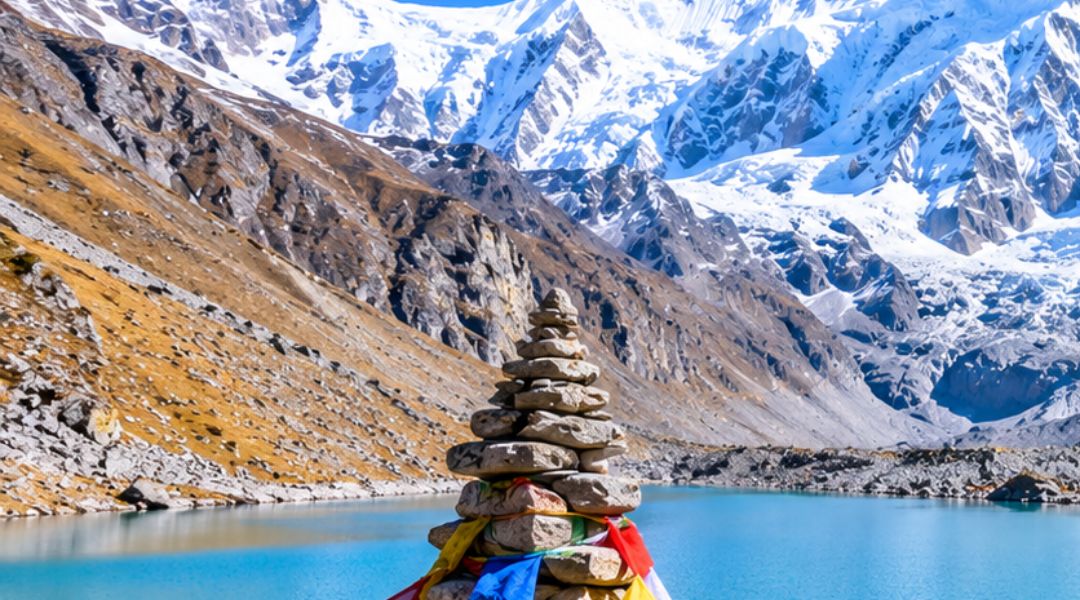
North ABC Trek
TripAdvisor Reviews Recommended by 99.99% travelers
Before we get into the North ABC Trek, let’s talk about the classic Annapurna Base Camp Trek first. It is one of Nepal’s most popular trekking routes and it’s not hard to see why. The mountain views are incredible, the trails are well established and teahouses are so easily available along the way. But during peak trekking seasons, the trails can get crowded and finding a room might be difficult. For those who prefer fewer people and a little more solitude, there’s another side of Annapurna you might want to explore.
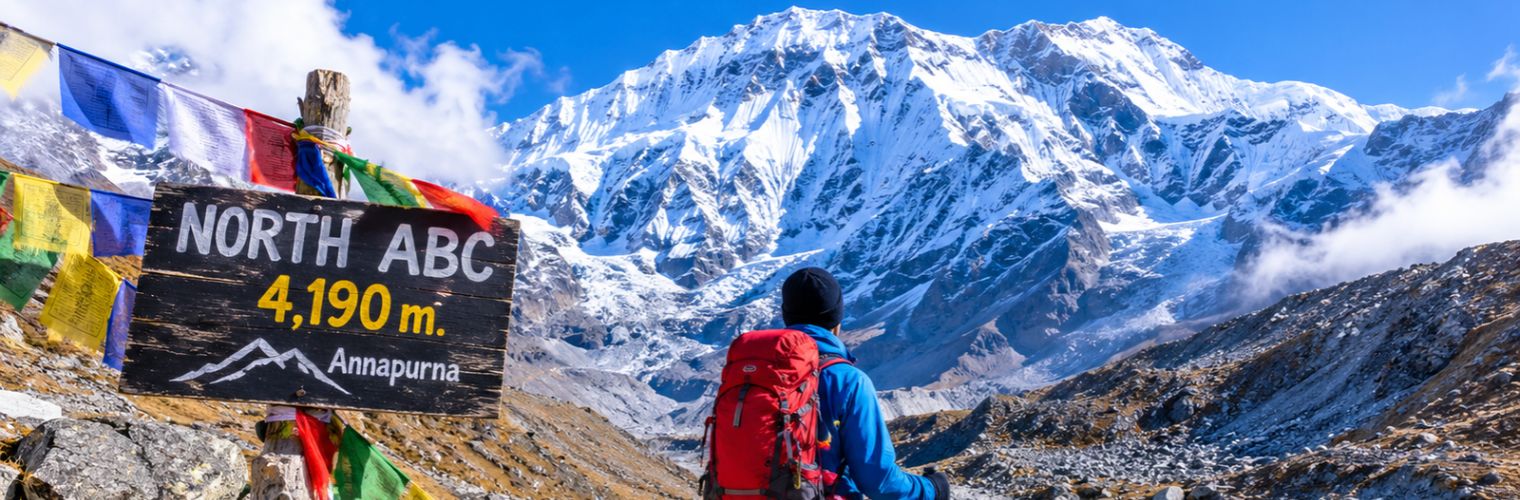
Our 9 Days North Annapurna Base Camp Trek package takes you along the historic Maurice Herzog Trail to the northern side of Annapurna I (8,091 m). We begin the journey in Kathmandu and travel to Pokhara before driving through Tatopani to Humkhola, where the actual trek starts. Over the next few days, you will walk through the Miristi Khola valley, past waterfalls, rocky trails and Bhusket Mela, eventually reaching Panchakunda Lake and North Annapurna Base Camp at around 4,190 metres.
At Eco Nepal Trekkers, we have planned this itinerary to make the journey manageable for travellers with different levels of trekking experience. If you’re new to high-altitude trekking or travelling with family, we recommend adding extra days for acclimatization and a more comfortable descent.
Book your North Annapurna Base Camp Trek with us and enjoy the journey with our friendly, experienced guides, who will be there to help you along the way.
USD 1350
Nepal
9 Days
Moderate
4,190 meters at North ABC
Hotel/Teahouses/Lodge/Tent
Private Vehicle/Local Bus/Flight
1-20
Spring (Mar-may) & Autumn (Sep-Nov)
- Reach North Annapurna Base Camp (4,190 m) and see the enormous northern face of Annapurna I (8,091 m) right in front of you.
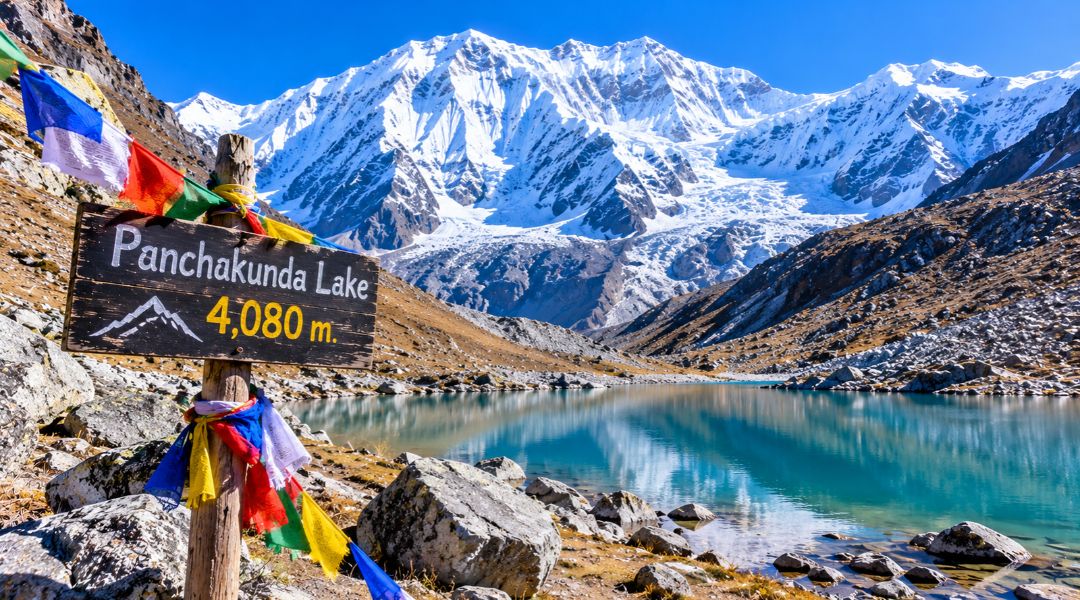
- Visit Panchakunda (4,050 m), a group of sacred high altitude lakes that hold importance for both Hindu and Buddhist communities.
- Walk along the Maurice Herzog Trail, the historic route associated with the French expedition that first climbed Annapurna I in 1950.
- Get views of Nilgiri, Tilicho Peak, Bharha Chuli and Khangsar Kang on clear days from different parts of the trail.
- Visit Narchyang, a Magar village in Myagdi, and see the traditional houses and terraced farms before the trek begins.
- Follow the Miristi Khola past waterfalls and forest trails before the route reaches the rocky upper valley.
- Stay at Bhusket Mela and Panchakunda, where you will find basic seasonal shelters or campsites instead of the usual teahouses.
- Relax in the natural hot springs at the Tatopani hot springs after the trek.
North ABC Trek Overview
The North ABC Trek takes you to the northern face of Annapurna I (8,091 m), the world’s tenth highest mountain. Located in the Myagdi district within the Annapurna Conservation Area, the trek reaches an altitude of approximately 4,190 metres. Our 9-day package begins trekking from Humkhola (2,890 m), with around 4 to 7 hours of walking on most trekking days.
Around Narchyang, you will come across Magar village, terraced fields and hillsides covered with stunning rhododendron forests. From Humkhola, the trail follows the Miristi Khola valley towards Sadi Kharka, passing waterfalls, streams and forested sections. As you head towards Bhusket Mela, the trees gradually thin out, and the surroundings become more open and rocky. By the time you reach Panchakunda Lake and North Annapurna Base Camp, you will be surrounded by steep mountain walls and glacial terrain with views of Annapurna I, Nilgiri, Tilicho Peak, Bharha Chuli and Khangsar Kang.
Annapurna Base Camp Trek: South vs North
Both treks are in Nepal’s Annapurna region, and neither is better than the other. It’s just that each has its own vibe and offers a completely different trekking experience even though both take you to the base of the same mountain.
The South Annapurna Base Camp (4,130 m) is the one most trekkers already know as the classic Annapurna Base Camp Trek. You might not have heard it called South ABC before, but it’s the same popular trek. The route follows the Modi Khola valley through villages such as Ghandruk and Chhomrong before reaching the Annapurna Sanctuary. you will see Annapurna South, Machhapuchhre, Hiunchuli and Annapurna I along the way. Teahouses are available throughout the trek, so finding meals and accommodation is relatively easy.
The North Annapurna Base Camp (4,190 m) is on the opposite side of Annapurna I, in the Myagdi district. Instead of the Modi Khola valley, the route follows the Miristi Khola valley from Humkhola towards Panchakunda. The main attraction is the northern face of Annapurna I, with far fewer trekkers than the southern route. There are no permanent teahouses all the way to base camp, so you will need to rely on basic seasonal shelters or camping arrangements.
How much does Annapurna North Base Camp Trek Cost in 2026/27?
The North Annapurna Base Camp Trek cost in 2026/27 is USD 1100 per person with Eco Nepal Trekkers. You can check out what is included in our Cost Includes and Excludes section. Our costs are transparent, so you can prepare your budget accordingly and know what you’re paying for.
you will also need to keep some extra money for personal expenses such as your Nepal visa, travel insurance, drinks, snacks, tips for guides and porters, and any additional hotel stays. These expenses are not usually covered by the package price, so it’s better to plan for them before the trek.
Can travellers customise their North ABC trek package with Eco Nepal Trekkers?
Yes, at Eco Nepal Trekkers, we can make changes to the North ABC Trek packages depending on how you want to trek. Depending on your available time, the itinerary can be extended or adjusted. You can also choose different arrangements according to your budget.
If you have enough time, you can add other treks in the Annapurna region such as Mardi Himal, Ghorepani Poon Hill or Khopra Danda. And if you don’t have much time, there are shorter hiking options too. The Annapurna region has treks ranging from 2 to 3 days to more than 2 weeks with different routes and difficulty levels.
Why Eco Nepal Trekkers for North Annapurna Base Camp Trek?
let’s see why you should choose Eco Nepal Trekkers for your North ABC Trek:
- Experienced Trekking Guides: Our guides are trained, well-equipped and familiar with the North ABC route. They know how to handle difficult situations and help you throughout the trek.
- Decades of Trekking Experience: We have been organising treks in the Annapurna region for decades, including the North ABC route.
- Flexible Itinerary: Our North ABC Trek itinerary is well-planned, but you can also customise it according to your available time and preferences.
- All-Inclusive Package: Our package covers trekking permits, guides, porters, meals and accommodation, so you don’t have to arrange everything separately.
- Responsible Trekking: We promote eco-friendly trekking practices and support local communities by working with local guides, porters & service providers.
- 1:2 Guide-to-Client Ratio: We provide one guide for every two trekkers, so you can get more personal assistance during the trek.
Whom this trek is suitable for?
North Annapurna Base Camp is a good choice for people who hate trekking on crowded trails. Unlike the popular Annapurna Base Camp route, you won’t come across large groups of trekkers here. The trek is also relatively short and can be completed in about a week.
It’s a good option for solo travellers, adventure trekkers and people who have already done popular treks in Nepal and want to try something different. However, don’t mistake a shorter trek for an easier one. The route has steep climbs, basic accommodation and fewer facilities along the way. you will also reach 4,190 metres in a short time, so previous trekking experience and good physical fitness are helpful. If you’re a complete beginner, we’d recommend adding extra days rather than rushing through the itinerary.
What to Pack for North Annapurna Base Camp Trek?
You don’t need to carry too many clothes, but you do need proper equipment for walking and sleeping above 3,500 metres. Here’s what you should pack for the trek:
Clothing
- Thermal tops and bottoms for cold mornings and nights
- Down jacket and fleece jacket
- Waterproof jacket and trousers
- 2 to 3 pairs of trekking trousers and shirts
- Warm gloves, woollen hat and extra socks
- Comfortable clothes for sleeping
Footwear and Trekking Gear
- Waterproof trekking boots with good grip
- Trekking poles for rocky trails and downhill sections
- Daypack for water, snacks and personal items
- Headlamp with spare batteries
- Rain cover for your backpack
Camping and Personal Essentials
- Sleeping bag suitable for temperatures below freezing
- Reusable water bottles and water purification tablets or a filter
- Sunscreen, sunglasses and lip balm
- Toilet paper, wet wipes and hand sanitiser
- Personal medicines and a small first aid kit
- Power bank, charging cables and offline maps
- Chocolates, energy bars or dry fruits for walking days
North ABC Trek Short Itinerary
- Day 01: Arrival at Tribhuvan International Airport, Kathmandu and transfer to the hotel (1,400 m).
- Day 02: Drive or fly from Kathmandu to Pokhara (822 m).
- Day 03: Drive from Pokhara to Tatopani and continue to Humkhola (2,890 m).
- Day 04: Trek from Humkhola to Bhusket Mela (3,650 m).
- Day 05: Trek from Bhusket Mela to Panchakunda Campsite (4,050 m).
- Day 06: Trek from Panchakunda Campsite to North Annapurna Base Camp (4,190 m) & drive back to Tatopani.
- Day 07: Drive from Tatopani to Pokhara (822 m).
- Day 08: Pokhara to Kathmandu
- Day 09: Final Departure
Customize your trekking package in Nepal with our local experts, tailored to your time, budget, and adventure level.
Detailed Itinerary
Day 01: Arrival at Tribhuvan International Airport, Kathmandu and transfer to the hotel (1,400 m).
Once you arrive at Tribhuvan International Airport, our representative will be waiting outside the arrival terminal to pick you up. From the airport, we will take you to your hotel in Kathmandu. We will discuss the North ABC itinerary and check whether you have all the necessary trekking equipment. If you need to buy or rent anything, you can find trekking gear shops around Thamel.
Day 02: Drive or fly from Kathmandu to Pokhara (822 m).
Today, you will be heading to Pokhara. You can either take a tourist bus which takes around 7 to 9 hours, or a domestic flight of like approx 25 to 30 minutes. If you’re taking the bus, you will travel along the Prithvi Highway, passing Malekhu, Mugling & Damauli. Much of the road follows the Trishuli and Marsyangdi river valleys. There are restaurants along the highway where you stop for lunch. Once you reach Pokhara, make sure to get enough rest, as tomorrow you will be travelling onwards.
Day 03: Drive from Pokhara to Tatopani and continue to Humkhola (2,890 m).
After breakfast, you will drive towards Humkhola. The journey takes around 5 to 7 hours. First, you will drive through Kushma and Beni before reaching Tatopani in Myagdi. From there, the road continues towards Narchyang, a beautiful Magar village. You will pass this village and continue towards Humkhola along the Miristi Khola valley.
The road after Narchyang is rough with narrow sections& loose stones. This is the part where you will notice a big difference from the highway. After reaching Humkhola, our team will arrange your accommodation and dinner.
Day 04: Trek from Humkhola to Bhusket Mela (3,650 m).
Finally, the walking part of the trek begins. After breakfast at Humkhola, you will head towards Bhusket Mela, which is at around 3,650 metres. you will pass futfutey waterfall (jharana) and small rivers before reaching the Sandhikharka area at approximately 3,160 metres. Most parts of the trail have stone steps, narrow and uneven paths. After Sandhikharka, the climb continues towards Bhusket Mela. At Bhusket Mela, our team will prepare dinner and arrange your camping accommodation.
Day 05: Trek from Bhusket Mela to Panchakunda Campsite (4,050 m).
You will have a warm breakfast at Bhusket Mela before leaving for Panchakunda, which is around 400 metres higher than yesterday’s campsite. There aren’t many trees along this section. Instead, you will be walking over rocky ground and loose stones, with mountain slopes on either side. The trail becomes more difficult in places, so trekking poles is going to be very useful, particularly on the uneven sections.
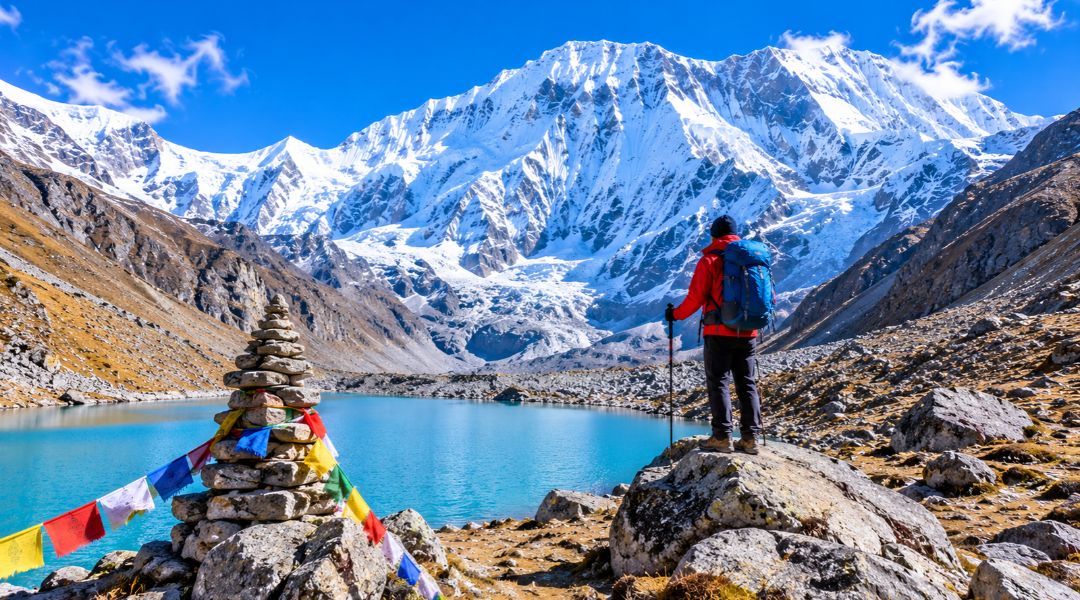
After around 4 to 5 hours, you will reach the Panchakunda area at approximately 4,050 metres. Panchakunda (Narchyang lake ) is known for its sacred lakes, with turquoise-blue water surrounded by rocky mountain slopes. You will be camping close to the lake area. Annapurna Base Camp is also much closer from here, like only a half an hour hike. Our crew will prepare your meals at the campsite. You will spend the night at the campsite.
Day 06: Trek from Panchakunda Campsite to North Annapurna Base Camp (4,190 m) & drive back to Tatopani.
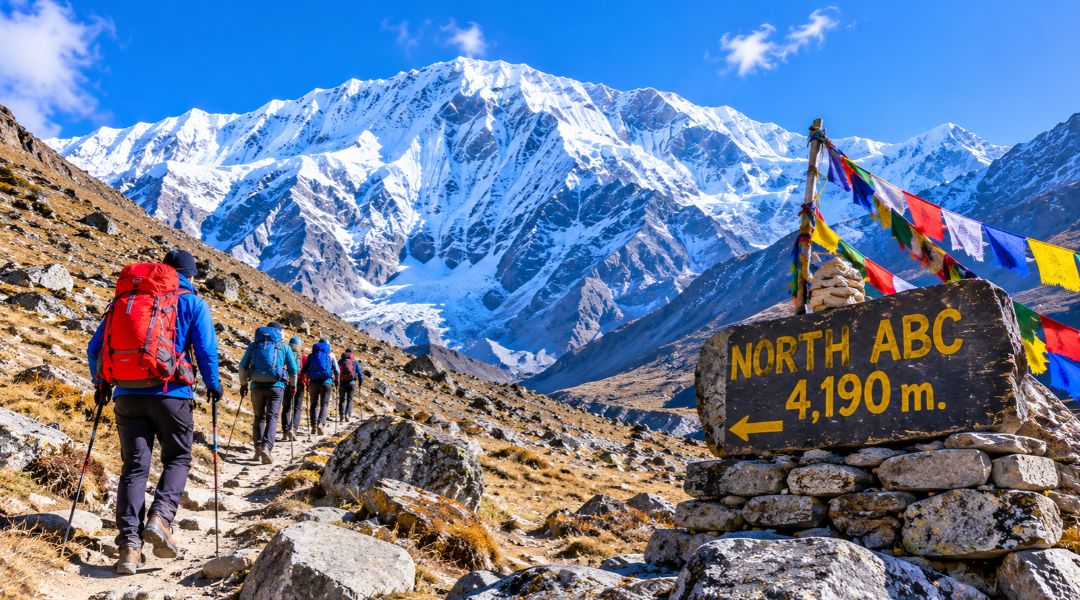
This is the day you have been waiting for. You will wake up early at Panchakunda, have breakfast and begin the final walk towards North Annapurna Base Camp. The route passes through rocky ground and glacial moraine. From the base camp, you will see the enormous stunning northern face of Annapurna I (8,091 m). This is the same side of the mountain where Maurice Herzog and Louis Lachenal made the first successful ascent of Annapurna I in 1950.
After spending some time at base camp, you will head back towards Panchakunda. From there, the return route follows the same trail past Bhusket Mela and Sandhikharka to Humkhola. Once you reach Humkhola, the planned jeep transfer takes you back through Narchyang to Tatopani. you will stay overnight in Tatopani, which is known for its natural hot springs.
Day 07: Drive from Tatopani to Pokhara (822 m).
After breakfast at Tatopani, you will take a jeep back to Pokhara. The drive follows the Kali Gandaki valley towards Beni and continues through Kushma. It takes approximately 4 to 5 hours to reach Pokhara. You have the rest of the day to yourself. You can spend the afternoon around Lakeside or simply rest after the trek.
Day 08: Pokhara to Kathmandu
Today, you will return to Kathmandu. If you’re travelling by bus, the journey takes around 7 to 9 hours along the Prithvi Highway. You can also choose a domestic flight, which takes approximately 25 to 30 minutes.
Day 09: Final Departure
It’s time to say goodbye to Nepal. Our representative will pick you up from the hotel and take you to Tribhuvan International Airport at least three hours before your flight. If you plan to stay longer in Nepal, you can also discuss additional trips with our team.
Cost Includes
- Airport pick-up and drop-off by private car/hiace/, or bus, depending on group size.
- 2 nights at a Three-star hotel in Kathmandu on a sharing basis with breakfast
- Kathmandu to Pokhara and Return, Kathmandu Transportation by VIP tourist bus
- 2 nights at a 3-star hotel in Pokhara on a sharing basis with breakfast
- Transportation from Pokhara to Tatopani and Return, Tatopani to Pokhara
- Three Meals a day during the trek, including Breakfast, Lunch, and Dinner.
- 3 cups of tea or coffee during the trek
- Every night, Seasonal fruits after dinner during the trek
- Annapurna Conservation Area Permit (ACAP) and TIMS Card (Trekkers’ Information Management System) Fees.
- An experienced government-licensed trekking guide.
- A porter will be available during the trek to carry your luggage (one porter assists two clients).
- All Tea House accommodations during the Trek
- All transportation as per the itinerary
- Farewell dinner in Kathmandu after finishing the trek
- Achievement Certificate after completing the Trek
- All expenses related to the Guide and Porter (including wages, accommodation, meals, gear, insurance, and required medications) will be covered.
- First Aid Box during the trek
- Eco Nepal Trekkers’ Duffel bag is available and can be returned after the trek
- Helicopter rescue services are available during the trek and must be paid for by your travel insurance company.
- All government-related taxes and VAT, with Office charges
Cost Excludes
- Nepal entry visa fee
- The international flight fare and airport departure tax
- Travel insurance, including high-altitude emergency evacuation coverage
- Your Gear And Equipment for Trekking
- Lunch and dinner meals in Kathmandu and Pokhara
- Your expenses such as hot showers, WiFi, bar and beverage bills, alcoholic drinks, Mineral water, hot water, and telephones during the trek
- Tips for your Trekking Guide & Porter
Good To Know
North ABC Trek Permits and Travel Insurance
To trek to North Annapurna Base Camp, you will need an Annapurna Conservation Area Permit (ACAP) and a TIMS card. These permits are included in our North ABC Trek package and we will arrange them for you. All we need from you is a copy of your passport and passport-sized photographs.
However, travel insurance is something you will need to arrange on your own. Since the trek takes you up to 4,190 metres, make sure your insurance covers high-altitude trekking, medical treatment and emergency helicopter evacuation. Not all travel insurance policies cover trekking at this height, so it’s better to check with your insurance company before buying one.
Best Time for North Annapurna Base Camp Trek
The North Annapurna Base Camp Trek can be done throughout a year. But that doesn’t mean every month has the same weather, trail conditions or trekking experience. That’s why we recommend spring (March to May) and autumn (September to November).
During spring, the weather starts getting warmer around Humkhola and the lower forest trails. April and May are particularly good months, although clouds can cover the mountains by afternoon. Autumn is a little different. October and early November usually have clearer mornings, which is great when you’re heading towards Panchakunda and North ABC. But don’t expect warm mornings at 4,000 metres. Temperatures around the upper campsite can drop to roughly -5°C to -10°C on cold autumn nights and early mornings. So even if it’s sunny during the day, you will still need proper warm clothes.
As for the other months, you need to be careful. June to August brings heavy rainfall around Tatopani and Humkhola, and the road and forest trails can become muddy or affected by landslides. Winter, especially December to February, can bring snow and ice around Panchakunda and the base camp. The route may even become inaccessible.
Meals and Accomodation during North Annapurna Base Camp trek
Our package includes breakfast, lunch and dinner every day. Around Humkhola, you may find small local teahouses serving dal bhat, noodles, eggs and tea/coffee. But once you leave Humkhola, there aren’t restaurants along the trail. Our trekking crew carries the necessary food supplies and prepares meals at the campsites.
For breakfast, you will usually have eggs, porridge, chapati or bread with tea or coffee. Lunch and dinner include dal bhat, fried rice, vegetable curry, potatoes, noodle soup or pasta. The menu won’t be as extensive as on the regular Annapurna Base Camp route, but you will have proper meals throughout the trek. If you’re vegetarian or have any food allergies, let us know before the trip.
For accommodation, you will stay in basic local lodges at Humkhola. At Bhusket Mela (3,650 m) and Panchakunda (4,050 m), our team arranges camping accommodation with tents and sleeping arrangements. There are no private bathrooms, hot showers or electricity at these campsites. you will need to bring a warm sleeping bag, as nights at these elevations can get very col
One thing we’d suggest is carrying your favourite chocolates, energy bars or dry fruits. We provide the main meals, but having something small to eat in between is necessary for your energy, especially on the longer walking days.
Annapurna North Base Camp trek Difficulty
The North Annapurna Base Camp Trek is a moderately difficult to challenging trek. The main difficulty is gaining altitude in a short time. You start walking from Humkhola (2,890 m) and reach North ABC (4,190 m) within a few trekking days. That’s a considerable height gain without much time for acclimatization.
From Humkhola to Bhusket Mela, you will walk uphill through forest trails and uneven sections. Above Bhusket Mela, the route becomes more rocky and exposed as you head towards Panchakunda. you will also need to walk on loose stones and cross streams along the way. The final section towards North ABC can be particularly tiring because you’re already above 4,000 metres.
Altitude Sickness and Remedies during North ABC Trek
Headache, nausea, dizziness, loss of appetite and unusual tiredness are some of the early signs of altitude sickness. If you notice any of these symptoms during the North ABC Trek, inform your guide immediately. Don’t ignore a headache or force yourself to continue towards Panchakunda or base camp. If symptoms develop, stop ascending and rest. If they worsen or fail to improve, descend to a lower altitude.
To reduce the risk, drink enough water, eat proper meals and avoid alcohol during the trek. More importantly, give your body enough time to adjust to the altitude. You can also consult your doctor about taking Diamox (acetazolamide) before the trek. Remember, medication doesn’t replace acclimatization and severe symptoms such as difficulty walking or breathlessness at rest require immediate descent and emergency medical assistance.
Drinking Water and Toilet Facilities During North ABC Trek
you will need to carry drinking water while walking between campsites. Our trekking team can help arrange water for the trek, but water collected from streams or other natural sources must be properly filtered, boiled or treated before drinking. Don’t drink directly from the Miristi Khola or smaller streams even if the water looks clean.
Toilet facilities are basic along this route. There are no attached bathrooms or flush toilets like those found at established teahouses on the South ABC route. Carry toilet paper, hand sanitiser and your personal hygiene supplies.
Mobile Network, Internet and Electricity During North ABC Trek
Mobile coverage is unreliable once you leave the lower villages around Narchyang and Humkhola. You shouldn’t expect to make phone calls or use mobile data regularly around Bhusket Mela, Panchakunda or North ABC.
Electricity is also unavailable at the higher campsites, so charge your phone, camera and power bank before starting the trek. Download offline maps and keep important contact numbers saved on your phone. Don’t depend on mobile internet for navigation or emergency communication.
Dates of Trip
Frequently Asked Questions
Client Reviews
Write Review


 Top Rated Service


Similar Packages
USD 1950
06 Days
Heli Tours
Easy

USD 1280
13 Days
Trekking in Nepal
Moderate
USD 800
12 Days
Trekking in Nepal
Moderate