Upper Mustang Trek
TripAdvisor Reviews Recommended by 99.99% travelers
Imagine a place where the landscapes look nothing like the usual trekking trails in Nepal. Well, that’s Upper Mustang, also known as the Forbidden Kingdom. Once closed to foreign visitors, this restricted region is now one of Nepal’s most interesting trekking destinations, especially for those who love adventure and history.
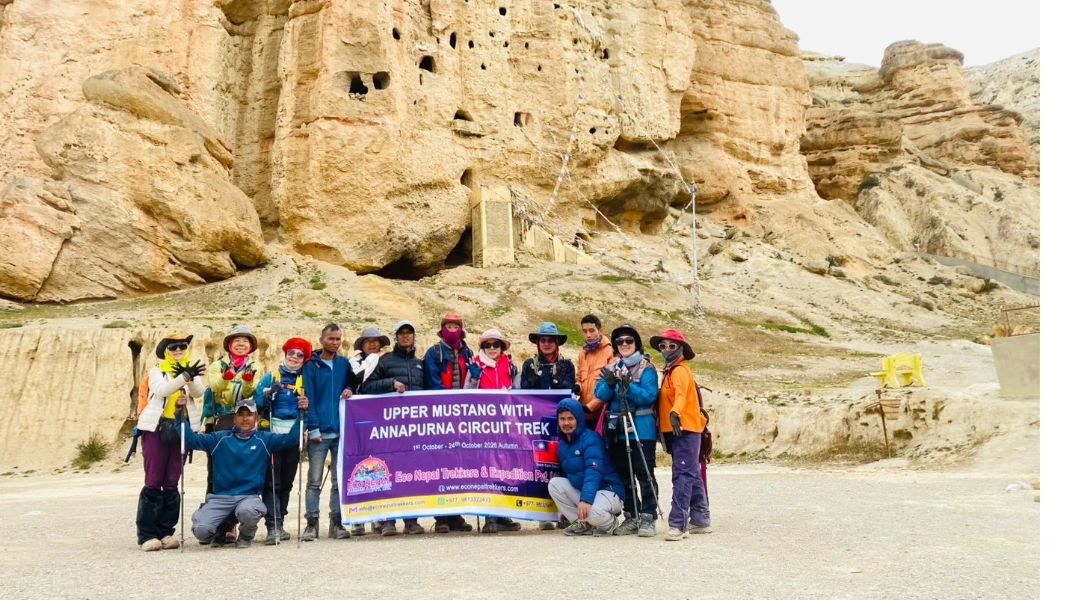
At Eco Nepal Trekkers, our 15 Days Upper Mustang Trek takes you through traditional villages, dry valleys, colourful cliffs and ancient Buddhist monasteries. Along the way, you will get to see how people live in this remote region of Nepal. You will also explore the old walled city of Lo Manthang and learn about the local culture, which has strong Tibetan influences.
And here’s another interesting thing about the Upper Mustang. The region lies in the rain shadow of the Annapurna and Dhaulagiri ranges. This means it receives less rainfall than most trekking regions in Nepal, making it possible to trek here even during the monsoon season. So, if you want to see a different side of Nepal beyond the usual Himalayan trails, why not explore the Upper Mustang with us?
USD 3000
Nepal
15 Days
Moderate
at Lo Manthang (3,810 m)
Hotel/Lodge/Teahouse
Tourist bus/Domestic Flight
Min. 2 pax - Mix. 25 pax
Spring (Mar-may) & Autumn (Sep-Nov)
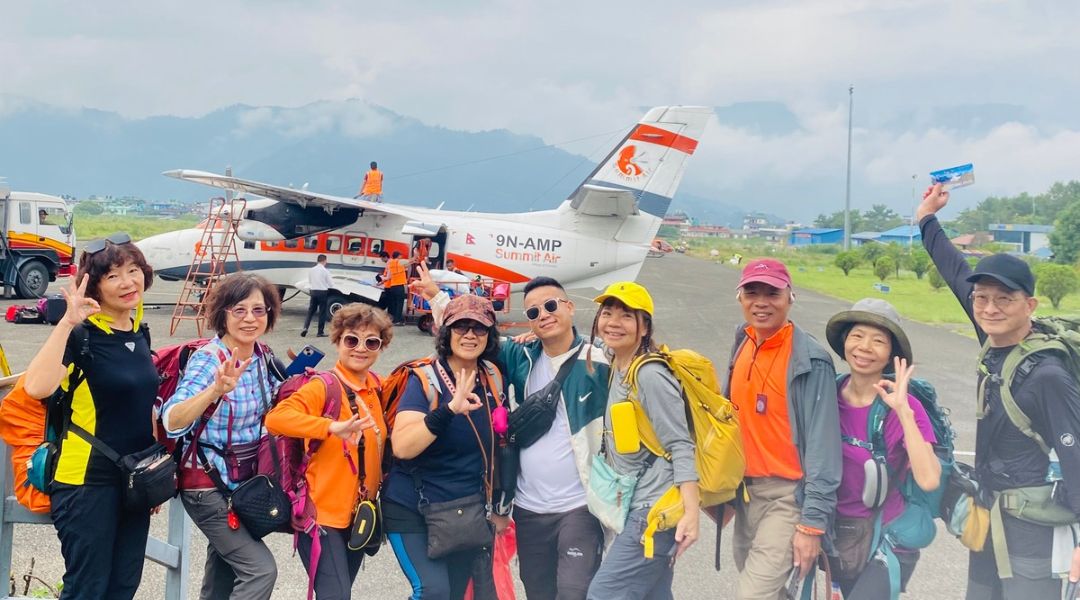
- An early morning flight from Pokhara to Jomsom with views of Annapurna and Dhaulagiri.
- The old village of Kagbeni with its narrow stone alleys and traditional mud houses.
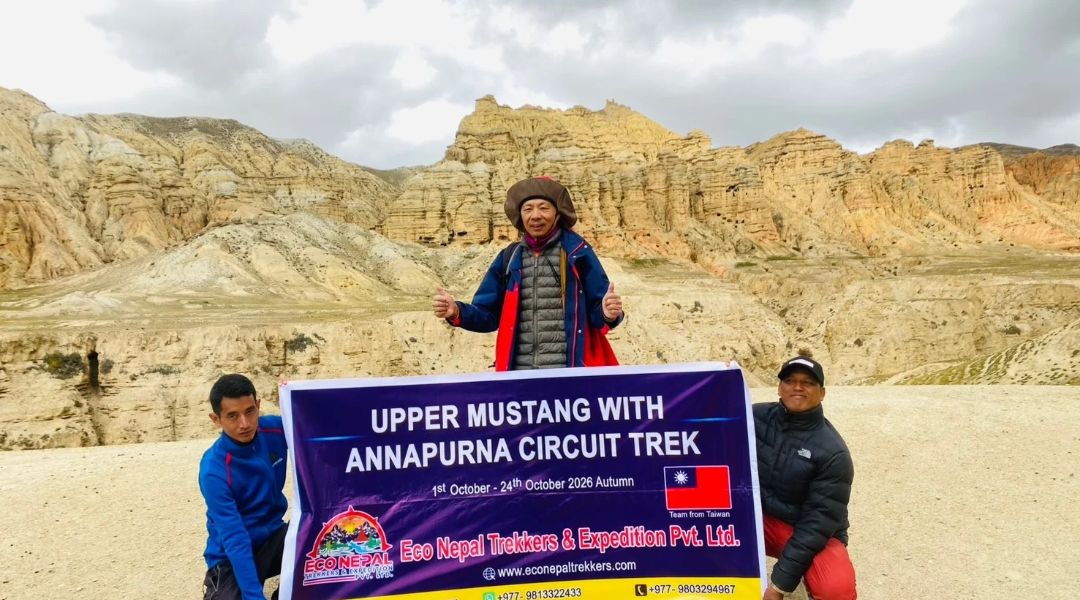
- Dry mountain valleys, deep gorges and colourful cliffs along the Upper Mustang trekking route.
- Traditional villages such as Chele, Syangboche, Ghami and Charang where Tibetan Buddhist culture is part of daily life.
- Lo Manthang at 3,810 metres, the ancient walled capital of the former Kingdom of Lo.
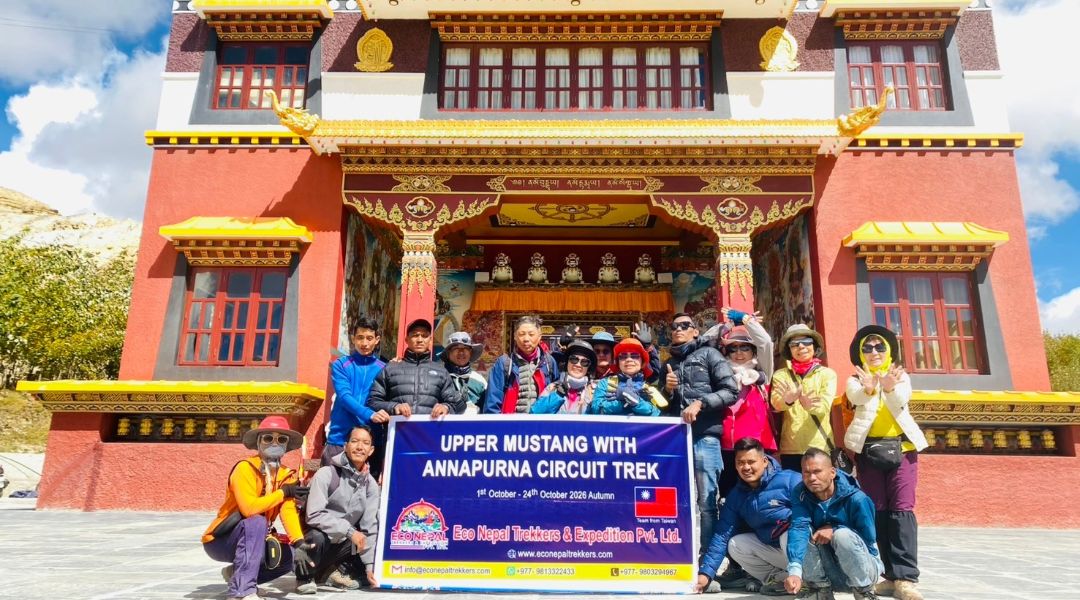
- Centuries old Buddhist monasteries such as Jampa Lhakhang and Thubchen Gompa with historic paintings and religious artwork.
- Ancient caves carved into the cliffs of Upper Mustang that were once used for burials and religious practices.
- The long mani wall near Ghami and the famous red cliffs of Dhakmar.
- Muktinath Temple at 3,750 metres, an important pilgrimage site for Hindus and Buddhists.
Upper Mustang Trek Overview
Upper Mustang is in the northern part of Mustang district near the Nepal and Tibet border. It lies beyond the Annapurna and Dhaulagiri ranges. The trek begins from Jomsom at 2,720 metres and goes through the Kali Gandaki Valley towards Lo Manthang at 3,810 metres. Around Jomsom, you can see Nilgiri and Dhaulagiri. Farther north, you will find dry mountain valleys and ancient caves carved into the cliffs.
Lo Manthang was once the capital of the Kingdom of Lo. Nepal abolished the monarchy in 2008, but the former royal family still holds cultural importance among local people. The Loba community has close ties with Tibetan culture and Buddhism. You can see this in their monasteries, religious festivals and everyday traditions.
Upper Mustang also has some of Nepal’s oldest cave settlements. People used these caves for different purposes over the centuries, including burial and religious practices. Foreign trekkers need a special restricted area permit to visit this part of Mustang.
Cost for Upper Mustang Trek in 2026/27
A 15 day Upper Mustang Trek can cost anywhere between USD 2,500 and 3,000 per person. The price is higher than most other treks in Nepal because of the restricted area permit. However, not every trekking company charges the same amount. The final cost depends on how long you trek, how many people are in your group and what your package covers.
At Eco Nepal Trekkers, we can arrange an Upper Mustang Trek package that includes transportation, trekking permits, a licensed guide, accommodation and meals. Expenses such as international flights, travel insurance, Nepal visa fees, personal shopping and tips are generally separate. We will explain the exact inclusions and exclusions before you confirm your booking.
You can also make your Upper Mustang Trek package cheaper or more expensive depending on how you want to travel. For example, joining a group and using shared transportation can help you save money. If you prefer private vehicles and better accommodation, you will need a bigger budget. You can discuss your plans with our team at Eco Nepal Trekkers and we can work out a package based on what you want to spend.
Can I Customize the Itinerary for Upper Mustang Trek?
Yes, you can customize the Upper Mustang Trek itinerary with Eco Nepal Trekkers. Our 15 day itinerary is a starting point, but you don’t have to follow it exactly. If you want to spend an extra day in Lo Manthang, explore more villages or shorten the trip, you can discuss your plans with our team.
If you have fewer days or want to try a different route, we also have other trekking options. The Jomsom Muktinath Trek covers the Lower Mustang and includes places such as Kagbeni and Muktinath. You can also consider the Annapurna Circuit Trek, which passes through Muktinath and can include Jomsom. For something more remote with Tibetan Buddhist villages, the Nar Phu Valley Trek is another option. These treks are different from Upper Mustang, but you can discuss them with our team before deciding which route suits you.
Who is the Upper Mustang Trek Suitable for?
The Upper Mustang Trek is a good option for people who enjoy long walks and have a decent level of fitness. You don’t have to be an experienced trekker. But walking for 5 to 7 hours a day can be tiring if you’re not used to it. The trail has a few steep climbs and the strong afternoon winds can make walking harder. You should also be prepared for basic teahouses and limited facilities in smaller villages. If you’ve done a few hikes before and feel comfortable spending several days in the mountains, you can consider this trek. Even beginners can manage it with proper preparation and enough time to adjust to the altitude.
Why Choose Eco Nepal Trekkers for Your Upper Mustang Journey?
With decades of trekking experience in Upper Mustang, we know the trails and the villages along the route. Our guides are friendly and experienced. They know the local culture and have plenty of stories to share about the people who live here. From the old monasteries of Lo Manthang to the caves hidden in the cliffs, we’ll help you understand what makes Upper Mustang so interesting.
We take care of your trekking permits, transportation, teahouse stays and other arrangements. You can also talk to us about changing the itinerary or adjusting the package to your budget. We want you to enjoy your time in Upper Mustang without having to worry about every little detail along the way.
Upper Mustang Trek Short Itinerary
- Day 01: Arrival in Kathmandu (1,350 m)
- Day 02: Drive from Kathmandu to Pokhara (822 m)
- Day 03: Fly from Pokhara to Jomsom (2,720 m) and trek to Kagbeni (2,810 m)
- Day 04: Trek from Kagbeni to Chele (3,055 m)
- Day 05: Trek from Chele to Syangboche (3,930 m)
- Day 06: Trek from Syangboche to Ghami (3,520 m)
- Day 07: Trek from Ghami to Charang (3,560 m)
- Day 08: Trek from Charang to Lo Manthang (3,810 m)
- Day 09: Acclimatization Day at Lo Manthang(3,810 m)
- Day 10: Trek from Lo Manthang to Dhakmar (3,650 m)
- Day 11: Trek from Dhakmar to Muktinath (3,750 m)
- Day 12: Trek from Muktinath to Jomsom (2,720 m)
- Day 13:Drive/ Fly from Jomsom to Pokhara (822 m)
- Day 14: Drive from Pokhara to Kathmandu (1,400 m)
- Day 15: Final departure from Kathmandu
Customize your trekking package in Nepal with our local experts, tailored to your time, budget, and adventure level.
Detailed Itinerary
Day 01: Arrival in Kathmandu (1,350 m)
Once you arrive at Tribhuvan International Airport, our representative from Eco Nepal Trekkers will pick you up and take you to your hotel.
After checking in, you can rest or walk around Thamel if you have enough time. We’ll also discuss the Upper Mustang Trek itinerary and check your trekking equipment. If you need anything before leaving Kathmandu, this is a good time to buy it.
Day 02: Drive from Kathmandu to Pokhara (822 m)
After breakfast, we’ll leave Kathmandu and head towards Pokhara. The drive follows the Prithvi Highway alongside the Trishuli River for part of the journey. You’ll pass small towns and terraced farmland before reaching the hills around Pokhara. We’ll stop along the way for lunch. Some sections of the highway can be rough because of road construction, so the journey may take longer than expected. Once we reach Pokhara, we’ll check into our hotel.
Day 03: Fly from Pokhara to Jomsom (2,720 m) and trek to Kagbeni (2,810 m)
If flights are operating, we’ll leave Pokhara early in the morning and fly to Jomsom. The flight takes us through the Kali Gandaki Valley with Annapurna and Dhaulagiri rising on either side. Once we reach Jomsom, you’ll notice that the green hills of Pokhara have been replaced by dry mountains and a wide river valley. From Jomsom, we’ll start walking towards Kagbeni. The trail follows the Kali Gandaki River and passes Ekle Bhatti.
Most of the walk is on fairly level ground covered with gravel and loose stones. The afternoon wind can make this section dusty, so it’s better to start walking early. As we approach Kagbeni, we’ll see old mud houses built close together above the river. The village has narrow stone alleys and an old Buddhist monastery. We’ll have time to walk around before continuing into Upper Mustang tomorrow. If flights are unavailable, we’ll arrange road transportation to Mustang. This may change the walking plan for the day.
Day 04: Trek from Kagbeni to Chele (3,055 m)
Today, we’ll enter the restricted area of Upper Mustang. Our guide will complete the permit checks at Kagbeni before we start walking north. The trail follows the Kali Gandaki Valley towards Tangbe. You’ll walk along dusty paths with dry cliffs rising above the river. Parts of the route follow the jeep road, while other sections use smaller footpaths. Tangbe is a small village with whitewashed houses and narrow lanes. There are also fields and apple trees around the settlement.
From Tangbe, we’ll continue towards Chhusang. This section passes beneath cliffs with old caves carved into the rock. After reaching Chhusang, we’ll cross the Kali Gandaki River on a bridge and begin climbing towards Chele. The final climb is quite steep compared to the earlier part of the day. Chele sits above the river valley, so you can look back towards the route we’ve just walked.
Day 05: Trek from Chele to Syangboche (3,930 m)
Today’s trail has more climbing than yesterday. We’ll leave Chele and follow a rocky path towards Taklam La Pass. The trail goes up and down through dry hills with deep valleys on either side. Some sections are narrow and covered with loose stones, so you’ll need to watch your footing.
After crossing the passes, we’ll descend towards Samar. It’s a small village surrounded by fields and a few trees. We’ll stop here for a break before continuing towards Syangboche.
Beyond Samar, the trail climbs again through open hills and crosses more ridges. There isn’t much shade along the way. You’ll also start noticing how far apart the villages are in this part of Mustang. The final section leads towards Syangboche, where we’ll spend the evening. It’s a small settlement with basic teahouses.
Day 06: Trek from Syangboche to Ghami (3,520 m)
We’ll leave Syangboche after breakfast and continue towards Ghiling. The trail crosses dry hills and gradually descends towards the village. Ghiling has traditional houses and cultivated fields that look quite different from the barren slopes around them. After passing Ghiling, we’ll climb towards Nyi La Pass at around 4,010 metres. The path is exposed and the uphill walk can feel harder because of the altitude. From the pass, you can look across the hills and valleys of Upper Mustang.
The trail then descends towards Ghami. Some sections are rocky while others are wider and easier to walk on. As we get closer to the village, we’ll start seeing farmland and houses again. Ghami is one of the larger villages along this route. We’ll have time to walk around the village after arriving.
Day 07: Trek from Ghami to Charang (3,560 m)
After leaving Ghami, we’ll pass the long mani wall near the village. It is made from stones carved with Buddhist prayers and is one of the important religious landmarks of Upper Mustang. We’ll then cross Ghami Khola and start climbing towards Tsarang La Pass. The trail is mostly dry and rocky. There are a few steep sections, but today’s walk is shorter than the previous two days.
After crossing the pass, we’ll descend towards Charang. The village sits above a river valley and has an old monastery and a former royal palace. You’ll notice the large red monastery building as you approach.Once we reach Charang, we can spend some time around the monastery and the village. The old buildings here give you a better idea of how important Charang was in the history of the Kingdom of Lo.
Day 08: Trek from Charang to Lo Manthang (3,810 m)
Today, we’re heading towards Lo Manthang, the former capital of the Kingdom of Lo. We’ll leave Charang and follow the trail across open hills. The route crosses the Charang Khola area before climbing towards Lo La Pass at around 3,950 metres.
There are hardly any trees along this section. The path is mostly dry with loose gravel and a few gradual climbs. You’ll see long stretches of bare hills and valleys with very little settlement.
Once we reach Lo La Pass, we’ll get our first view of Lo Manthang. From here, you can make out the old walled town sitting on the plateau below. We’ll descend towards Lo Manthang and enter the settlement through its old streets. The houses are built close together inside the historic town walls. You can walk around the village this afternoon, but we’ll keep the main sightseeing for tomorrow.
Day 09: Acclimatization Day at Lo Manthang(3,810 m)
We have a full day in Lo Manthang, so there’s no need to hurry. We’ll spend time walking through the old town and visiting its important monasteries. Jampa Lhakhang and Thubchen Gompa are known for their old Buddhist paintings and religious artwork. The former royal palace is another important building in the town, although access to the interior may be limited.
If you want to go a little farther, we can arrange a trip towards Chhoser. This area is known for its ancient cliff caves, including the Jhong Cave complex. Some of the caves have several rooms connected by narrow passages. The trip to Chhoser can be arranged by jeep or as a longer excursion depending on your plans. We’ll return to Lo Manthang later in the day.
Day 10: Trek from Lo Manthang to Dhakmar (3,650 m)
Instead of returning through Charang, we’ll take another route towards Dhakmar. This trail passes through higher mountain terrain and includes a visit to Ghar Gompa. We’ll leave Lo Manthang and climb towards Chogo La Pass at around 4,230 metres. This is one of the highest points on our trek. The climb is long and the ground can be loose in places. From the higher ridges, you can look across the dry valleys and mountains surrounding Upper Mustang.
After crossing the pass, we’ll descend towards Ghar Gompa, also known as Lo Gekar. This old Buddhist monastery is associated with Guru Rinpoche and has an important place in Mustang’s religious history. From Ghar Gompa, the trail continues across another ridge before descending towards Dhakmar. The downhill sections can be steep and rocky. As we get closer to the village, you’ll see the large red cliffs that Dhakmar is known for. They stand directly behind the settlement and are quite different from the pale hills along the earlier part of our route.
Day 11: Trek from Dhakmar to Muktinath (3,750 m)
Today, we’ll return towards Lower Mustang by jeep. The road follows the mountain valleys south through villages such as Ghami, Syangboche and Chele. This isn’t a smooth highway. Much of the road through Upper Mustang is unpaved, with gravel and rough sections. The drive passes through the same dry hills and deep valleys we crossed on foot earlier in the trek.
After reaching Kagbeni, we’ll complete the restricted area exit formalities and continue towards Muktinath. The road climbs towards Ranipauwa through the Muktinath area. Muktinath is an important pilgrimage destination for Hindus and Buddhists. The temple complex is known for its 108 water spouts and the Jwala Mai shrine. Depending on our arrival time, we can visit the temple this afternoon or early tomorrow morning.
Day 12: Trek from Muktinath to Jomsom (2,720 m)
If we haven’t visited Muktinath Temple yet, we’ll go there in the morning before starting our trek towards Jomsom.
For today’s walk, we’ll take the route through Lubra rather than following the main vehicle road. The trail begins with a climb towards a ridge above Muktinath. From the higher section, you can see the Kali Gandaki Valley and mountains such as Dhaulagiri and Nilgiri. After crossing the ridge, the trail descends towards Lubra. This is a long downhill section with loose rocks and gravel. It can be hard on your knees, so walking poles are useful here.
Lubra is a small village known for its Bon religious tradition. After passing through the village, we’ll follow the Panda Khola Valley towards the Kali Gandaki River. The final section takes us back to Jomsom. We’ll be walking on stony ground near the river, where the afternoon wind can be quite strong.
Day 13:Drive/ Fly from Jomsom to Pokhara (822 m)
Today, we’ll return to Pokhara. If flights are operating, we’ll take an early morning flight from Jomsom. The aircraft follows the Kali Gandaki Valley back towards Pokhara.
If we’re travelling by road, we’ll drive south through Marpha and the villages of Lower Mustang. The route passes through the Kali Gandaki gorge and continues towards Beni before reaching Pokhara.
The drive has a mixture of paved and rough sections. It’s a long journey, especially if road conditions are poor. After reaching Pokhara, you can spend the evening around Lakeside or rest at the hotel.
Day 14: Drive from Pokhara to Kathmandu (1,400 m)
After breakfast, we’ll begin our drive back to Kathmandu. The road passes through the hills of central Nepal and follows the Trishuli River for part of the journey.
We’ll stop for lunch along the way and continue towards Kathmandu. Traffic near the capital can be heavy, so our arrival time will depend on the road conditions.
Once we reach Kathmandu, we’ll transfer you to your hotel. You can spend your final evening in Thamel or simply rest before your flight home.
Day 15: Final departure from Kathmandu
And that’s the end of our 15 Days Upper Mustang Trek! Our team at Eco Nepal Trekkers will arrange your airport transfer for your international departure. We hope you’ve enjoyed your time in Mustang and had a wonderful journey with us.
Cost Includes
- Airport pick-up and drop-off by private car/hiace/, or bus, depending on group size.
- 2 nights at a Three-star hotel in Kathmandu on a sharing basis with breakfast
- Kathmandu to Pokhara and Return, Kathmandu Transportation by VIP tourist bus
- 2 nights at a 3-star hotel in Pokhara on a sharing basis with breakfast
- Domestic Flight from Pokhara to Jomsom and Return, Jomsom to Pokhara
- Three Meals a day during the trek, including Breakfast, Lunch, and Dinner.
- 3 cups of tea or coffee during the trek
- Every night, Seasonal fruits after dinner during the trek
- Upper Mustang Trek Restricted Special Permit and Annapurna Conservation Area Permit (ACAP).
- An experienced government-licensed trekking guide.
- A porter will be available during the trek to carry your luggage (one porter assists two clients).
- All Tea House accommodations during the Trek
- All transportation as per the itinerary
- Farewell dinner in Kathmandu after finishing the trek
- Achievement Certificate after completing the Trek
- All expenses related to the Guide and Porter (including wages, accommodation, meals, gear, insurance, and required medications) will be covered.
- First Aid Box during the trek
- Eco Nepal Trekkers’ Duffel bag is available and can be returned after the trek
- Helicopter rescue services are available during the trek and must be paid for by your travel insurance company.
- All government-related taxes and VAT, with Office charges
Cost Excludes
- Nepal entry visa fee
- The international flight fare and airport departure tax
- Travel insurance, including high-altitude emergency evacuation coverage
- Your Gear And Equipment for Trekking
- Lunch and dinner meals in Kathmandu and Pokhara
- Your expenses such as hot showers, WiFi, bar and beverage bills, alcoholic drinks, Mineral water, hot water, and telephones during the trek
- Tips for your Trekking Guide & Porter
Good To Know
Permits and Travel Insurance for Upper Mustang Trek
Upper Mustang is a restricted trekking region in Nepal. So, you need special permission to enter the area. For our Upper Mustang Trek, you will need two permits.
- Restricted Area Permit (RAP): This permit costs USD 50 per person per day. The total fee depends on how many days you spend inside the restricted area.
- Annapurna Conservation Area Permit (ACAP): This permit costs NPR 3,000 for most foreign travellers and NPR 1,000 for SAARC nationals.
Note: When you book your Upper Mustang Trek with Eco Nepal Trekkers, we will help arrange the necessary permits. Our team will also explain the documents you need before arriving in Nepal.
Travel Insurance for Upper Mustang Trek
We strongly recommend getting travel insurance before starting the Upper Mustang Trek. You will spend several days in remote mountain villages where medical facilities are limited.
Your insurance should cover trekking above 4,000 metres, emergency medical treatment and helicopter evacuation. We also suggest choosing a policy that covers flight delays and cancellations.
The flight between Pokhara and Jomsom depends on the weather. Sometimes flights get cancelled or delayed, which can affect your travel schedule.
Note: We can guide you on the insurance coverage you should look for. However, you will need to purchase your travel insurance yourself before the trek.
Best Time for Upper Mustang Trek
The best time for the Upper Mustang Trek is from March to May and September to November. April and October are particularly good months to plan your trek. The days are pleasant for walking although mornings and nights can still be cold. If you travel in May, you might also get to witness the Tiji Festival in Lo Manthang.
Interestingly, you can also trek to Upper Mustang during the monsoon months of June to August. The region receives much less rainfall than other parts of Nepal. However, flights to Jomsom can be delayed due to bad weather. We don’t recommend December to February for most trekkers because of the extreme cold and seasonal teahouse closures.
Food During Upper Mustang Trek
You will find a mix of Nepali and Tibetan food along the Upper Mustang Trek. Dal bhat is available in almost every teahouse and is a good option after a long day of walking. You can also try thukpa, momos, Tibetan bread, fried rice and noodles. Tea and simple breakfast items are available in most villages. Don’t expect the same menu everywhere. Places like Kagbeni and Lo Manthang have more food choices than smaller villages along the trail. If you have any dietary restrictions, please tell our team at Eco Nepal Trekkers before the trip.
Accommodation During Upper Mustang Trek
Most nights on the Upper Mustang Trek will be spent in local teahouses and guesthouses. You will generally get a simple room with two beds and blankets. Bathrooms are often shared and rooms usually don’t have heating. The dining area is where everyone gathers for meals and warmth in the evening. There is better accommodation in Jomsom and Lo Manthang, but facilities become limited in smaller villages like Syangboche and Ghami. Hot showers, WiFi and charging may cost extra.
Upper Mustang Trek Difficulty
The Upper Mustang Trek difficulty is generally considered moderate. You don’t need climbing experience or technical equipment, but you should be prepared to walk around 5 to 7 hours on trekking days. There are uphill sections and several mountain passes along the route.
The weather can make the trek harder than you might expect. Upper Mustang is known for its strong afternoon winds. The trails can also be dusty and exposed to the sun with little shade. If you’re planning this trek for the first time, regular walking and a few longer hikes before your trip will help. You don’t have to be an athlete, but you should be comfortable spending several days walking in the mountains.
Altitude Sickness During the Upper Mustang Trek
Altitude sickness is something you should be aware of during the Upper Mustang Trek. The journey starts from Jomsom at 2,720 metres and takes you to Lo Manthang at 3,810 metres. You will also cross mountain passes above 4,000 metres. Although the altitude is lower than Everest Base Camp, there is still a chance of developing acute mountain sickness (AMS).
You might experience headaches, dizziness, nausea or difficulty sleeping as you gain altitude. These symptoms can affect anyone regardless of fitness. If you start feeling unwell, inform your guide and avoid climbing higher. Severe symptoms such as confusion or difficulty walking require immediate descent and medical attention.
How to Prevent Altitude Sickness During Upper Mustang Trek?
One thing you shouldn’t do in Upper Mustang is rush to reach the next village. Your body needs time to adjust as you climb higher. Follow the planned itinerary and avoid gaining too much sleeping altitude in a single day.
Drink enough water and eat properly even when you don’t feel very hungry. Avoid alcohol at higher elevations. Most importantly, don’t ignore a headache that keeps getting worse. If you’re feeling sick, tell your guide rather than trying to finish the day’s walk. You can also ask a doctor about altitude sickness medication before travelling.
WiFi or Internet on Upper Mustang Trail
Internet access is available in parts of the Upper Mustang Trek, but don’t expect a reliable connection throughout the journey. Teahouses in Jomsom and Lo Manthang may offer WiFi, sometimes for an extra charge. In smaller villages such as Chele, Syangboche and Ghami, internet facilities are limited and the connection can be slow or unavailable.
You can also use a Nepal Telecom (NTC) or Ncell SIM card for mobile data. However, network coverage varies along the trail, and there are sections where you may not get any signal. We recommend buying a local SIM card in Kathmandu or Pokhara before the trek. If you need to contact your family regularly, download important information in advance and let them know that you might be offline for a day or two.
Dates of Trip
Frequently Asked Questions
Client Reviews
Write Review


 Top Rated Service


Similar Packages
USD 1350
9 Days
Trekking in Nepal
Moderate
USD 1950
06 Days
Heli Tours
Easy

USD 1280
13 Days
Trekking in Nepal
Moderate