
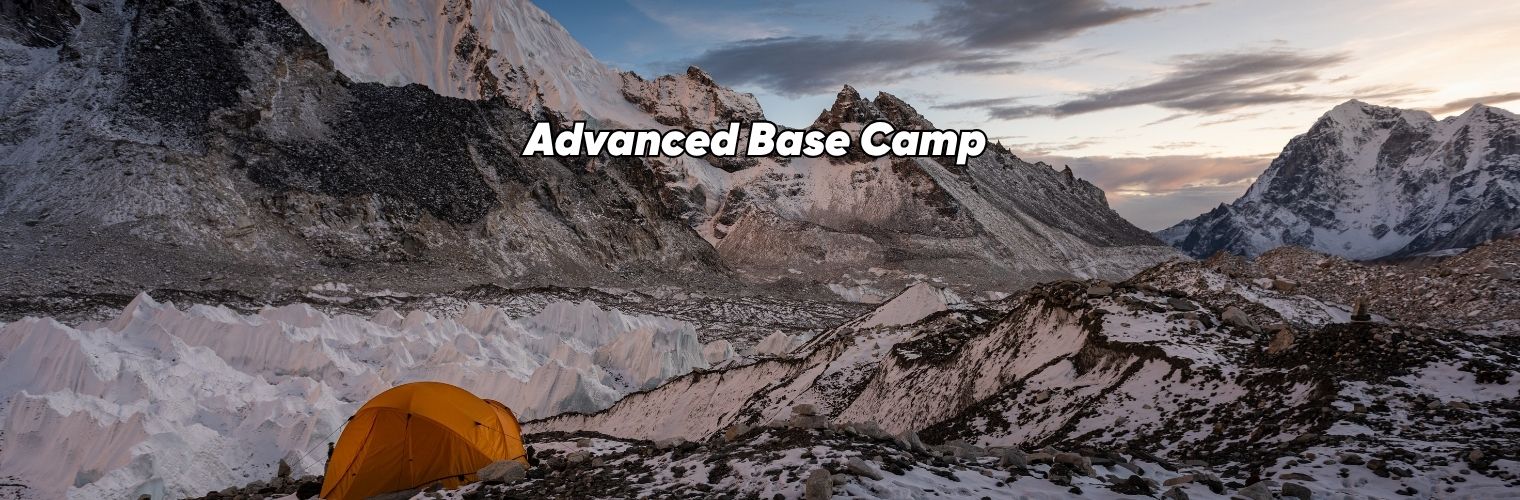
Advanced Base Camp
Did you know that in high-altitude mountaineering, particularly in the Himalayas, expeditions depend on a structured system of camps managed for altitude, logistics and safety.
The Advanced Base Camp (ABC) is an important component of this system. A higher camp based above the primary base camp is used for staging climbing operations and acclimatization.
For big climbers who climb Mount Everest, the Advanced Base Camp serves a crucial function in coordinating logistics, getting climbers ready for higher camps and assisting summit pushes.
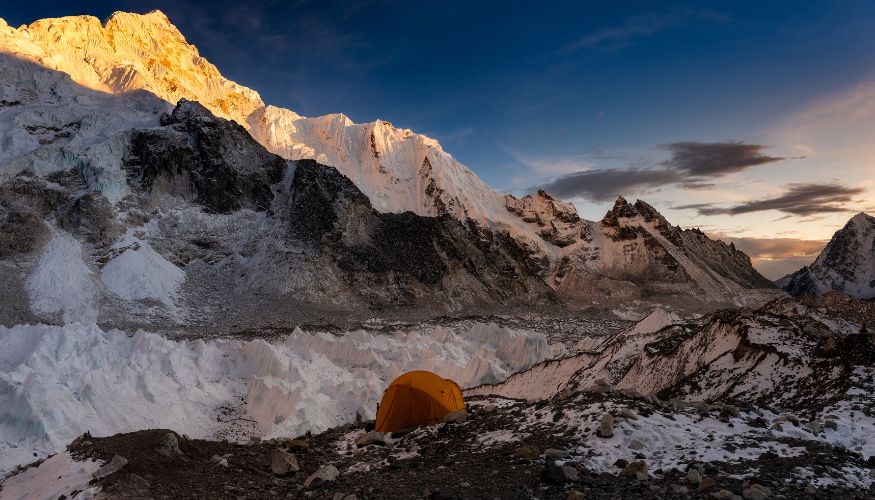
In this blog, we explain everything about the Advanced Base Camp and how it helps the Himalayan expeditions, and the role of ABC in high-altitude climbing in Nepal.
What Is an Advanced Base Camp?
The Advanced Base Camp refers to a higher camp set up above a main base camp on high-altitude expeditions. The tent was set up somewhere in the climbing route and serves as an advanced base for mountaineering.
So, the main function of an Advanced Base Camp is to help facilitate the summit process. It aids in shortening the final push by transporting climbers and supplies higher on the mountain. It is also an important part of the acclimatization process, enabling climbers to slowly become acclimated to altitude before going higher. It also serves as a staging area, where teams organize gear, plan rotations and prepare to move to higher camps.
The difference between base camp and advanced base camp is mainly in function and location. The main logistics hub on expeditions is where teams stay, keep supplies and coordinate the route to the base camp. Unlike the Base Camp, which remains located lower on the mountain and has more of a logistical role, the Advanced Base Camp is situated higher up along the summit route and serves as a staging area for climbing operations.
Advanced Base Camp on Mount Everest
The Advanced Base Camp on Mount Everest exists on the north side of the mountain in Tibet, and it’s a major part of the northern climbing route.
The Everest Advanced Base Camp is located at an elevation of approximately 6,400 meters and serves as a higher precursor to the primary base camp, with its climbers in closer proximity to the upper regions of the mountain.
The journey to Advanced Base Camp starts from the North Base Camp and traverses glacier grounds, with climbers taking slow steps up while carrying gear and getting acclimatized. This part is crucial in getting the team ready for more elevated camps and ultimately summit bids.
Advanced Base Camp vs Everest Base Camp
Everest Base Camp and Advanced Base Camp differ in altitude, access, and purpose.
Everest Base Camp (EBC)
Known as “Everest Base Camp,” the altitude is 5,364 meters; this site is the primary setting for expeditions. This accessible location serves as one of Nepal’s most well-known trekking areas.
Advanced Base Camp (ABC)
It sits at around 6,400 meters on the north side (Tibet) of Mount Everest in the Advanced Base Camp above. It is only used by climbers as a part of high-altitude expeditions.
Key Differences
| Details | Everest Base Camp | Advanced Base Camp |
| Altitude | 5,364 m | 6,400m |
| Accessibility | Trekkers and climbers | Only for climbers |
| Purpose | Trekking destination & expedition base | Staging point for climbing |
| Difficulty | Moderate trekking | High-altitude mountaineering |
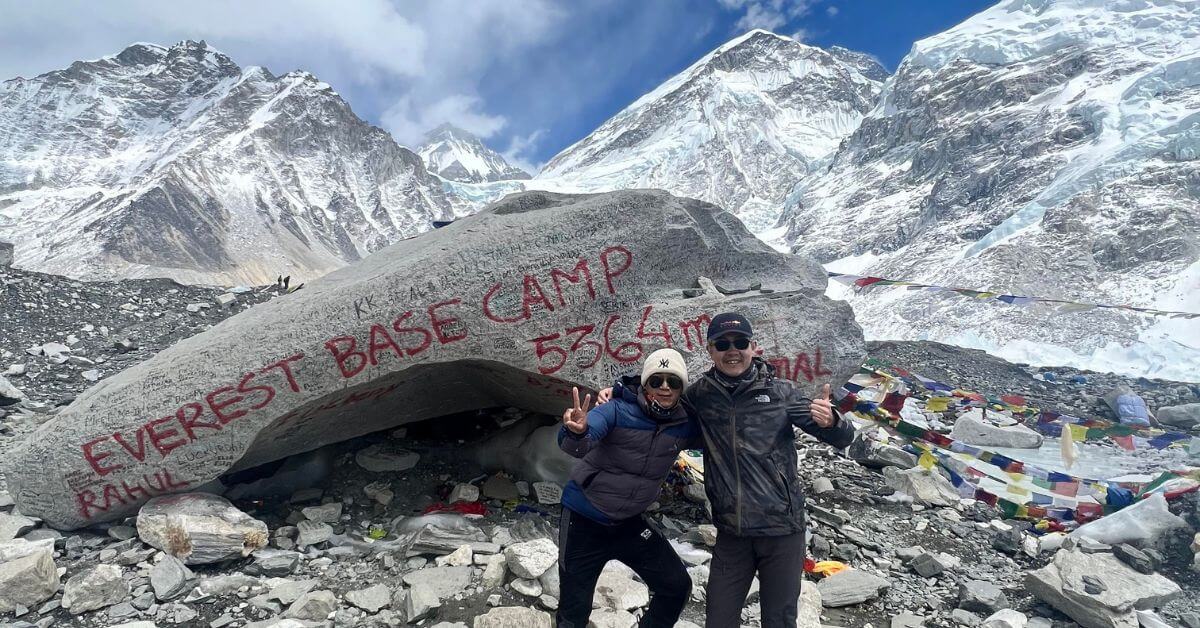
Everest Base Camp Trek
Experience the ultimate adventure to the foot of the world’s highest peak. A journey of a lifetime through the majestic Himalayas.
Role of Advanced Base Camp in Climbing Expeditions
The Advanced Base Camp is crucial for the high altitude expeditions, especially in such mountains as Mount Everest that require proper planning and altitude management.
Another one of its main functions is to act as an acclimatization point so that climbers can gradually get used to these lower oxygen levels before heading up the mountain to higher camps. “Most importantly, it acclimates your body to prepare for being at this elevation, reducing the chances of suffering altitude sickness.
It is also a supply and logistics hub, storing and organizing crucial equipment, food and oxygen. This minimizes the burden of having to haul all supplies straight from base camp to high camps.
Moreover, you will also be doing the direct ascent of higher camps from Advanced Base Camp, which is categorized more as technical climbing rather than approach trekking. It is from here that climbers start their rotations toward higher camps and, eventually, summit attempts.
Other Mountains with Advanced Base Camps
This Advanced Base Camp phenomenon is not exclusive to Everest. Those are often utilized on other high Himalayan peaks like Cho Oyu and Shishapangma.
In fact, ABCs have become a normal feature of expeditions to 8,000-meter peaks that necessitate multiple camps to deal with altitude management, logistics and climbing progression.
Can Trekkers Visit Advanced Base Camp?
Trekkers are usually not allowed up to Advanced Base Camp.
Entry requires mountaineering permits and expedition clearance because these camps lie along active climbing routes rather than regular trekking trails.
Base Camps are only open to organized climbing expeditions and require proper permits and support teams.
For hikers, a less dangerous and more attainable option is the Everest Base Camp trek, where you can hike at high-altitude while not requiring technical climbs.
Challenges of Reaching Advanced Base Camp
The environment and altitude make it challenging to reach an Advanced Base Camp.
Extreme altitude is the most important factor, where oxygen levels are low and physical performance decreases.
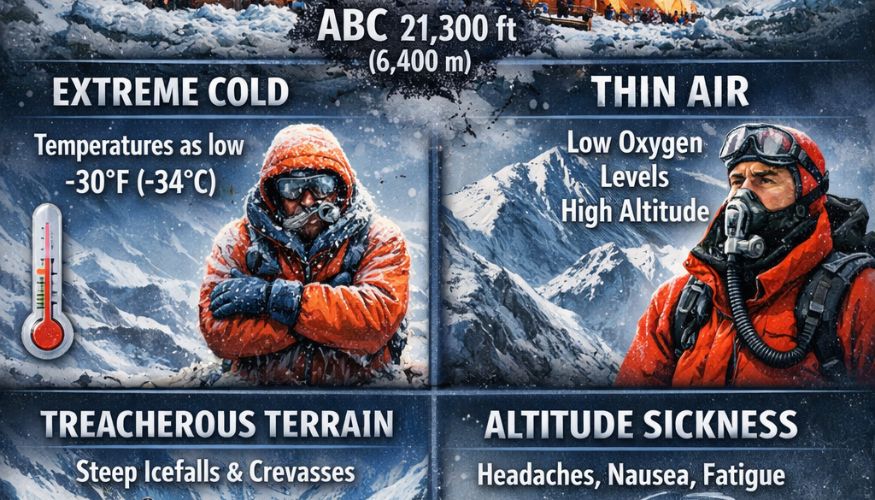
Men and women are willing to face adverse weather conditions, such as strong winds, low temperatures, and abrupt climate changes.
The landscape is typically technical, including glaciers and ice and rocky ground, all things that can be dangerous without the right equipment or experience.
Also, lack of oxygen is a big issue and acclimatization and in some cases”, opo to help with supplemental oxygen.
Why Advanced Base Camp Is Important
The Advanced Base Camp is vital for high-altitude expeditions.
It boosts summit success rates by enabling climbers to stage their ascent in instalments instead of attempting direct long pushes from lower elevations.
It also enhances safety, with climbers able to acclimatize properly and adapt to a changing environment.
From a logistical standpoint, it helps consolidate equipment, supplies and movement, making this a significant aspect of any Himalayan climbing expedition.
Interesting Facts About Advanced Base Camp
An Advanced Base Camp is placed in extremely high-altitude locations, which are usually higher than 6,000 meters, with very harsh environmental conditions compared to normal trekking routes.
This is only used for mountaineering expeditions and not a permanent or tourist-accessible location, thus the makeshift operational camp.
It often takes weeks of acclimatization to reach and use an Advanced Base Camp, as climbers acclimatize slowly by spending time at progressively less elevated altitudes where oxygen is still available.
FAQs
What is an Advanced Base Camp?
Advanced Base Camp means a camp at a higher altitude than base camp for climbing, acclimatization and logistical purposes.
What is Everest Advanced Base Camp (ABC), and where is it?
It is situated on the north side of Mount Everest in Tibet.
Is it possible for tourists to visit Advanced Base Camp?
No. Its summit is not usually accessible to tourists and requires mountaineering permits.
What is the ABC altitude on Everest?
Approximately 6,400 meters (21,000 feet).
What are the differences between EBC and ABC?
Everest Base Camp is a common trekking stop, while Advanced Base Camp is used only by climbers as an operational camp at astronomic above sea level.
Conclusion
High-altitude mountaineering is not devoid of an Advanced Base Camp, which forms the most important component of acclimatization tools for logistics and summit preparation.
It assists climbers in acclimatizing to altitude, coordinating supplies and climbing safely up to higher camps and summit attempts.
And in practical terms, as such, Advanced Base Camps are established for climbing groups only and are accessible only to climbers who have mountain permits and experience.