
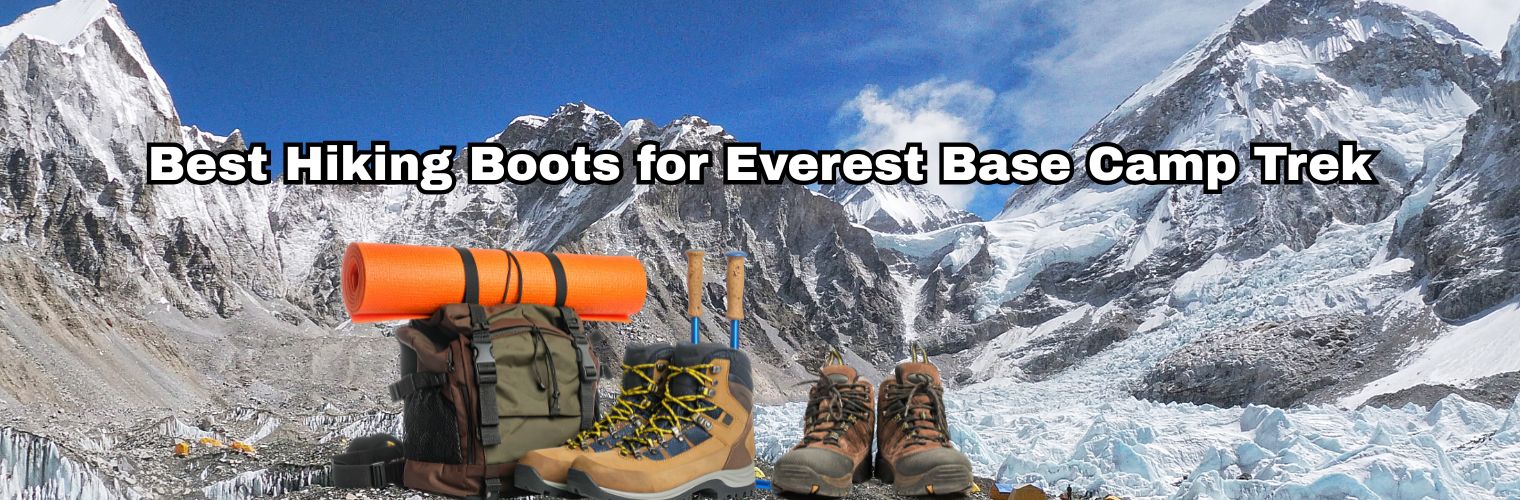
Best Hiking Boots for Everest Base Camp Trek
When you are ready for the EBC Trek in Nepal, choosing the best hiking boots for Everest Base Camp Trek is essential for a safe and comfortable Trek.
You walk 130 km (80 miles) over 12 to 14 days across rocky trails, stone staircases, glacial moraines, suspension bridges, and uneven mountain terrain. Poor footwear can cause blisters, foot pain, ankle injuries, and reduced trekking performance.
Expensive hiking boots are not required, but the most important things are comfort, proper fit, waterproof protection, ankle support, and good grip. Well-fitted boots that have been broken in before the trek perform far better than brand-new expensive boots.
This guide explains how to choose the best hiking boots for the Everest Base Camp Trek, including essential boot features, recommended boot types, waterproofing, ankle support, sizing, and expert buying tips.
Why Good Hiking Boots Matter for the Everest Base Camp Trek?
You walk across rocky paths, loose stones, uneven surfaces, and stone staircases during this Everest Base Camp Trek while trekking for around 5 to 8 hours a day.
High-quality hiking boots offer grip, provide stability, protect your feet from the elements, and ensure comfort throughout the hike.
While built-in cushioning helps to lower foot fatigue, pressure points, and blisters, durable soles improve traction on uneven patches. Since weather conditions in the Everest region can change fast, a pair of waterproof hiking boots will also keep your feet dry on rainy and snowy days or wet trails.
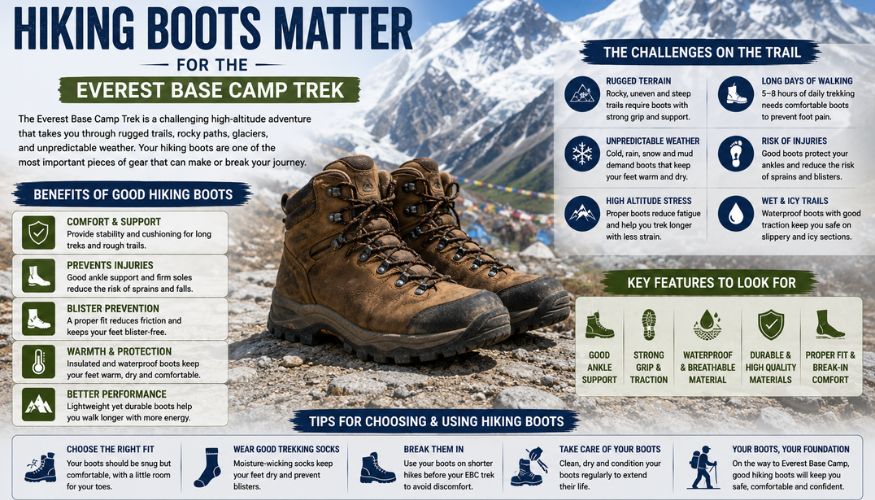
The mid-cut or high-cut boot offers further ankle stability on steep and uneven terrain, also providing protection for the feet against protruding rocks and abrasive surfaces.
Do You Need Hiking Boots for Everest Base Camp?
For the standard Everest Base Camp Trek, hiking boots are not compulsory but would be logical for almost all trekkers. Since the trail comprises rocky paths, irregular terrain, underground stones, and steps, along with varying weather conditions, good grip, comfort, stability, and protection are paramount for your footwear.
Trail running shoes tend to be lighter and offer less stability; however, they are more flexible as well. They offer more support, durability, and protection from the elements than you could get with a trekking shoe.
Technical or mountaineering boots: For technical climbing, extreme cold, and use with crampons, they are not typically needed, though for the main Everest Base Camp Trek, as this is a non-technical climb.
For most hikers, a comfortable pair of waterproof hiking boots with ample traction and a good fit is recommended. So whatever shoes you wear should be broken in before the hike to help prevent blisters and pain.
Features to Look for in Hiking Boots
Choosing the best Hiking boots for the Everest Base Camp Trek is important because the trail is often rocky and uneven, with stone steps, irregular ground worn by centuries of foot traffic, and unfriendly weather conditions travellers may encounter. Hiking boots often need to walk a tightrope between protection, support, comfort, and weather resistance.
These include being able to find features such as:
- Waterproof coverage: Keeps feet dry in rain, snow, and wet parts of the path.
- Ankle Support: Mid-cut or high-top boots offer extra support while on steep, rocky, and uneven terrain.
- Grip & Traction: Sturdy outsoles with decent traction give you increased stability on rocks, loose stones, and wet surfaces.
- Comfort and Cushioning: Proper cushioning minimizes foot fatigue and pressure during lengthy walking days
- Breathability: Breathable materials that allow heat and moisture to escape from inside the boots.
- Weight: Lightweight boots can help limit foot fatigue, but still provide ample protection and support.
- Durability: Compromising on quality is something that boot manufacturers can not afford to. The construction (including outsole) should be able to take repeated walks from rock collections across rough terrain.
- Insulation: Winter and cold early-morning walks at higher elevations call for insulated boots.
The amount of waterproofing, extra warmth, weight, and ankle support you choose depends on the trekking season, trail conditions, and what feels best for you.
Best Hiking Boots for Everest Base Camp Trek
There is no single hiking boot that is best for every trekker. The right choice depends on fit, comfort, traction, waterproofing, weight, ankle support, and trekking season. For the standard Everest Base Camp Trek, technical mountaineering boots are generally not required.
| Type | Best For | Key Features |
| Overall | Most trekkers | Mid-cut, waterproof, good traction, cushioning, ankle support |
| Budget | Budget trekkers | Good grip, proper fit, durable construction |
| Lightweight | Long walking days | Lightweight, flexible, good traction |
| Waterproof | Wet conditions | Waterproof protection, good grip |
| Beginners | First-time trekkers | Comfortable, supportive, good traction |
| Women | Female trekkers | Proper fit, secure heel, toe space, cushioning |
| Men | Male trekkers | Proper fit, suitable width, traction, support |
Should You Buy or Rent Hiking Boots?
Yes, you can buy or rent boots in Kathmandu for your EBC Trek. But the shops will have different sizes, models and wear. Renting lowers the initial outlay but may offer a narrower choice of fit and condition.
Especially for rare hikers, it makes more sense to rent boots rather than buying them, but you should at all times take a test before starting on your Everest Base Camp Trek.
Read More: Can I Rent Trekking Gear in Kathmandu?
How to Break In Your Hiking Boots
Before you start the Everest Base Camp trek, to avoid rubbing and blisters, ensure comfort as mentioned above. Use the boots on walks out of season and build walking distance up in the lead-up to the trek.
Make sure you incorporate both uphill and downhill walks into your test in order to see if it fits and supports correctly. Wear appropriate trekking socks and spot pressure points early enough to fix them before the trek.
Hiking Socks
Hiking socks eliminate friction, control moisture, and provide comfort when walking all day long. Socks: Merino wool and synthetic socks are widely used for trekking as they allow moisture management & regulate warmth.
Traditional socks are made from thicker materials to provide extra insulation and shock absorption; lightweight socks are thinner, more breathable, and generally faster drying. Bring a few pairs so you have the option to change them when they are wet or dirty.
Common Mistakes When Choosing Hiking Boots
If you choose the incorrect hiking boots, then it could lead to discomfort and foot issues while trekking. Tight boots can cause blisters and toe pinching, especially when going downhill.
New boots can rub on you before they have had a chance to break in. Cutting corners and selecting boots based on looks instead of comfort and fit is another cause for concern. With rain, snow, and wet trails possible in the Everest region trekking literally at any time of the year, waterproof protection should not be ignored.
Hiking Boot Care During the Trek
Good boot care keeps the boots comfortable, grippy, and durable over the course of the Everest Base Camp Trek. After every walking day, keep boots as dry as possible and clean off any mud, dirt, and snow from the boots and outsoles.
If the boots are wet, they should be dried naturally by air and never placed directly close to intense heat. But as with all other gear, you can extend the life of hiking boots by cleaning them regularly and checking soles, laces, and seams, as well as ensuring they are still in waterproof condition.
Packing Checklist for Footwear
The right footwear accessories help improve comfort, foot protection, and performance during the Everest Base Camp Trek.
| Footwear Item | What to Pack |
| Hiking Boots | 1 pair |
| Trekking Socks | 3–5 pairs |
| Insoles | 1 pair |
| Waterproof Covers | 1 pair |
| Blister Care Kit | 1 small kit |
If you want to know the details of the backpacking list for the Everest Base Camp Trek, you can Read More: What to Pack for Everest Base Camp Trek
FAQs
What type of hiking boots are best for the Everest Base Camp Trek?
Mid-cut, comfortable, waterproof hiking boots with good traction and ankle support are best for the Everest Base Camp trek.
Do I need waterproof boots?
Yes, waterproof boots are recommended because the trail can experience rain, snow, wet surfaces, and changing weather conditions.
Can I wear trail running shoes to Everest Base Camp?
Yes. Experienced trekkers can use trail running shoes, but they generally provide less ankle support, insulation, and protection than hiking boots.
Should hiking boots be one size bigger?
Not necessarily. Boots should have enough space for your toes without allowing excessive movement. Try them with your trekking socks and ensure your toes do not hit the front during downhill walking.
Can I rent hiking boots in Kathmandu?
Yes. Hiking boots can be rented from trekking equipment shops in Kathmandu. Check the fit, size, sole condition, waterproofing, and overall condition before renting.
How do I prevent blisters during the trek?
Break in your boots before the trek, wear suitable trekking socks, keep your feet dry, and address rubbing or pressure points early.
Are expensive hiking boots worth it?
Expensive boots are not essential. Proper fit, comfort, traction, waterproofing, and support are more important than price or brand.
Conclusion
Proper body fit, comfort, traction, waterproof protection, and ankle support largely determine the choice of hiking boots. The most appropriate set should be experimented with and positioned to lead the journey to lessen the probability of blisters and discomfort. Rank footwear based on your foot shape, trekking season, or trail conditions, not the brand of shoe or price.