Best Seller
Starts :
USD 1400
USD 1400
Duration
12 Days
Activity
Trekking in Nepal
Grade
Moderate
Call Us on Whatsapp
+977 9813322433(Pemba)
Exploring the local Sherpa culture while being surrounded by the world’s tallest mountain. Seems like a dream, right? And that’s exactly what you get during the Everest Region Trekking.
In total, this valley alone has around fifteen trekking routes spread across 4 different valleys. As a matter of fact, if one starts counting off the beaten path variations, the number can go well beyond fifty.
Compared to Annapurna or Langtang, every valley here offers noticeably better high-altitude facilities, a natural benefit of being home to the world’s highest peak.
Besides that, the Everest region lies farther inside the Himalayan rain shadow, which means there is a much lower chance of heavy rainfall. Furthermore, this phenomenon contributes to clearer skies and more predictable sunrise/sunset views.
Sounds like a dream destination for all the trekkers around the world, right?
And that’s accurate. Historically, no other region in Nepal has attracted as many trekkers as this one.
Now you might be thinking these cannot be the only things that set this region apart, and they aren’t.
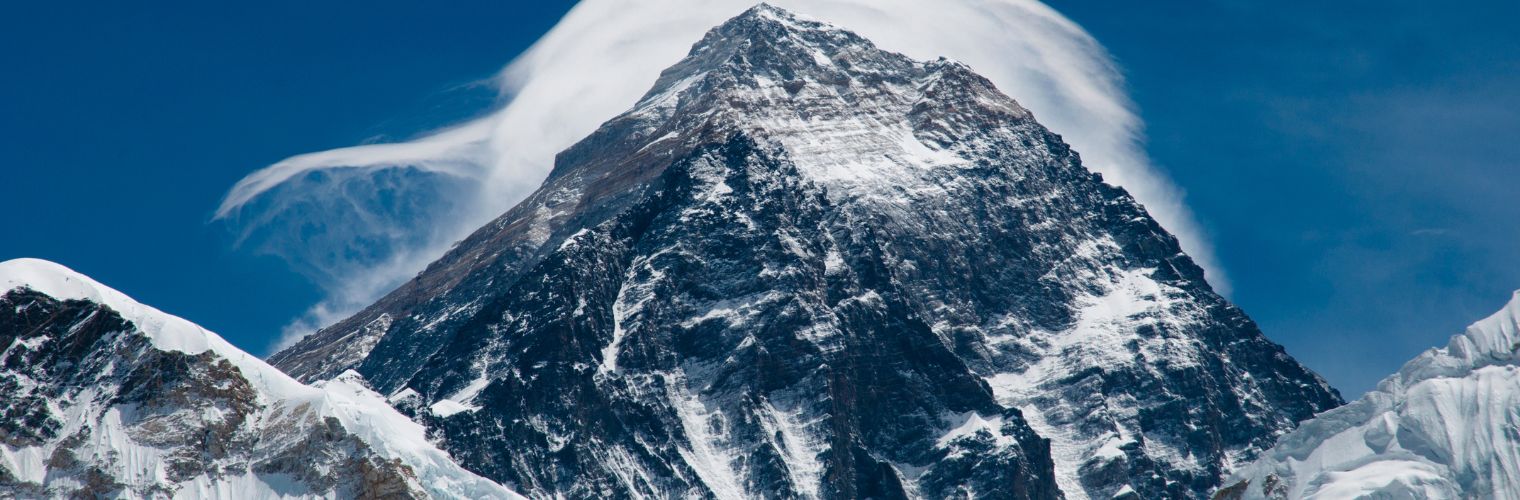
Wait, let’s start with the most obvious reason: Mount Everest at 8,848.86 meters is the highest mountain on Earth. That simple fact creates a magnetic appeal that no other region can match.
However, the fascination goes deeper than just one mountain. This naturally gifted region is home to multiple 8,000-meter giants like Lhotse (8,516m), Makalu (8,485m), and Cho Oyu (8,188m), all of which dominate the skyline alongside Everest itself.
The trails here deliver sustained elevation experiences that feel genuinely expedition-like. By the time you reach Namche Bazaar at 3,440 meters (just three days into most treks), you’re already higher than many Annapurna viewpoints.
From there, the landscape only becomes more dramatic, more vertical, and more otherworldly.
In fact, the region’s vertical walls, deep glacial valleys, and exposed high-altitude terrain create atmospheric intensity that Annapurna’s gentler forests and terraced villages cannot replicate.
Additionally, Sherpa communities throughout the Khumbu valley provide cultural richness that goes beyond standard mountain hospitality. Originally migrating from Eastern Tibet centuries ago, Sherpas developed unique high-altitude lifestyles, Buddhist spiritual practices, and mountaineering skills that made them legendary worldwide.
Walking through villages like Namche Bazaar, Tengboche, Khumjung, and Pangboche means encountering authentic Sherpa culture: ancient monasteries with morning prayer chants, mani stones carved with Buddhist mantras lining trails, and prayer wheels spinning at village entrances
Besides that, Sagarmatha National Park’s UNESCO World Heritage status (designated in 1979) protects the region’s natural environment from excessive development. This preservation creates the raw, untouched feeling that defines high-altitude Himalayan trekking.
Strict regulations limit construction, control waste management, and maintain trail authenticity. The result? Despite massive annual visitor numbers, the region retains a genuine wilderness character that heavily commercialised destinations lose over time.
One of the fascinating aspects of trekking in this region is that the landscape changes more quickly and more dramatically than anywhere else in Nepal.
In fact, lower-altitude forested sections exist only briefly until Namche Bazaar. From there, vegetation thins rapidly as trails climb into high-alpine terrain.
By Tengboche at 3,867 meters, you’re already walking through sparse conifer forests with mountain views dominating every direction. At Dingboche (4,410m), vegetation becomes genuinely sparse with only hardy alpine plants surviving.
Furthermore, from Lobuche (4,940m) to Gorak Shep (5,164m), the terrain becomes completely rocky, glacial, and barren.
By the time you finish your trekking journey, you will realise that the landscape feels progressively more extreme, more hostile to life, and more dramatically high-altitude with every day’s walk.
Furthermore, unlike Annapurna’s ecological diversity or Langtang’s valley gentleness, Everest’s landscape emphasizes vertical drama. High walls like the Nuptse face rise thousands of meters directly from the valley floors.
Deep glacial valleys cut between massive peaks. Ice formations and hanging glaciers dominate higher elevations.
Now, let’s discuss the accommodation system that makes these extreme-altitude treks possible without expedition logistics.
Teahouses operate all the way to Gorak Shep at 5,164 meters, higher than any other region’s permanent lodging facilities. However, facilities become progressively more basic with altitude.
Between Lukla (2,845m) and Namche Bazaar (3,440m), teahouses offer relatively comfortable facilities: attached bathrooms in many lodges, reliable hot showers, decent WiFi connectivity, varied menu options, and even Western-style amenities like bakeries and coffee shops in Namche itself.
However, above Dingboche (4,410m), conditions simplify dramatically. Rooms become smaller and colder, toilets are shared and often outside buildings, hot showers cost extra (when available at all), WiFi becomes unreliable or expensive, and charging electronics requires payment.
Dining halls use yak-dung heaters (the only fuel source at these altitudes) creating distinctive smoky atmospheres. Food options remain consistent regardless of altitude: dal bhat, noodle soups, fried rice, and simple egg dishes dominate menus, with fresh vegetables becoming rare above 4,000 meters.
Ok, this is where it gets really interesting. The Everest region offers routes ranging from beginner-friendly short treks to seriously challenging high-pass adventures.
Everest Base Camp is the most globally recognised trek in Nepal, attracting thousands monthly during peak seasons.
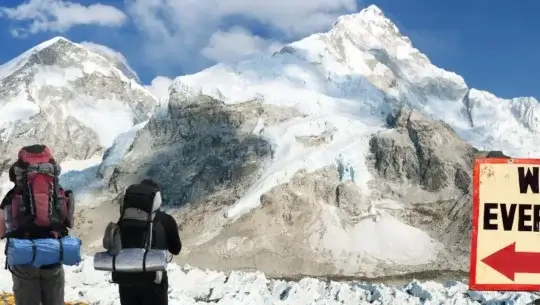
The Everest Base Camp Trek 12 to 15-day journey reaches 5,545 meters at Kala Patthar viewpoint, following a well-established route through villages: Lukla (2,845m), Phakding (2,610m), Namche Bazaar (3,440m), Tengboche (3,867m), Dingboche (4,410m), Lobuche (4,940m), and Gorak Shep (5,164m).
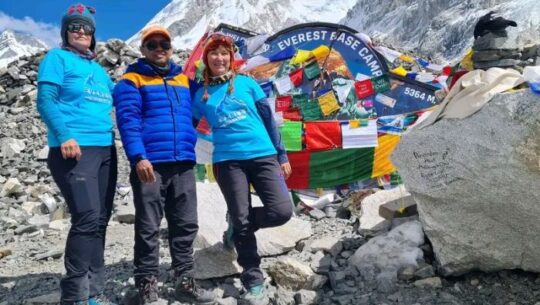
Wait, here’s what many first-timers don’t realise: Everest Base Camp at 5,364 meters provides more emotional than scenic satisfaction. The Nuptse wall blocks direct summit views, and base camp itself sits on rocky glacial moraine offering limited perspectives.
The real visual payoff comes from the sunrise climb to Kala Patthar. That 5,545-meter viewpoint offers unobstructed views of Everest’s summit, with surrounding giants like Nuptse, Pumori, and Changtse creating dramatic panoramas.
Furthermore, proper itineraries include essential acclimatization days at Namche Bazaar and Dingboche. These rest days allow the body to adjust to lower oxygen levels, dramatically reducing the risk of altitude sickness.
Now, if you want Everest region experiences without Base Camp crowds, the Gokyo Lake trek offers the perfect alternative.
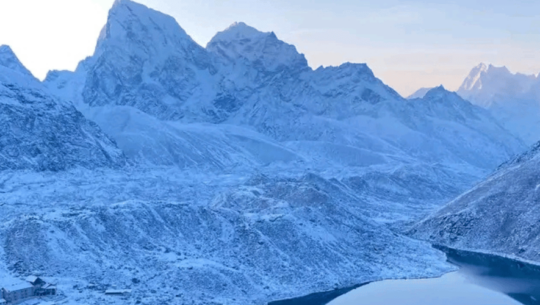
This 12 to 14-day trek reaches Gokyo Ri at 5,357 meters, accessing the stunning, crystal-clear Gokyo Lakes (a series of six glacial lakes between 4,700m and 5,000m) and crossing Nepal’s longest glacier, the Ngozumpa.
From Gokyo Ri’s summit, you’ll witness four 8,000-meter peaks simultaneously: Everest, Lhotse, Makalu, and Cho Oyu. This viewpoint provides wider valley perspectives than Kala Patthar, creating exceptional photography opportunities.
Additionally, Gokyo remains significantly more peaceful than the Base Camp route. While EBC sees thousands monthly, Gokyo attracts perhaps 30 to 40 per cent of those numbers, preserving a more authentic wilderness atmosphere.
Wait, for those wanting both Gokyo and Base Camp experiences in one trek, the Cho La Pass route connects these valleys.
This 16 to 18-day journey crosses Cho La Pass at 5,420 meters, involving technical challenges like icy sections that requires careful footing, steep scree slopes, early-morning starts (typically 4 to 5 AM to cross before afternoon weather deteriorates), and glacier navigation, which feels genuinely adventurous.
The pass crossing represents the trek’s physical and mental challenge, rewarding successful crossers with the satisfaction of linking two spectacular valleys in one continuous journey.
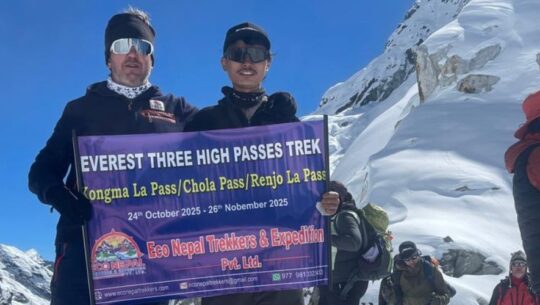
Ok, this can be termed as the hardest standard trekking route in the Everest region. The Three Passes Trek crosses Kongma La (5,535m), Cho La (5,420m), and Renjo La (5,360m) over 17 to 21 days.
This route provides the highest sustained altitude exposure of any Nepal trek, with multiple consecutive nights above 5,000 meters. Terrain varies from exposed ridgelines to glacier crossings to steep, rocky passes, requiring concentration and stamina.
Furthermore, the Three Passes route delivers the region’s best mountain views. Each pass offers unique perspectives on surrounding peaks, creating photographic opportunities unavailable on standard routes.
However, low crowds define this trek’s character. The difficulty level and extended duration filter out casual trekkers, leaving trails relatively peaceful even during peak seasons.
Now, if you want Everest region experiences without extreme altitude exposure, the Tengboche or Everest View Trek offers the ideal introduction.
Reaching a maximum altitude of just 3,867 meters at Tengboche Monastery over 7 to 11 days, this route remains suitable for families, first-time trekkers, and those with limited time or concerns about altitude sickness.
Despite the modest maximum elevation, views remain spectacular: Everest, Lhotse, and Ama Dablam appear clearly from Tengboche and surrounding viewpoints.
Wait, for those seeking the region’s most beautiful mountain close-up, Ama Dablam Base Camp provides exceptional experiences.
This 7 to 10-day trek reaches approximately 4,600 meters, delivering intimate views of Ama Dablam (6,812m), often called “the Matterhorn of Nepal” for its perfect pyramidal shape.
The trail branches from the main EBC route at Pangboche, following less-travelled paths to base camp. Significantly fewer trekkers choose this option, creating peaceful mountain experiences and exceptional photography opportunities.
Furthermore, Ama Dablam Base Camp can be added during standard EBC treks as a side excursion or done independently for those prioritizing beauty over altitude achievements.
Every Everest trek requires two permits: a Sagarmatha National Park Permit costing NPR 3,000 (approximately USD 25 for foreign nationals) and a Khumbu Pasang Lhamu Rural Municipality Permit costing NPR 2,000 (approximately USD 17).
Combined permit costs total USD 42, similar to Annapurna. However, here’s something different: no TIMS card is required in the Everest region, simplifying the permit process slightly.
Permits can be obtained in Kathmandu at the Nepal Tourism Board office or at Monjo checkpoint (the Sagarmatha National Park entrance) on the trail itself. Required documents include passport photocopy and passport-sized photos.
Spring coincides with Everest climbing season, bringing stable weather and clear skies. Rhododendrons bloom in lower elevations, adding color to otherwise barren landscapes. However, this also represents peak traffic season with maximum crowds and highest prices.
October and November offer the best clarity of any season, with 90-percent-plus clear days and mild daytime temperatures. This represents the most popular trekking season, though nights become very cold above 4,000 meters, dropping to -10°C or below.
Winter (December to February) brings extreme cold, snow above Tengboche, and lodge closures at higher elevations. Only experienced cold-weather trekkers should attempt winter Everest treks.
On the other hand, the Monsoon Season (June to August) is not recommended because flight delays are frequent, trails become slippery, and clouds can completely hide the mountains.
The truth is, trekking in the Everest region offers something no other destination can match: walking among the world’s highest peaks, experiencing Sherpa culture at its authentic source, and achieving the globally recognized accomplishment of reaching Everest Base Camp.
So, are you ready to trade comfort for adventure, invest in premium costs for premium experiences, and challenge yourself at altitudes where the world’s roof begins? The Eco Nepal Trekkers team is waiting to guide you on your Everest Region trekking adventure.
12 Days
Trekking in Nepal
Moderate
18 Days
Trekking in Nepal
Moderate - Challenging
12 Days
Heli Tours
Strenuous
13 Days
Trekking in Nepal
Moderate - Challenging

8 Days
Trekking in Nepal
Moderate

8 Days
Trekking in Nepal
Moderate
15 Days
Trekking in Nepal
Moderate
18 Days
Trekking in Nepal
Challenging