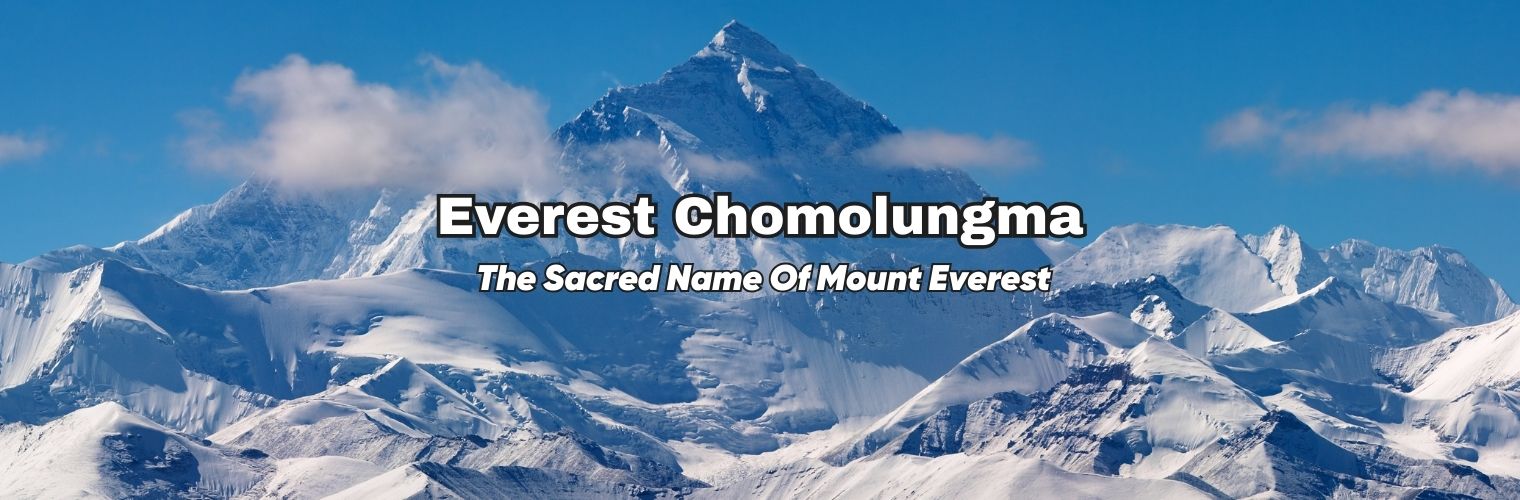
Everest Chomolungma
Did you know that before the world’s tallest mountain was popularly known as Mount Everest, it was already known as Chomolungma?
Mount Everest is 8,848.86 meters high above sea level and is the tallest mountain in the world. Though the name “Everest” has taken hold internationally, the mountain goes by many other names across cultures and regions.
Meanwhile, Chomolungma is a name found in Tibetan language traditions that conveys the mountain’s cultural and spiritual significance beyond its physical height. But in Nepal, the Everest is called Sagarmatha, demonstrating how geography and language contribute to the Everest’s name.
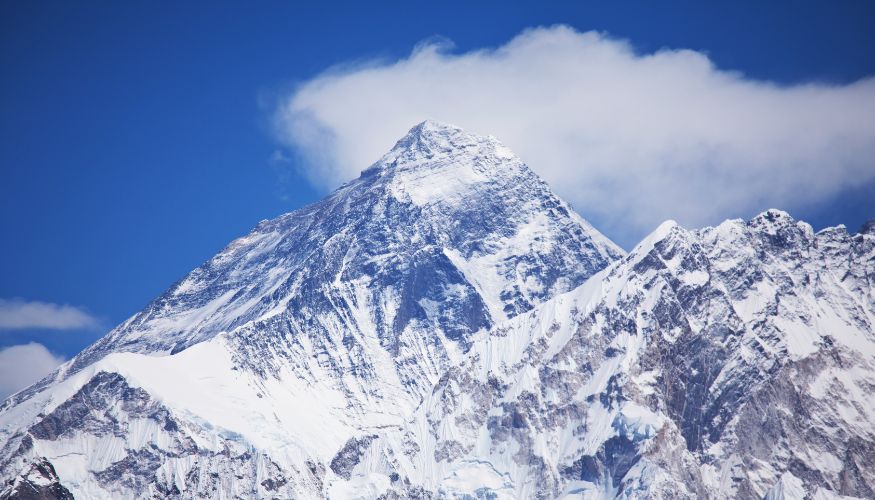
Understanding these names brings context beyond a geography lesson. It describes how the mountain is known locally, how it was identified historically, and how its significance varies across cultures.
This blog discusses the name Chomolungma, which means “Goddess Mother of the World” in Tibetan, the mountain’s location, and its cultural and climbing significance.
What Does Chomolungma Mean?
Chomolungma is the traditional Tibetan name for Mount Everest and derives from the Tibetan language.
It is often translated to “Goddess Mother of the World” and illustrates how culturally significant and sacred that mountain is to the surrounding Himalayan region.
According to Tibetan and Himalayan indigenous customs, Chomolungma is a sacred and divine mountain, revered as more than just a geographic structure but rather an omnipotent natural force or spiritual deity.
Everest vs Chomolungma – Different Names of the Same Mountain
The world’s tallest mountain has different names, depending on language, culture and historical context. In English, it’s known as Mount Everest. In Nepal, the mountain is called Sagarmatha. In Tibet, it is known as Chomolungma or “Goddess Mother of the World,” a name that emphasizes its spiritual and cultural importance.
These other names were coined because the mountain exists between Nepal and Tibet and was recognized by local cultures long before Western explorers officially mapped it out and named it. Every name offers a different cultural and historical interpretation of the same mountain.
Different Names Of Mount Everest
| Name | Language | Meaning |
| Mount Everest | English | Named after Sir George Everest |
| Sagarmatha | Nepali | “Forehead of the Sky” |
| Chomolungma | Tibetan | “Goddess Mother of the World” |
Where Is Chomolungma Located?
Mount Everest, Sagarmatha, also known as Chomolungma, is located between the Nepal and Tibet border and is part of the central Himalayan mountain system.
Geographically, Mount Everest lies within the Mahalangur Himal sub-range, a section of the Himalayas that includes several of the world’s highest peaks. The mountain’s position places it between Nepal’s Khumbu region and the Tibetan Plateau.
Chomolungma reaches a height of 8,848.86 meters, making it the highest mountain on Earth.
| Location Detail | Information |
| Mountain Name | Chomolungma / Mount Everest |
| Location | The Nepal and Tibet (China) border |
| Mountain Range | Himalayas |
| Elevation | 8,848.86 meters (29,031 feet) |
| Sub-Range | Mahalangur Himal |
| Region Nepal | Khumbu region |
| Region Tibet | Tibetan Plateau |
Cultural Importance of Chomolungma
The Tibetan name for Mount Everest, Chomolungma, is of great cultural and spiritual significance in the Himalayan region. In Tibetan Buddhism, the mountain is a holy site and home to a goddess, representing power and security in native religions.
Chomolungma holds significant sacred value for local sociocultural settings. So before climbing or travelling in the region, climbers and locals perform rituals and prayers beseeching a blessing for safe travel. These practices represent the reverence for, and spiritual relationship with, the mountain.
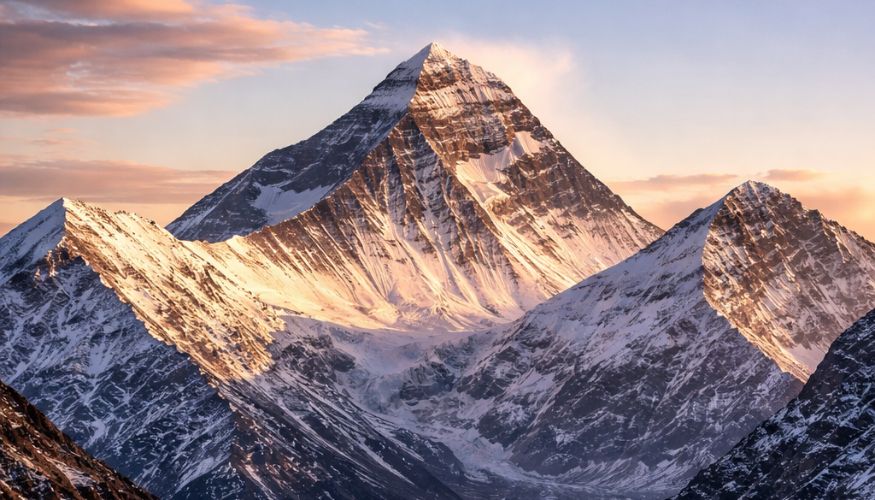
Chomolungma is viewed as more than just a mountain, but also as an omnipresent god and revered being, a concept still retained today when local villagers and climbers alike plan their Chomolungma expeditions.
History of Mount Everest
Mount Everest has an epic history of exploration, mountaineering and modern trekking. The peak was known to local communities for centuries, but reached international recognition in the 19th century via British surveying expeditions in the Himalayas. It was subsequently named for Sir George Everest, although it already had the traditional names Sagarmatha and Chomolungma.
The first successful summit of Mount Everest was in 1953 when Sir Edmund Hillary and Tenzing Norgay. This accomplishment remains a huge achievement in mountaineering history and also put the mountain on the international map.
Today, the climb of Mount Everest is considered a significant feat, having been commercialized with expeditions that provide ordering support and guides as well as equipment to help reach the summit.
Climbing Chomolungma
Chomolungma is one of the most physically challenging mountaineering goals in the world. The challenges are environmental, altitude and route-related as well as technical.
Why Chomolungma Is Difficult
It’s the extreme altitude that is the main challenge. This reduction in available oxygen at altitude impairs physical performance and can influence decision-making.
The weather is harsh and unpredictable. Strong winds, freezing temps and sudden storms are common, particularly at the summit.
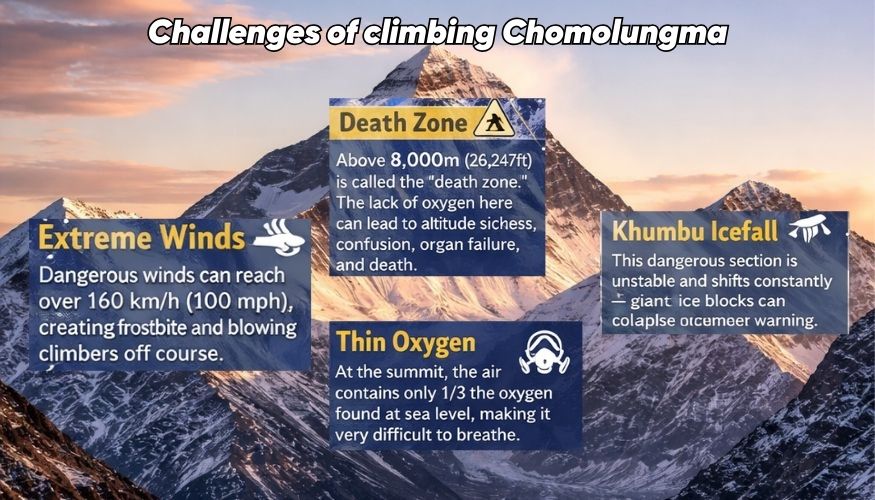
Some parts of the ascent are technically challenging, with ice slopes, fixed rope sections, and exposed ridgelines that require a certain amount of controlled movement and experience.
The Death Zone Chomolungma
Above 8,000 meters, climbers are in what’s called the death zone. At this altitude, the human body is unable to acclimatize to low concentrations of oxygen in the air, and long exposure can bring a serious risk to health.
This is why climbers try to minimize time spent in this zone on the final ascent to the summit.
Climbing Routes for Chomolungma
There are two routes used to climb Chomolungma.
The most-used route is the South Col, from Nepal. It covers the Khumbu Icefall, the Western Cwm, and the final summit ridge.
The second one is the North Ridge route from the Chinese side. It follows a line down the northern side of the mountain, includes exposed ridge climbing and high-altitude camps.
Reaching the summit safely from both routes calls for well-planned acclimatization and coordinated support.
Everest Base Camp and Trekking Experience
The Everest region provides one of the most well-organized trekking experiences in the whole Himalayas, with mountain passes reaching over 8000 meters, but also accommodation and trails.
Everest Base Camp is a popular trekking spot, standing at 5,364 meters. It serves as the culmination of the trek as well as a seasonal launch point for climbing expeditions on Mount Everest.
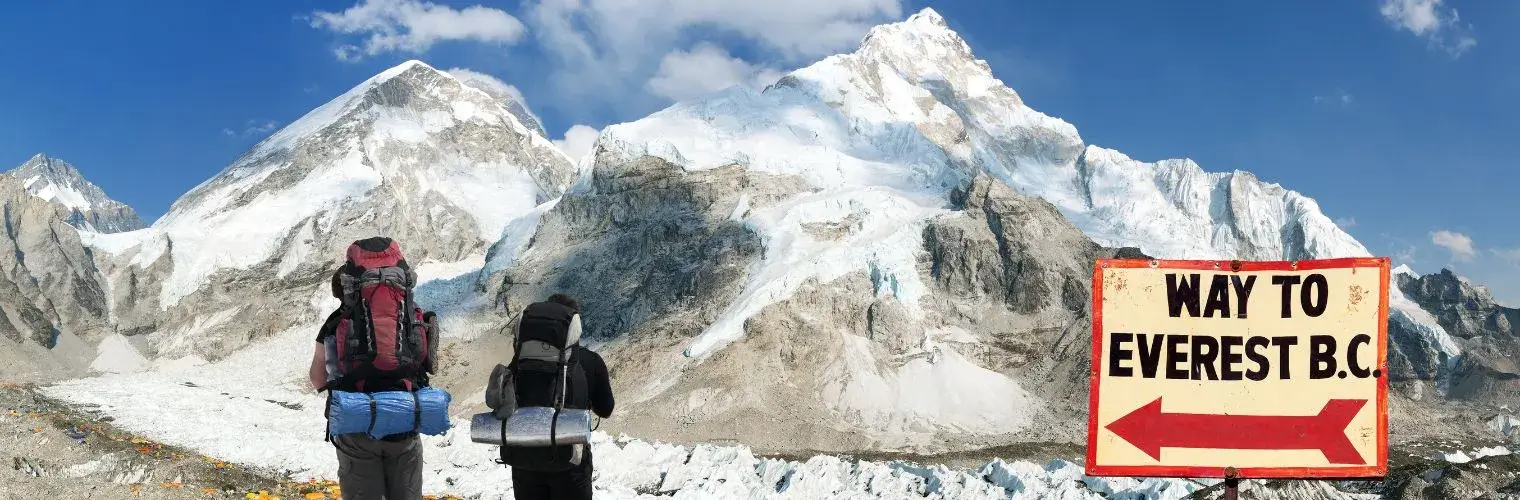
Everest Base Camp Trek
Experience a lifetime memorial adventure to the foot of the world’s highest mountain. A journey through the majestic Himalayas.
The trekking route winds through diverse landscapes, beginning in wooded valleys and exhibiting transitions to alpine and glacial landscapes as one gains elevation. The entire trail is within the Sagarmatha National Park, an area with protected features of nature as well as permanent settlements in the mountains.
Along this route, Namche Bazaar serves as the main entry and acclimatization point. Situated at roughly 3,440 meters, it acts as a logistical hub where trekkers acclimatize and gear up for the upper stages of the trek.
Why Chomolungma Is More Than Just a Mountain
Chomolungma revered spiritual symbol in Himalayan culture, where it is considered the abode of a goddess and venerated by local peoples.
All at once, it is a natural wonder of life, some of the highest altitude jungles and glaciers in the world & wild scrambling mountain scenery.
Today, Chomolungma is also a global icon of adventure, with trekkers and climbers from all over the world pursuing its challenge and grandeur in one of Earth’s most extreme environments.
FAQs
What does Chomolungma mean?
Chomolungma is a Tibetan name that means “Goddess Mother of the World.” It represents the mountain’s spiritual and cultural significance, not its physical height.
Is Chomolungma the same as Mount Everest?
Yes. Chomolungma and Mount Everest are the same Mountain. The difference is just the name of the language.
What is the Nepali name for Everest?
The Nepali name for Mount Everest is Sagarmatha.
Where is Chomolungma located?
Chomolungma is located on the border between Nepal and Tibet (China) in the Himalayan range.
Why is Everest considered sacred?
Everest never made the list because, from a religious standpoint, it is considered sacred by locals. It has spiritual meaning in both Tibetan and Nepali cultures, where the mountain is seen as a good neighbour rather than simply a physical landmark.
Final Through
Chomolungma, or Mount Everest, is more than just the highest point on Earth. Geography, mountaineering and culture combine to give it worldwide significance.
The name “Chomolungma” emphasizes the mountain’s spiritual identity, something local communities have been cognizant of and reverent to long before it was known around the world as Everest.
Man, woman and mountain travellers and readers gain these perspectives, which allow people to view the mountain as more than a geographical feature; it’s a physical place shaped by culture, history and meaning.