Is Lower Mustang Worth Visiting?
While trekking in the Annapurna Circuit, every trekker has one question in mind: “Is Lower Mustang Worth Visiting?” The short answer is yes, it is for the one who likes to immerse themselves in Tibetan culture.
In fact, Lower Mustang trek is an excellent choice for those who value cultural depth, reliable weather, and moderate trekking difficulty over wilderness isolation. It works particularly well for trekkers who are short on time, want a monsoon-safe route, or prefer cultural landscapes to high-altitude extremes.
However, it is not a universal fit. The presence of a motorable road running parallel to large sections of the trail changes the trekking experience. Dust, vehicles, and shared space with pilgrims are part of the reality unless alternate trails are deliberately chosen.
In short, Lower Mustang is rewarding when expectations match reality. But trekkers looking for solitude or untouched wilderness may feel underwhelmed, while those seeking cultural transitions and seasonal flexibility often find it surprisingly satisfying.
Quick Summary
- Lower Mustang is worth visiting for trekkers who value culture, dry landscapes, and flexibility over wilderness solitude.
- The region sits in a rain shadow and receives only 250–300 mm of rainfall annually, making it one of Nepal’s most reliable trekking options during the June–August monsoon season.
- Trekking difficulty is moderate, with most settlements between 2,700 m and 3,760 m, where wind and dust are bigger challenges than technical terrain.
- Cultural highlights include Thakali villages like Marpha, the pilgrimage site of Muktinath, and the Tibetan-influenced gateway village of Kagbeni (2,800 m).
- The presence of roads, vehicles, and pilgrims means Lower Mustang is not ideal for trekkers seeking remote, untouched trails.
What Makes Lower Mustang Different from Other Trekking Regions in Nepal?
Lower Mustang differs from Everest and Annapurna in three measurable, experience-shaping ways.
First, climate. Lower Mustang lies north of the Himalayan crest in a rain-shadow zone. Annual rainfall averages 250–300 mm, compared to nearly 3,900 mm in Pokhara. This creates an arid, high-altitude environment that remains walkable even during Nepal’s monsoon.
Second, wind. The Kali Gandaki Gorge functions as a natural wind tunnel. Daily up-valley winds routinely reach 25–45 km/h by late morning, a condition rarely experienced on Everest Base Camp or Annapurna Base Camp routes.
Third, culture. Lower Mustang marks a visible cultural transition zone. Architecture shifts from pitched roofs to flat mud roofs, monasteries replace temples, and Tibetan Buddhist influence becomes dominant as you move north from Ghasa toward Kagbeni and Marpha.
How Does Lower Mustang Compare to Upper Mustang?
Lower Mustang and Upper Mustang offer fundamentally different experiences, despite being part of the same Mustang Region of Nepal.
Lower Mustang is accessible, affordable, and flexible. Upper Mustang is regulated, costly, and intentionally restricted to preserve culture and control impact.
| Feature | Lower Mustang | Upper Mustang |
| Permit Requirement | ACAP + TIMS | Restricted Area Permit required |
| Permit Cost | Low (≈ USD 50 total) | High (historically USD 500; shifting to daily model) |
| Accessibility | Road, flight, public transport | Controlled entry only |
| Cultural Depth | Mixed Thakali & Tibetan | Predominantly Loba (Tibetan-rooted) |
| Landscape | Transition zone | Full trans-Himalayan desert |
| Solitude | Low | High |
| Infrastructure | Developed lodges | Basic teahouses |
For trekkers unsure about the cost or restrictions of Upper Mustang, Lower Mustang offers a practical introduction without long commitments.
What Kind of Landscape Can You Expect in Lower Mustang?
Lower Mustang is dry, wide, and exposed.
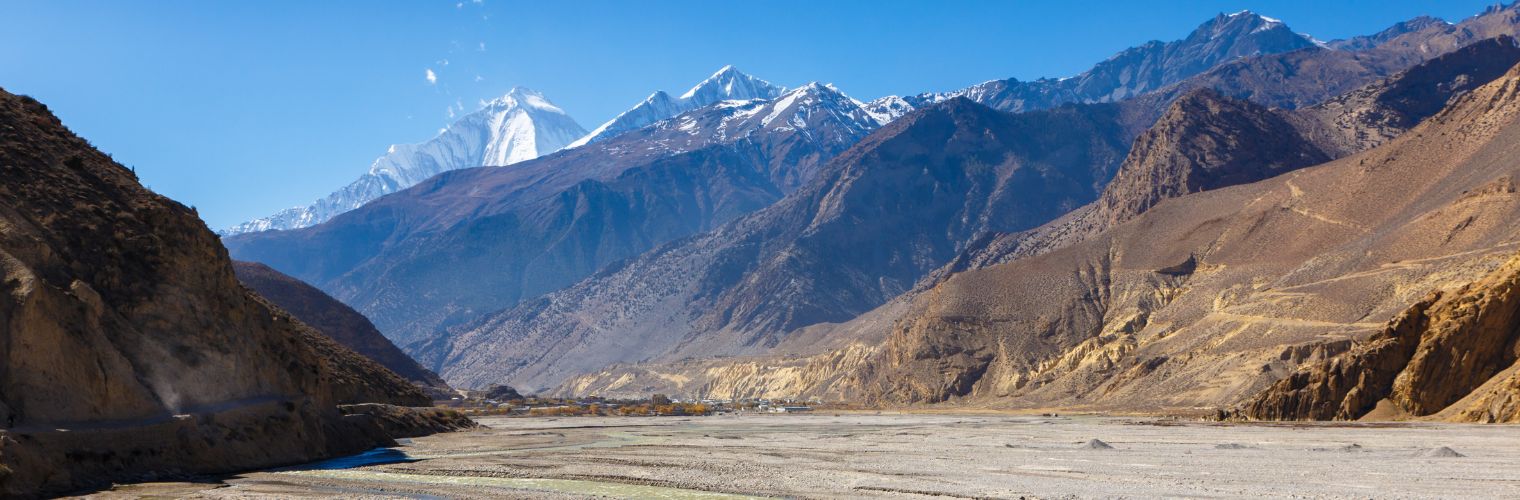
The Kali Gandaki riverbed dominates the terrain, often 500 meters wide, filled with rounded stones and fossil deposits. Vegetation is sparse, with pine and juniper forests gradually giving way to scrubland and orchards.
Apple farms around Marpha and buckwheat fields introduce pockets of cultivation, but the dominant colours remain grey, brown, and muted green. Rock formations are sedimentary and wind-eroded rather than sharp or alpine.
You trek between mountains rather than toward them. Dhaulagiri and Annapurna I rise steeply on either side of the gorge, creating extreme vertical relief rather than expected viewpoints.
Is Lower Mustang Culturally Rich Enough Compared to Other Regions?
Yes, but it is a living culture blended with commerce, not a preserved exhibit.
Marpha represents the cultural heart of Lower Mustang. The Thakali community, historically salt traders, shaped villages designed for wind resistance: narrow alleys, whitewashed stone houses, and flat clay roofs.
Kagbeni acts as the cultural gateway. Its medieval layout, red Sakya monastery, and prayer-wheel-lined lanes feel closer to Upper Mustang than to the lower Annapurna region.
Muktinath represents a rare spiritual overlap. It functions simultaneously as a major Hindu pilgrimage site and a Tibetan Buddhist sacred place, with both traditions practised openly and daily.
How Difficult Is the Lower Mustang Trek?
Lower Mustang trek is moderately difficult, primarily due to wind and altitude rather than technical terrain.
Most villages (including Jomsom and Marpha) lie below 2,800 m. This reduces altitude stress for most trekkers. However, Muktinath at 3,760 m can trigger AMS if ascended too quickly.
But wind is the defining challenge. Persistent daily gusts carry dust, strain breathing, and increase fatigue, which is why in this region sunglasses and face coverings are essential, not optional.
Typical walking times range from 3 to 7 hours per day, with the steepest ascent occurring between Kagbeni and Muktinath.
What Is the Best Time to Visit Lower Mustang?
Lower Mustang’s biggest advantage is seasonal reliability.
| Season | Conditions | Suitability |
| Spring (Mar–May) | Clear mornings, dusty afternoons | High |
| Monsoon (Jun–Aug) | Dry due to the rain shadow | Very High |
| Autumn (Sep–Nov) | Clear, busy, stable | High |
| Winter (Dec–Feb) | Cold, flight delays possible | Low–Moderate |
During the monsoon, when many trekking regions shut down, Lower Mustang remains one of Nepal’s few dependable options.
What Are the Main Places to Visit During a Lower Mustang Trek?
- Marpha – Preserved Thakali village, apple orchards, monastery complex
- Jomsom – Transit hub, airport, logistics centre
- Kagbeni – Medieval village, Upper Mustang checkpoint
- Muktinath – Major Hindu–Buddhist pilgrimage site
- Kali Gandaki Riverbed – Fossil-rich, wind-shaped landscape corridor
What is a Typical Lower Mustang trek experience like, day by Day?
Days begin early to avoid peak winds. Morning walking is calm and clear; afternoons are louder, dustier, and physically draining.
Accommodation ranges from basic lodges to concrete hotels with attached bathrooms in major towns. Food is reliable but simple: dal bhat, noodles, potatoes, and limited vegetables.
The experience is not isolated. Expect shared trails with pilgrims, vehicles, and local traffic unless alternate routes like the Lubra Valley are used.
Is Lower Mustang Safe for Trekkers?
Yes, with basic preparation.
Altitude risks are manageable with gradual ascent. Trails are wide and well-used, and medical access exists in Jomsom. Wind exposure is uncomfortable but rarely dangerous.
The region is politically stable, and crime against trekkers is extremely rare. Travel insurance remains advisable, particularly for flight delays and altitude-related contingencies.
Who Should Visit Lower Mustang and Who Shouldn’t?
Visiting Lower Mustang is:
Ideal for:
- First-time trekkers with fitness
- Cultural and landscape-focused travelers
- Monsoon-season visitors
- Short-duration itineraries
However, it is not ideal for:
- Trekkers seeking greenery
- Wilderness purists
- Luxury-only travelers
- Those sensitive to wind and dust
Is Lower Mustang Worth Visiting Compared to Popular Treks Like Annapurna Base Camp?
Let us be honest here, Lower Mustang does not compete with Annapurna Base Camp on greenery or classic alpine views.
However, it excels in weather reliability, cultural layering, and moderate altitude exposure. For trekkers prioritising these factors, Lower Mustang can be the more practical and less crowded choice.
So, Is Lower Mustang Worth Visiting in 2026 and Beyond?
Lower Mustang remains underrated but relevant.
It fits modern trekking realities: limited time, changing weather patterns, and a desire for culture over altitude extremes. For travellers whose expectations align with its dry terrain and mixed infrastructure, it continues to offer strong value.
If this sounds like your kind of trek, exploring a structured Lower Mustang itinerary is the next logical step.
FAQs: Lower Mustang Travel Questions
Do I need a restricted permit?
No. Only ACAP and TIMS are required.
Is Lower Mustang expensive?
Moderate. Transport and lodging cost more than in Langtang, but less than in Upper Mustang.
Can beginners do it?
Yes, with reasonable fitness and gradual ascent.
Is it windy?
Yes. Daily wind is a defining feature.
How many days are enough?
5–7 days cover the core experience.