10 Days Spiritual Tour In Nepal Overview
A 10 day spiritual tour in Nepal is a pilgrimage-focused travel plan that visits major Hindu and Buddhist sacred sites across Nepal within a fixed, balanced schedule. It is designed for travelers who want structured spiritual exposure without trekking, retreat programs, or physical strain.
In this spiritual tour in Nepal, we have combined the Kathmandu Valley, Pharping, Namobuddha, Lumbini, and selected low-altitude destinations, moving logically by road. In fact, you will spend the majority of your time at active temples, monasteries, and pilgrimage sites where daily rituals, prayers, and monks from different religions continue life as usual.
The tour begins in Kathmandu, where Hindu and Buddhist traditions coexist at sites like Pashupatinath, Boudhanath, and Swayambhunath. From there, it expands outward to quieter spiritual centers such as Pharping and Namobuddha, known for meditation caves and monastery life.
Then we move on to Lumbini, the birthplace of the Buddha, which serves as the spiritual anchor of the itinerary, offering space for reflection across multiple traditions within a single sacred zone.
Rather than structured meditation courses, the focus stays on observation, participation in daily prayers, mindful walking, and personal reflection. The pace is calm, intentional, and respectful, allowing travellers to engage with living spiritual traditions while maintaining comfort, clarity, and continuity throughout the 10 days.
Why Eco Nepal Trekkers for a 10-Day Spiritual Tour of Nepal
A spiritual tour needs local understanding, patience, and respect for living traditions. It also needs an operator who treats sacred places as active religious spaces, not sightseeing stops. This is where Eco Nepal Trekkers’ approach matters.
Eco Nepal Trekkers is a locally owned Nepali company, legally registered and licensed, with guides who come from mountain and cultural communities themselves. While the company was formally established in 2023, the guiding team carries more than 16 years of combined experience across Nepal.
This background allows guides to explain not only what you see, but why rituals matter in daily life, how Hindu and Buddhist practices coexist, and how pilgrims traditionally behave at each site.

Furthermore, as a team, we handle cultural respect very carefully. Guides explain temple etiquette, prayer customs, and appropriate behaviour before visits, which helps guests to participate respectfully rather than observe from a distance. Visits are timed around real daily rituals, not staged demonstrations.
For us, maintaining ethics in our day-to-day matters always comes first. As a company opened by a former porter, we take pride in ourselves by paying Guides and porters fairly. Besides that, all of our staff are properly insured, and work under safe conditions. This matters to travellers who want their presence to support communities, not burden them.
Besides that, we also work on a personalized basis. Itineraries are adjusted to individual pace, interest, and comfort, allowing space for reflection without rushing between sites. Communication is clear, expectations are realistic, and decisions are explained calmly.
For travellers seeking a grounded, respectful 10-day spiritual tour in Nepal, Eco Nepal Trekkers offers experience without exaggeration and care without pressure.
Destinations Covered in the 10-Day Spiritual Tour in Nepal
Each destination included in this tour serves a different purpose within Hindu and Buddhist traditions. Some mark historical events, while others support ongoing monastic practice, and some exist mainly for personal reflection. The focus is not on seeing many places quickly, but on spending meaningful time in locations where spiritual practice continues naturally, without being staged for visitors.
Kathmandu Valley
Our tour starts from Kathmandu Valley, as it gives you the perfect introduction to how Hindu and Buddhist co-exist in Nepal.
At first, we visit the Pashupatinath Temple , where pilgrims (mainly Hindus) come to witness Shiva devotion in its most active form. It is not quiet, and it is not staged. Rituals happen all day along the Bagmati River, and the atmosphere teaches one clear truth: in Nepal, spiritual practice includes life, death, and duty in the same space.
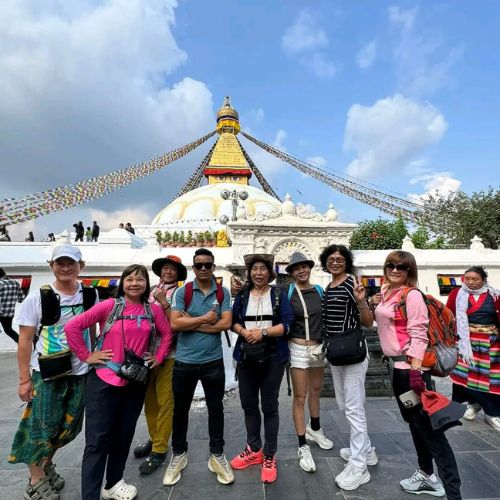
Then we move on to the famous Boudhanath Stupa, which was built for the purpose of repetition. People come to walk clockwise, spin prayer wheels, and keep their minds steady through simple action. Early mornings are especially focused, when monks chant, and local families do their rounds without rushing.
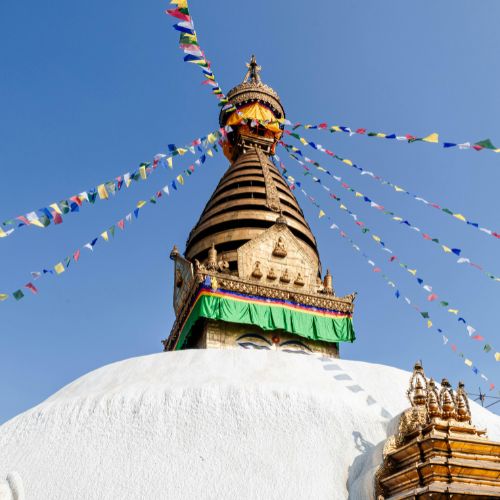
Aftwards, we visit Swayambhunath Stupa for perspective. It sits above the valley, and pilgrims climb up even when the stairs feel long. Buddhists and Hindus both worship here, which quietly explains Nepal’s shared spiritual culture better than any lecture.
Now, to understand Buddhist monks, we visit the Kopan Monastery, which gives a different feeling. It is structured and disciplined, but welcoming to visitors who want to observe. People come here to understand how monastic life works. Furthermore, you will get a brief idea of how they schedule, study, and chant, without needing to join a modern society.
Pharping
Pharping is small, but spiritually dense. People come to the Asura Cave (Yanglesho) because it is linked with Guru Rinpoche and Vajrayana practice. The caves are not about views or comfort. They are about stillness, short visits, and respectful silence in a place pilgrims consider powerful.
Namo Buddha
Namo Buddha is visited for one main reason: the story of compassion linked with Prince Mahasattva. The stupa and nearby monasteries make this idea tangible. It is also a good place for quiet walking and simple reflection because the space is open and less crowded than central Kathmandu.
Lumbini
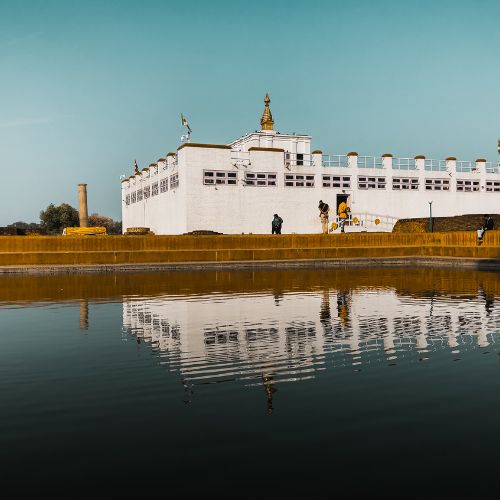
Lumbini is not symbolic. It is literal. People come because this is recognized as the birthplace of Siddhartha Gautama, marked by the Maya Devi Temple area and the Ashoka Pillar. The feeling here is calm and spacious. Visitors move slowly through the Sacred Garden and then visit the international monasteries, where different Buddhist countries express one shared respect in different styles.
Janakpur
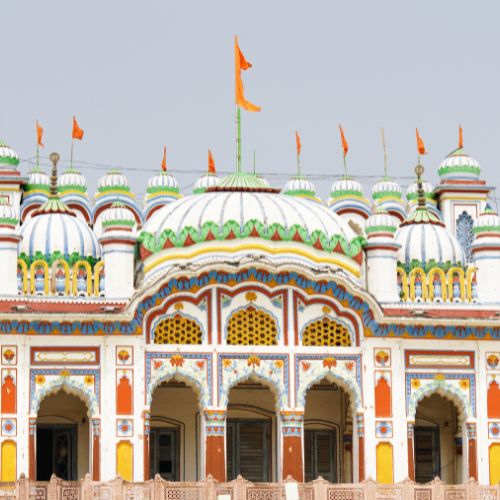
Janakpur draws Hindu pilgrims who want a connection to the Sita’s birthplace tradition. The focus is on Janaki Mandir and the surrounding sacred spaces. People come for worship, family blessings, and ritual continuity tied to the Ramayana story. It is especially meaningful for devotees from the Mithila region and beyond.
Bhaktapur and Patan
Bhaktapur is spiritual because worship is built into the city’s old squares and temples. People come to see the Newar tradition functioning in real time. In this place, you will find shrines, festivals, and temple courtyards that are still used, not just preserved.
Patan (Lalitpur) adds a strong Buddhist layer through its monasteries and bahals. Places like the Golden Temple (Hiranya Varna Mahavihar) show how Newar Buddhism lives alongside Hindu temples in one compact heritage area. It is a practical reminder that, in Nepal, faith is often shared space, shared streets, and shared daily rhythm.