

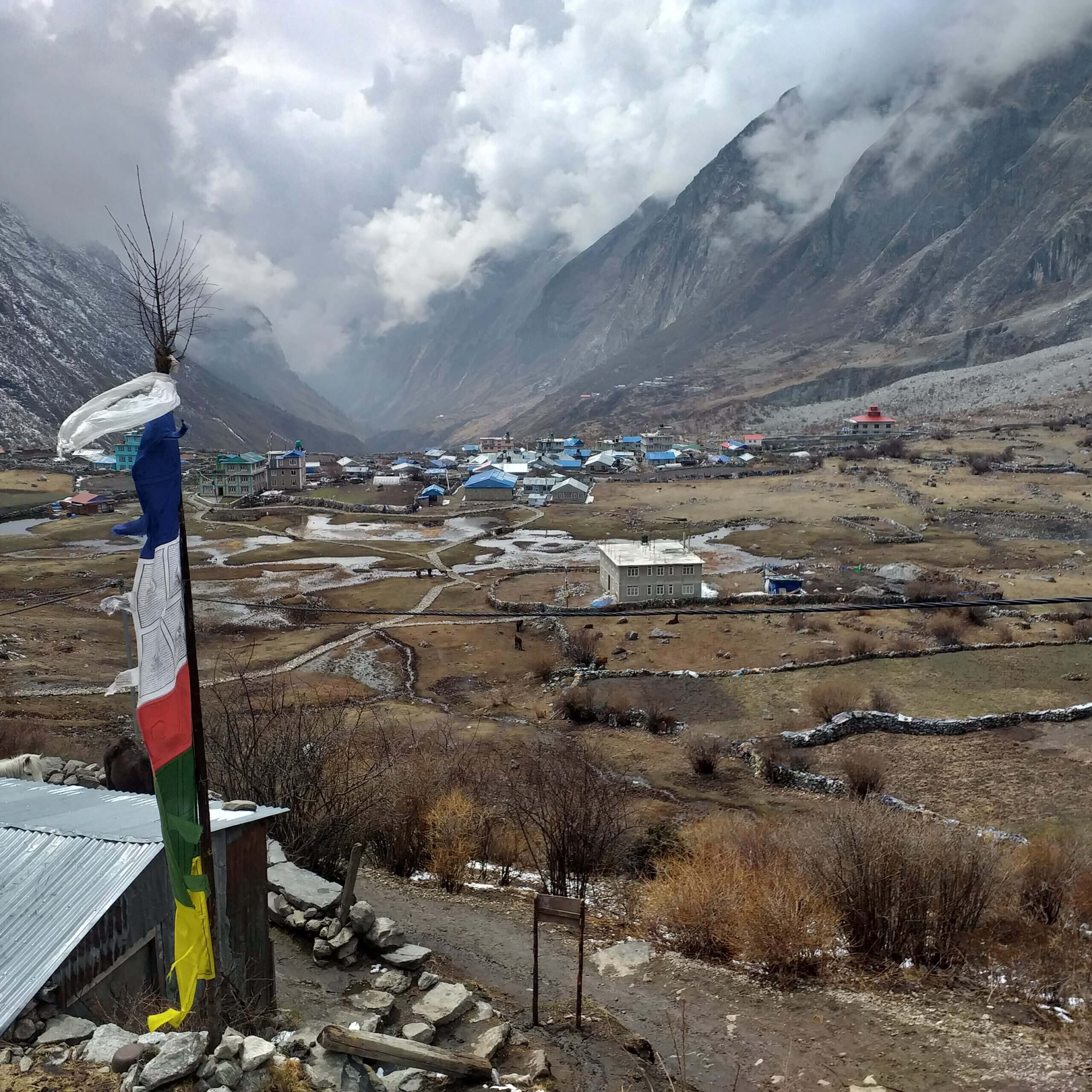
Langtang Valley Trek
TripAdvisor Reviews Recommended by 99.99% travelers
If you’re short on time and want mountain views, alpine terrain, and forest trails, the Langtang Valley trek will be perfect for you, which is not much farther from Kathmandu.
It is a moderate, beginner-friendly trek with no technical climbing and usually takes 7 to 11 days.
Kyanjin Gompa, local villages and gradual altitude gain make this a more practical and accessible trekking option in Nepal.
USD 850
Nepal
11 Days
Moderate
4,984m
Hotel/Lodge/Teahouse
Tourist Bus/Private vehicle
Min. 2 pax
Spring (Mar-may) & Autumn (Sep-Nov)
- A picturesque drive to and from Syabru Besi.
- Experience the peacefulness of the lower sections of Langtang Valley.
- Hike through the Langtang National Park and Langtang Valley.
- Magnificent vistas of Dorje Lakpa, Ganesh Himal, and Langtang Lirung.
- A close perspective on the way of life and culture of Tibetan Buddhism.
- See the well-known Buddhist monastery Kyanjin Gompa.
- Pass through dense forests, yak pastures, and high alpine meadows.
Langtang Valley Trek Overview
The Langtang Valley Trek is the best and most popular adventure trek in Nepal’s Langtang region. This trek’s trekking trail was rebuilt after the 2015 earthquake, so the route is well maintained. It is one of the most popular trekking routes in Nepal after the Everest Base Camp and the Annapurna Circuit.
Langtang National Park is rich in natural habitats where you can see a variety of plants and animals along the way. Including Himalayan yaks, Musk deer, Himalayan Goral, and Red Panda are common animals that can be encountered while passing through Langtang National Park.
The Langtang Valley trek takes you to an altitude of 4,000m, which lets you witness the beautiful views of Langtang Lirung (7227m), Dorje Lakpa (6996m), Langshisha Ri (6427m), and Ganja La (5845m).
The Langtang Valley trek has two starting points, Syabru Besi and Dhunche. Both routes pass through cultural and traditional Tamang and Buddhist Sherpa villages, which offer trekkers accommodations with great hospitality and authentic Nepali cuisine. Many historical and cultural Buddhist Monasteries and Gumbas can be seen and visited during the trek. Monasteries are filled with historical stories and myths.
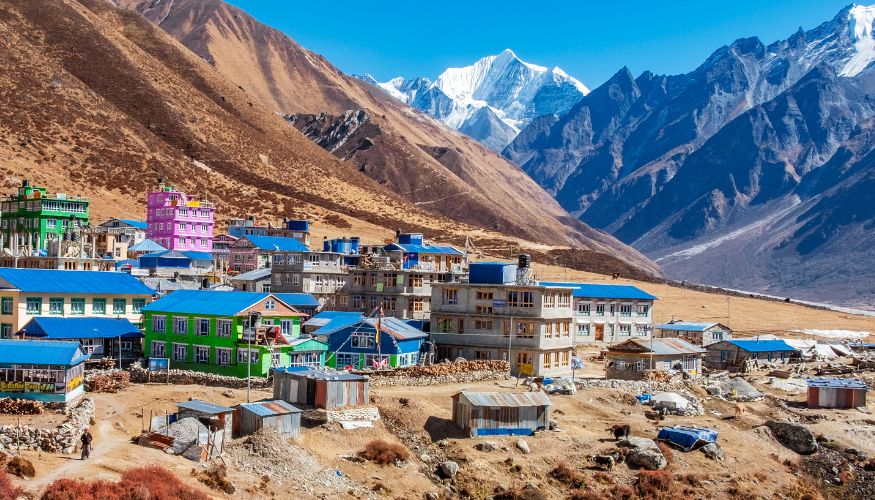
While continuing your journey to Kyanjin Gompa, you will spend the night, explore the local monasteries, and visit the Swiss Cheese Factory, which is known for high-quality artisanal yak cheese made from traditional, nutrient-rich Himalayan milk. and hike to the Tserko Ri (4,984m) viewpoint. From the Tserko Ri viewpoint, you can see beautiful glaciers, snow-capped mountains, and incredible sunrise views, including other mountains like Langtang Lirung (7,227m), Langtang II (6,586m), Yala Peak (5,520m), and Naya Khang (5,844m).
Kyanjin Ri is another important Viewpoint, and its altitude (4,773m to 15,655ft) offers a majestic view of the Langtang Lirung Glacier and Langtang Lirung Face. And from Kyanjin Gompa to Lama Hotel, then back to our starting point, Syabrubesi.
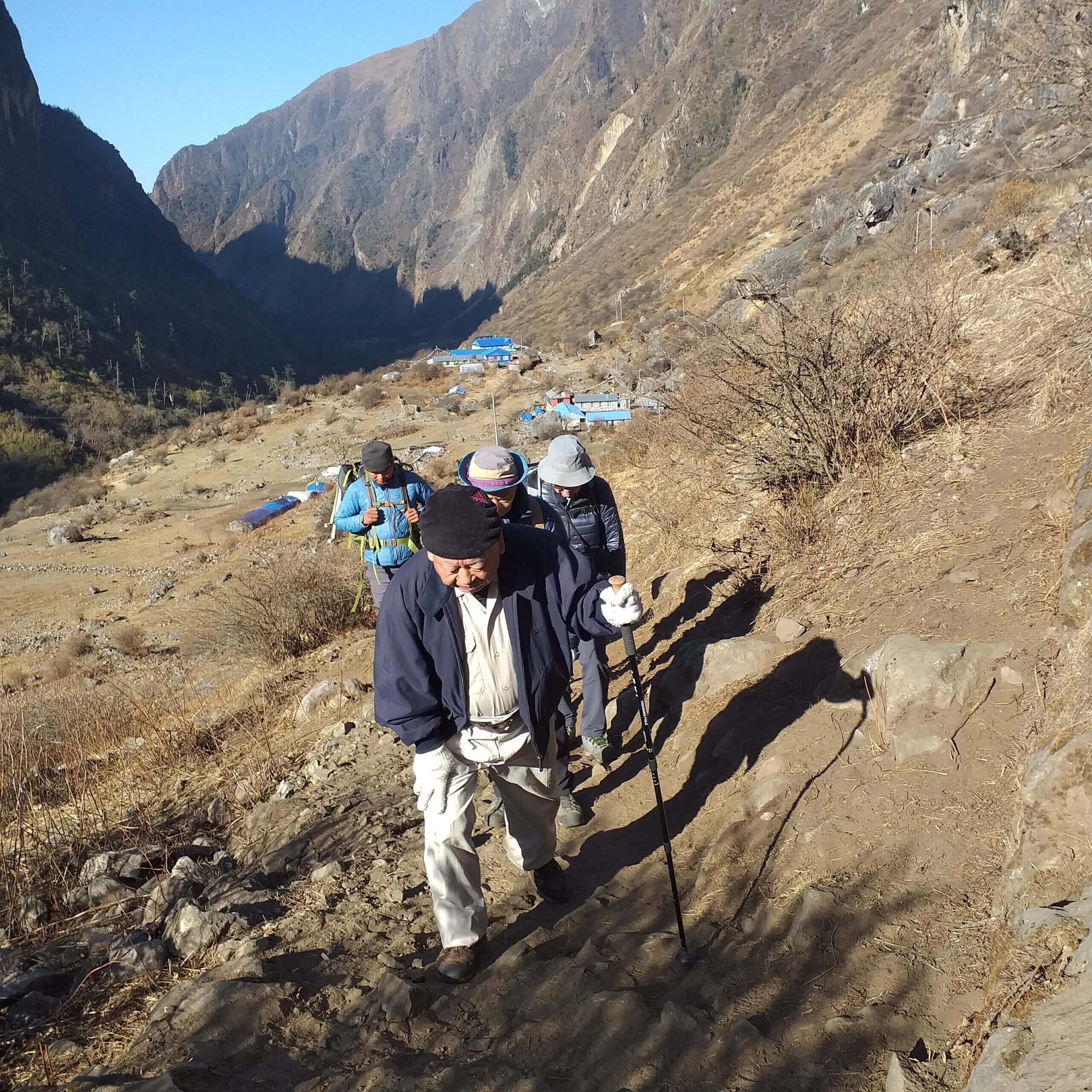
This trek lasts 7-11 days and includes an extra day for beginners. Trekking routes are easy and filled with joyful and memorable activities and scenery. You can enjoy seeing beautiful mountains, lakes, historic sites, monasteries, and cultural villages. Many people recommend this trekking route because the trails are well-built and well-maintained. Along this journey, you can also experience Nepal’s 1st Himalayan National Park.
Why Choose Langtang Valley Trek?
Langtang Valley is a popular choice for trekkers seeking a shorter, more accessible Himalayan adventure without the grandeur of the Everest Region or the Annapurna Region trails.
Its proximity to Kathmandu is one of its important advantages. For starters, the trek begins with a road trip rather than a flight, which is an easier and less expensive option from a logistical standpoint.
The trail is less crowded around the busy trekking routes, especially outside of peak seasons. It provides a quieter trekking experience while retaining existing lodges and infrastructure.
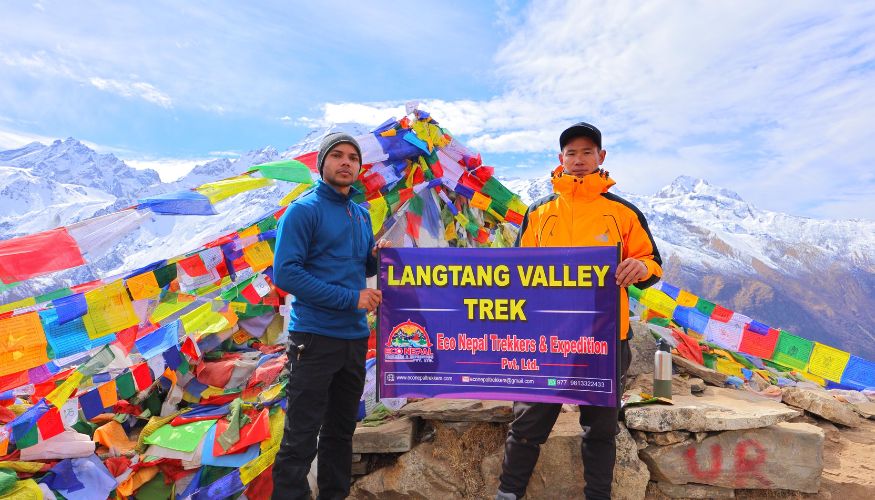
The region has many close-up mountain views, especially Langtang Lirung and the surrounding peaks. It gradually feeds from wooded trails to high alpine and glacial valleys.
Culturally, the region is shaped by Tamang communities, whose customs are rooted in Tibetan heritage. There are also villages along the way, giving you real contact with local life instead of homes catered for tourism.
The trail winds through the Langtang National Park, which encompasses forests, rivers and alpine meadows as well as wildlife habitats. This results in environmental variation within a relatively short distance.
The Langtang Valley trek is affordable in real-world terms, not too challenging to the average person and can be done in 7-11 days. You’ll also pass through Kyanjin Gompa, the most significant stoppage and one of the main highlights on the trail.
Altitude & Acclimatization In Langtang Valley Trek
The altitude on the Langtang Valley trek is relatively moderate compared to other Himalayan trekking routes like Everest Base Camp, Manaslu Circuit, or Kanchenjunga, but it still demands caution and gradual acclimatization.
The highest overnight altitude is at Kyanjin Gompa, 3,870 meters above sea level. Therefore, optional hikes to higher viewpoints like Kyanjin Ri or Tserko Ri range from 4,500 m to 5,000 m+. These higher points, when visited, are more often day hikes instead of places to sleep.
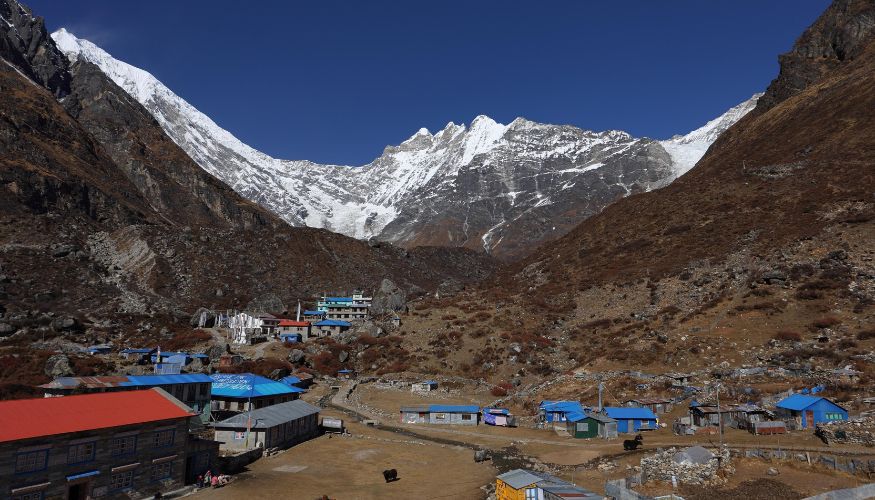
The way is called a gradual altitude gain, which lowers the risk of altitude sickness. The overall risk is low to moderate as compared to higher treks like that of Everest Base Camp, but it is never absent.
Most itineraries provide an acclimatization day at Kyanjin Gompa, which means trekkers hike short distances to higher altitudes and come back down to a lower elevation to sleep. This is based on the normal “walking high, sleeping low” practice in mountain trekking.
In practical terms, the appropriate acclimatization is dependent on:
- walking at a slow and steady pace
- All the more important to stay well hydrated throughout the trek
- Noting early symptoms like headache, nausea or dizziness
The trek does not involve technical climbing, but altitude awareness is still a must. Local guides typically keep track of pacing and symptoms, so they can adjust a trekker’s plan if necessary.
Cost for the Langtang Valley Trek
The Langtang Valley trek cost depends mainly on travel style, group size, and level of support. Expenses such as guides, transport, and logistics become more cost-efficient when shared among multiple trekkers.
To keep pricing flexible, costs are usually calculated per person based on services included and group size.
Per Person Cost Overview Table for Langtang Valley Trek
| Cost Category | Estimated Price (USD) |
| Trekking Permits, including Langtang National Park and TIMS | $50 |
| Transportation (Kathmandu to Syabrubesi) | $10 to $20 (bus) / $180+ for private jeep) |
| Trekking Guide Cost | $25 per day |
| Food & Accommodation on Trek | $35 to $50 per day |
Smaller groups or solo trekkers typically spend more per person because fixed costs such as transport and guide services are not shared. As group size increases, the overall cost per person becomes lower while maintaining the same trekking structure.
It is also important to note that these costs do not include personal expenses such as WiFi, hot showers, charging devices, or snacks. Managing these additional costs helps keep the overall trekking budget under control.
Can I Do the Langtang Valley Trek in 5 Days?
Yes. While the Langtang Valley trek is normally part of a 7–11 day itinerary, it can be done in just 5 days.
It is a moderately difficult trek that demands good physical fitness, with long walking days ( 6 to 8+ hours). This itinerary allows minimal time for acclimatization causing an increased risk of knock-on symptoms due to high altitude.
The route typically follows:
| Day | Outline Itinerary | Elevation |
| Day 1 | Kathmandu to Syabrubesi And Trek to Rimche | 2460m at Rimche |
| Day 2 | Rimche to Langtang Village | 3430m at Langtang Village |
| Day 3 | Langtang Village to Kyanjin Gompa And Optional Hike to Kyanjin Ri | 3870m at Kyanjin Gompa |
| Day 4 | Kyanjin Gompa to Lama Hotel | 2470m at Lama Hotel |
| Day 5 | Lama Hotel to Syabrubesi And Return to Kathmandu | 1350m at Kathmandu |
The reduced duration means less time for side hikes like Kyanjin Ri or Tserko Ri.
Not only does a longer itinerary allow for better acclimatization, but it also allows for the best overall conditions during trekking.
Read Full details: Langtang Valley Trek 5 Days
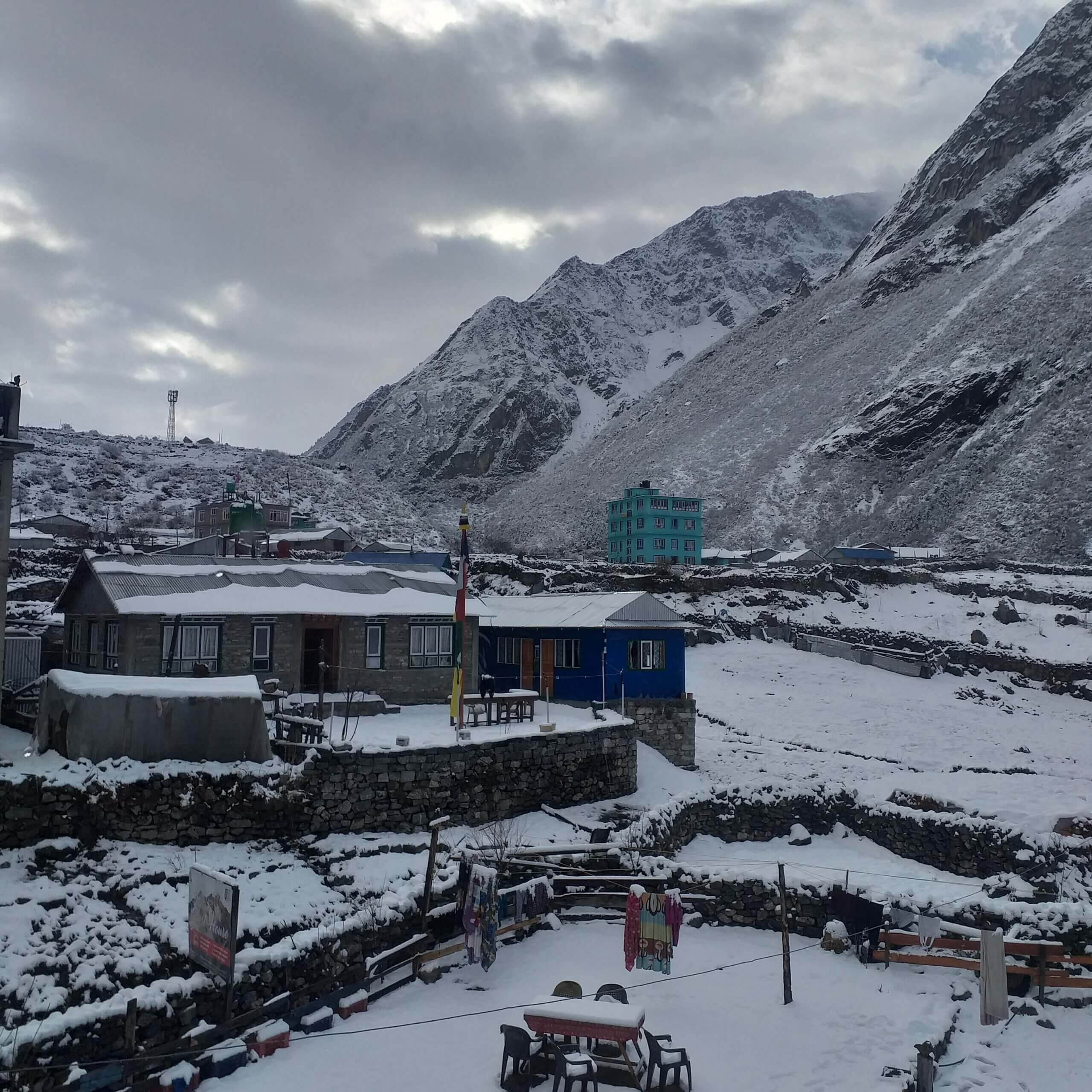
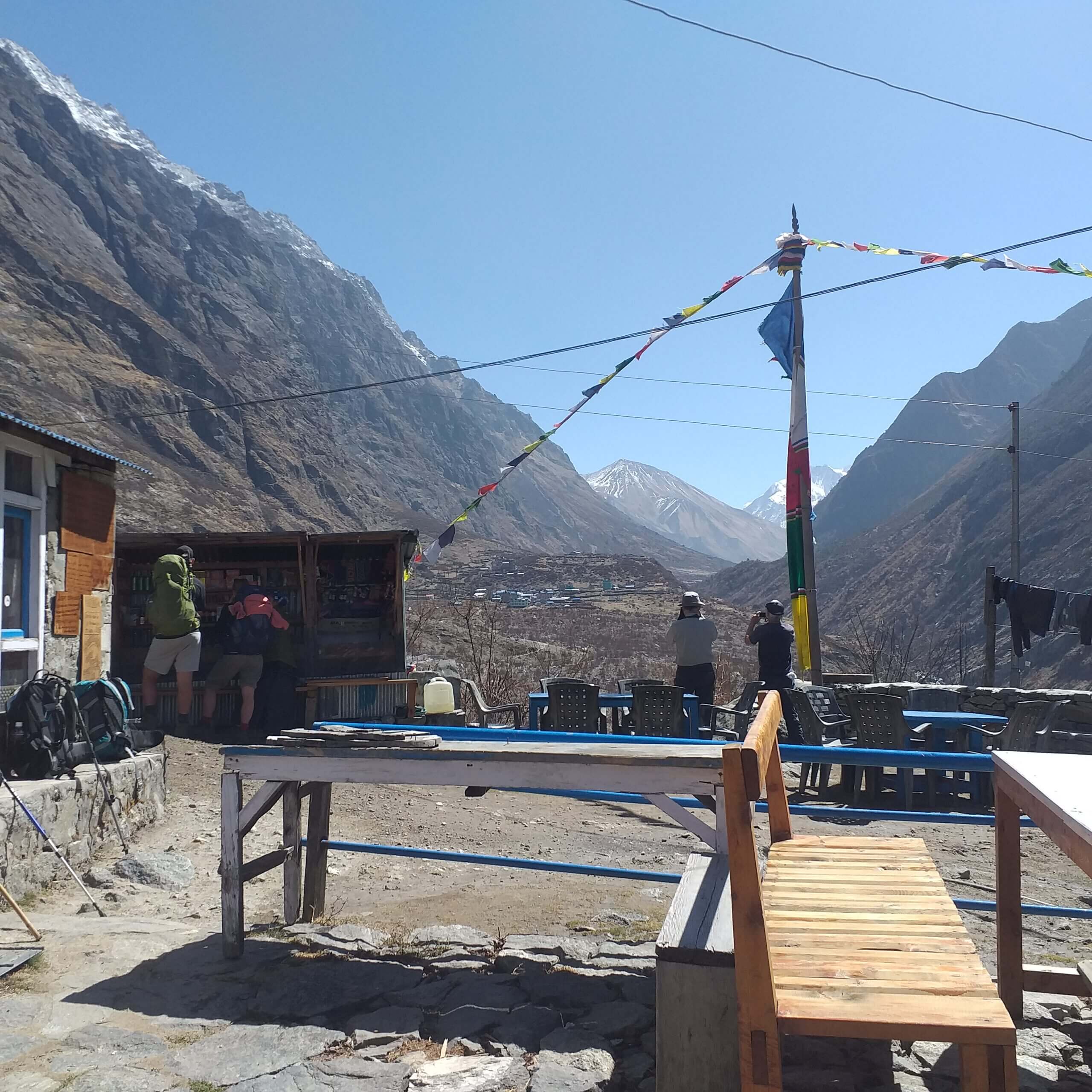

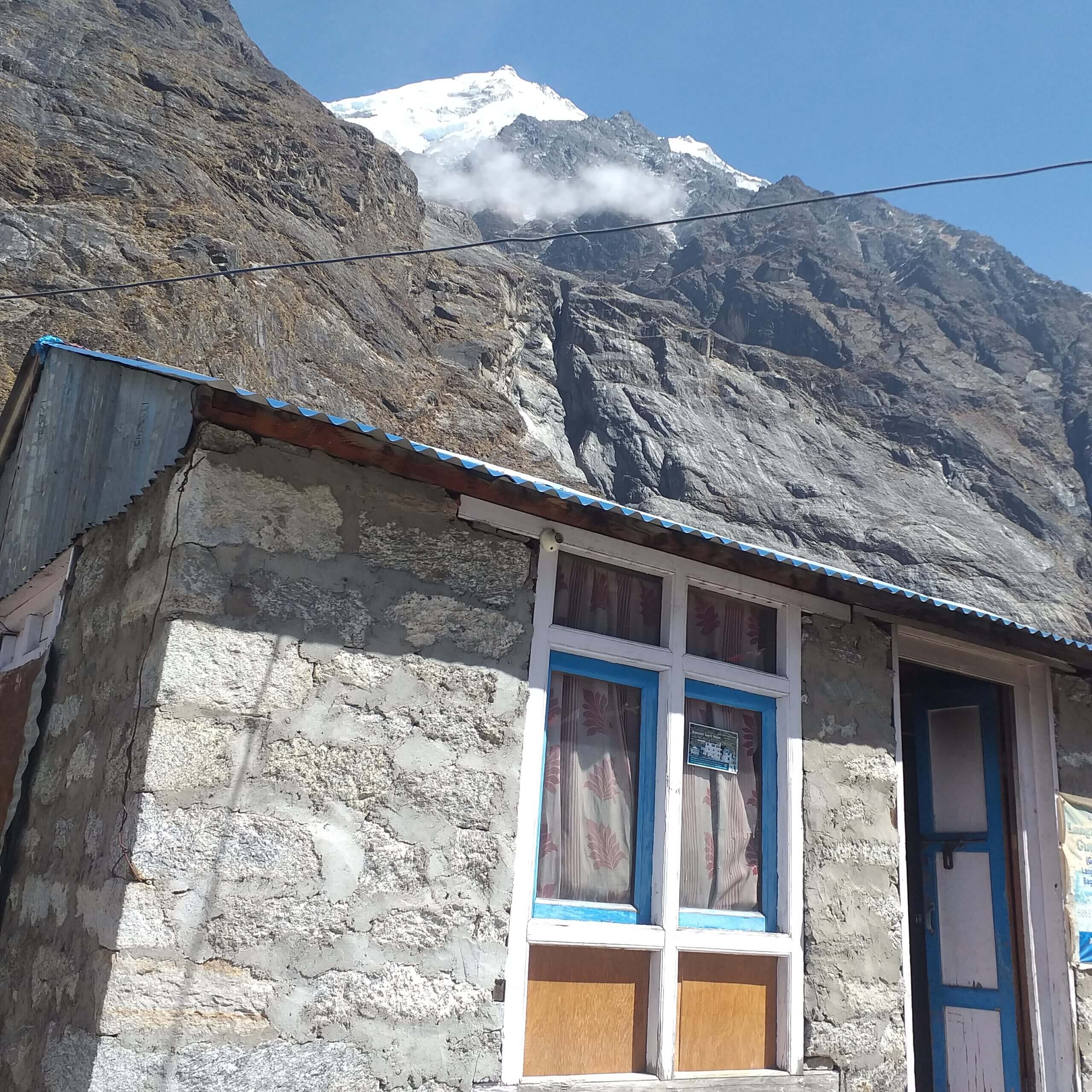
Langtang Valley Trek Short Itinerary
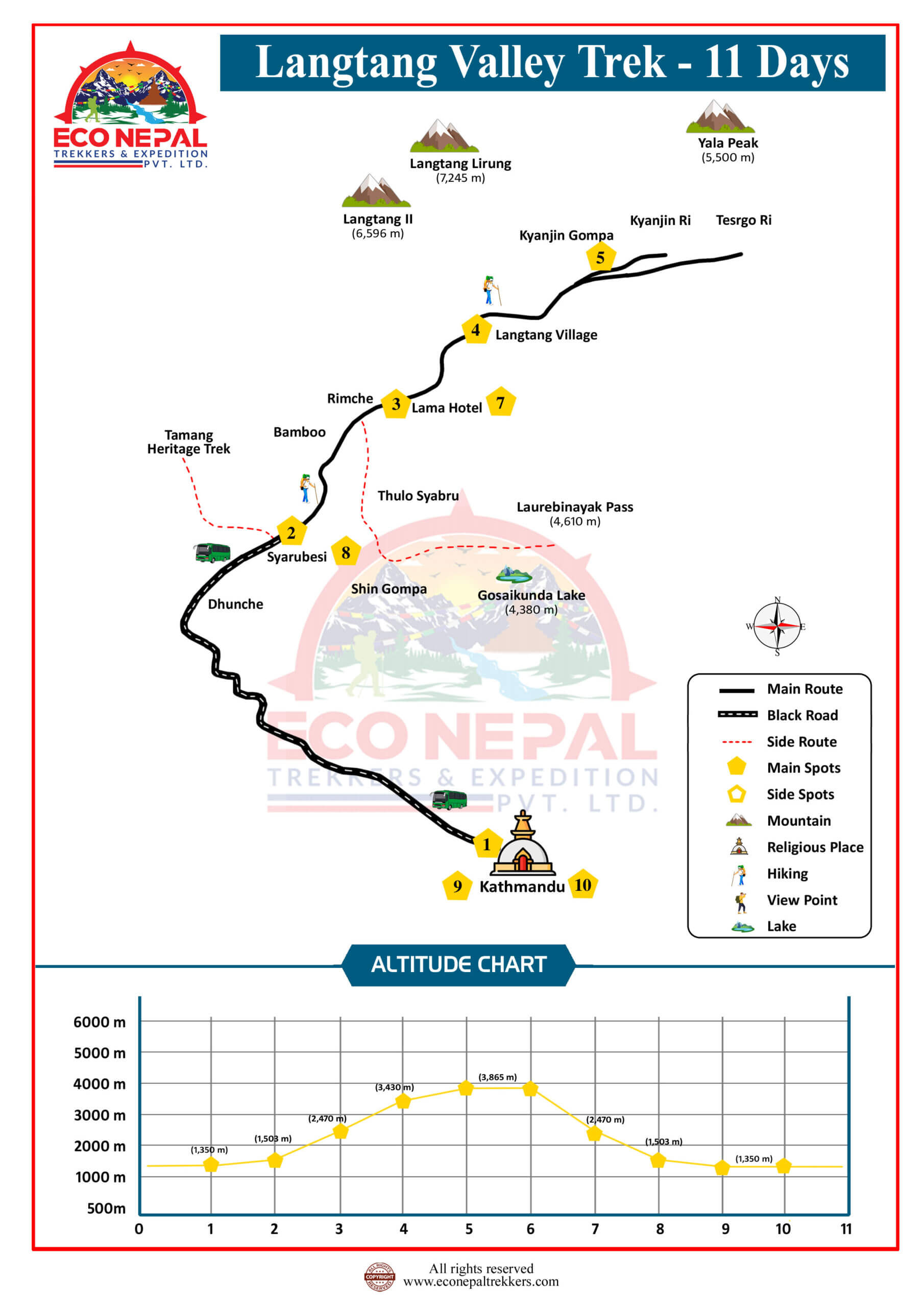
- Day 01: Arrival in Kathmandu (1,350 m/4,429 ft)
- Day 02: Drive from Kathmandu to Syabrubesi (1,550 m/5,085 ft), 7-8 hrs
- Day 03: Trekking from Syabrubesi to Lama Hotel (2,470 m/8,104 ft), 6 hrs
- Day 04: Trekking from Lama Hotel to Mundu (3,430 m/11,253 ft) via Langtang Village, 7 hrs
- Day 05: Trekking from Mundu to Kyanjin Gompa (3,865 m/12,681 ft), 3 hrs
- Day 06: Acclimatization Day in Kyanjin Gompa or Trek to Tsergo Ri (4,984m)
- Day 07: Trekking from Kyanjin Gompa to Lama Hotel (2,470 m/8,104 ft), 6-7 hrs
- Day 08: Trekking from Lama Hotel to Syabrubesi (1,550 m/5,085 ft), 6-7 hrs
- Day 09: Drive from Syabrubesi to Kathmandu (1,350 m/4,429 ft), 7-8 hrs
- Day 10: Sightseeing in Kathmandu
- Day 11: Final Departure
Detailed Itinerary
Day 01: Arrival in Kathmandu (1,350 m/4,429 ft)
Trek Distance
N/A
Highest Altitude
Kathmandu (1,350 m/4,429 ft)
Trek Duration
N/A
Meals
Breakfast
On your first day in Kathmandu, upon arrival at Tribhuwan International Airport, our representative will welcome you and then drop you off at your hotel in the Hamel area, a famous tourist hub like Pokhara. You’ll enjoy stunning views of the valley, the Himalayas, and the terraced fields below as you take off for Kathmandu. A representative will be there to help you check into your hotel and navigate the initial cultural shock of Kathmandu’s twisting, winding streets.
Day 02: Drive from Kathmandu to Syabrubesi (1,550 m/5,085 ft), 7-8 hrs
Trek Distance
122 Km (about 76 miles)
Highest Altitude
Syabrubesi (1,550 m/5,085 ft)
Trek Duration
7-8 hrs
Meals
Breakfast /Lunch /Dinner
Today, after breakfast, you will head towards Syabrubes. It takes around 7-8 hours by car, depending on traffic and road conditions.
If you’re lucky, you might encounter white water rafters tackling the formidable rapids while driving along the Trisuli River. As it departs the Kathmandu Valley, the road climbs steeply across the slopes and offers breathtaking views of the Annapurna Himalayas to the west, Manaslu, Ganesh Himal, and many more ahead.
From here, the roads become a little rocky. Getting to Dhunche takes about 50 kilometres, and from there, another 15 kilometres to Syabrubesi, where you will spend the night before starting the walk properly the next day.
Day 03: Trekking from Syabrubesi to Lama Hotel (2,470 m/8,104 ft), 6 hrs
Trek Distance
11 Km
Highest Altitude
Lama Hotel (2,470 m/8,104 ft)
Trek Duration
5-6 hrs
Meals
Breakfast /Lunch /Dinner
The Bhote Kosi, also known as the “Tibet River,” comes from adjacent Tibet and is traversed by the trail today. You will then ascend steadily through uninhabited oak and rhododendron forests before connecting with the trail from Syabru Besi.
The difficult ascent through the forest to the Lama Hotel is rewarded with a nice lodge and a comfortable bed in the little town.
Day 04: Trekking from Lama Hotel to Mundu (3,430 m/11,253 ft) via Langtang Village, 7 hrs
Trek Distance
14.5 Km
Highest Altitude
Mundu (3,430 m/11,253 ft)
Trek Duration
6-7 hrs
Meals
Breakfast /Lunch /Dinner
After breakfast, you will continue your journey to Mundu (3,430 m/11,253 ft) via Langtang Village, which takes you around 7 hours by walking from Lama Hotel. You will pass through a stunning woodland with Langtang Lirung in the background. By the time you get to Ghora Tabela, the trail will have passed through lush meadows, and you can see the Langtang Range encircling the valley on two sides.
As you proceed, the valley opens, revealing herders tending to their animals on the elevated summer pastures. Just a half-hour walk more will bring you to Mundu. The antique homes in this area serve as a memory of how the communities in this valley used to appear.
Day 05: Trekking from Mundu to Kyanjin Gompa (3,865 m/12,681 ft), 3 hrs
Trek Distance
7 Km
Highest Altitude
Kyanjin Gompa (3,865 m/12,681 ft)
Trek Duration
3-4 hrs
Meals
Breakfast /Lunch /Dinner
The trail ascends gradually from Mundu as the valley widens and the views expand while passing through yak farms. With several Buddhist artefacts, including chortens, prayer flags, and rocks bearing Buddhist inscriptions, the trip is now short.
You will arrive at the Kyangjin settlement after fording several minor streams and moraines. There, you can observe a small monastery, as well as a cheese factory run by the government, which is a great place to get supplies for lunch and afternoon snacks.
There is time to relax in the afternoon or explore the neighbourhood because you will arrive before lunch. So, you can enjoy some of the breathtaking views and ascend the valley in the direction of Langshisha Kharka.
Day 06: Acclimatization Day in Kyanjin Gompa or Trek to Tsergo Ri (4,984m)
Trek Distance
N/A
Highest Altitude
Tsergo Ri (4,984m)
Trek Duration
3-4 hrs
Meals
Breakfast /Lunch /Dinner
While travelling to a higher altitude, you need to take proper rest. You should be able to get familiar with the elevation and the surroundings to prevent altitude sickness. So, today you can just dwell around the Gompa and the periphery.
But if you think you can continue the journey, you will head towards Tserko Ri. The walk to Tsergo Ri (4,984m), from where you can see more than 20 Himalayan peaks, the Langtang Valley, and ice lakes, is exciting but a difficult ascent.
This strenuous ascent is well worth it for the stunning sights and thrilling experience! Then you will return to Kyanjin Gompa for a second night and a well-earned dinner after soaking in the beautiful sights.
Day 07: Trekking from Kyanjin Gompa to Lama Hotel (2,470 m/8,104 ft), 6-7 hrs
Trek Distance
20 Km
Highest Altitude
Lama Hotel (2,470 m/8,104 ft)
Trek Duration
6-7 hrs
Meals
Breakfast /Lunch /Dinner
Today, you will retrace your steps from Kyangjin to Ghora Tabela by taking the Langtang Khola from Mundu village to Kyangjin. Without a doubt, the ascent will be faster than the descent. You will then continue the downward slope to the Lama Hotel after lunch.
Day 08: Trekking from Lama Hotel to Syabrubesi (1,550 m/5,085 ft), 6-7 hrs
Trek Distance
11 Km
Highest Altitude
Syabrubesi (1,550 m/5,085 ft)
Trek Duration
6-7 hrs
Meals
Breakfast /Lunch /Dinner
The trek’s last day is today. You have two options for returning to Syabrubesi. You can retrace your steps through the forest and the towns of Bamboo and Rimche which will take around 7 hours to get to Syabrubesi.
Alternatively, you can take a shorter, steeper path that offers breathtaking vistas of the Langtang Valley. The route includes Sherpa Gaun and Rimche. Depending on the weather and your degree of fitness, you can choose the path you want to take that day.
Day 09: Drive from Syabrubesi to Kathmandu (1,350 m/4,429 ft), 7-8 hrs
Trek Distance
122 kilometers
Highest Altitude
Kathmandu (1,350 m/4,429 ft)
Trek Duration
7-8 hrs
Meals
Breakfast
After spending a most memorable time trekking through the gorgeous Rasuwa region of the Langtang Valley, you will enjoy a morning drive that will take you back to Kathmandu. In the evening, you can wander through the city or do some souvenir shopping to finish off your time in Kathmandu.
Day 10: Sightseeing in Kathmandu
Trek Distance
N/A
Highest Altitude
Kathmandu (1,350 m/4,429 ft)
Trek Duration
5-6 hrs
Meals
Breakfast
We set out on a pleasurable city tour of Kathmandu. Visit famous sites including Swayambhunath Stupa (the Monkey Temple), Pashupatinath Temple, Boudhanath Stupa, and the historic Durbar Square as we learn about the city’s rich cultural past.
Experience the bright colours, exquisite architecture, and meditative atmosphere of these UNESCO World Heritage sites firsthand. In the centre of Nepal’s capital city, it’s a day full of unique encounters and opportunities for cultural exploration.
Day 11: Final Departure
Trek Distance
N/A
Highest Altitude
1350m
Trek Duration
N/A
Meals
Breakfast
It’s time to leave Nepal. A representative will pick you up and take you to the airport in time for your flight back home. It is advisable to arrive at the airport two hours before departure.
Trip Map
Cost Includes
- Airport pick-up and drop-off by private car/hiace/, or bus, depending on group size.
- 3 nights at a Three-star hotel in Kathmandu on a sharing basis with breakfast
- Your Hotel to Machhapokhari Bus Station and Return Your hotel by Private transport
- Kathmandu to Syabrubesi and from Syabrubesi to Kathmandu transportation by Local Bus/Private Jeep depen on your required
- Three Meals a day during the trek, including Breakfast, Lunch, and Dinner.
- 3 times a cup of tea or coffee during the trek
- Every night, Seasonal fruits after dinner during the trek
- All necessary permits, Langtang National Permit and TIMS (Trekkers’ Information Management System) fees.
- All accommodations will be Tea Houses and Lodges during the trek
- An experienced Trekking guide who is licensed by the government
- A porter will be available during the trek to carry your luggage. Each porter will be assigned to two clients, ensuring easy and convenience
- All transportation as per itinerary
- Experienced Cultural license holder, Tour Guide for sightseeing
- Private Vehicle for Kathmandu sightseeing
- Farewell dinner in a typical Nepali restaurant
- Achievement Completation Certificate after the Trek
- All expenses related to staff members’ wages, accommodation, meals, gear, insurance, and required medications will be covered.
- Emergency helicopter rescue services are available and must be paid for by your travel insurance company
- Government taxes, vat, and office service charge
Cost Excludes
- Nepal entry visa fee
- The international flight fare and airport departure tax
- Travel insurance, including high-altitude emergency evacuation coverage
- Your Personal Gear And Equipment
- Lunch and dinner meals in Kathmandu
- Kathmandu Sightseeing entrance fee
- Your personal expenses, personal hygiene Hot Shower, WiFi, bar and beverages bills, alcohol drinks, telephones during the trek
- All drinks (Alcohol, Mineral water, hot water, coffee)
- Sweet things like chocolates, Desert during the trek
- Tips for your Guide & Porter as well as Driver
Useful Information
What Is The Best Season To Do Langtang Valley Trek?
The best Seasons for the Langtang Valley Trek are spring (March to May) and autumn (mid-September to November), which are ideal seasons for an exciting, clear-weather trek.
Autumn offers outstanding weather and crystal-clear views of the beautiful mountains. The best time to experience your adventure in the Himalayas is between September and November.
Similarly, spring (March to May) is the second most well-known trekking season. It’s also a fantastic choice for high-altitude trekking and mountain climbing.
Trekking in the Langtang Valley is also available in the winter (December to February). But there’s a chance of wind and chilly weather. There is typically ice and snowfall above 3,000 meters. On the other hand, because of the rainy weather, the monsoon is not advised. Unfavourable weather conditions can make travelling difficult, and excessive rain might cause further issues.
How Difficult Is Langtang Valley Trek?
The Langtang Valley Trek has a moderate difficulty rating and is suitable for a variety of trekkers. Although it does require some physical fitness, it is not particularly demanding, making it appropriate for beginners as well.
For individuals who aren’t used to high-altitude walking, the trail’s ascent to an altitude of about 5,000 meters may provide some difficulties. For the majority of people, it is manageable thanks to the gentle elevation and clearly marked trails.
The average length of the trek is 7-11 days, giving hikers plenty of time to progressively acclimatize and reduce their risk of altitude sickness. It’s crucial to pay attention to your health, take breaks when necessary, and drink enough water while travelling.
From thick forests and green meadows to rocky trails and moraines, the landscape is diverse. The walk may include some sections that call for navigating rivers and tough, narrow routes. These challenges can be handled with the right planning, trekking poles, and strong footwear.
How to Prepare For Langtang Valley Trek?
The Langtang Valley Trek requires physical training, careful equipment selection, mental preparation, proper health insurance, and route knowledge.
Even though it’s a moderate trek, you must be physically fit because you will be walking for five to seven hours every day at elevations above 3,000 meters during the trek. Since acclimatize is crucial, schedule a slow climb and drink plenty of water. Pack a sleeping bag, first aid kit, water purification tablets, sturdy trekking boots, and layered clothing for different temperatures.
Additionally, because there are no ATMs along the trail, it is crucial to have cash on hand. Hiring a guide or porter can increase comfort and safety, and it is advised to have travel insurance that covers high-altitude trekking.
If you want to know in detail about Preparation for Langtang Valley Trek, you can read Our Article here: Langtang Valley Trek Preparation Guide
Accommodation & Food on Langtang Valley
The Langtang Valley trek is serviced with local accommodation in the form of teahouses, basic mountain lodges integrated into villages along the route.
The rooms are basic, often twin-sharing with no more than bedding and a few pieces of furniture. Teahouses exist in all the main stops, including Kyanjin Gompa, etc.
Food along the route is standardized. The most widely available and frequently offered meal is dal bhat (rice, lentils, and veggies). You can choose noodles, soups, fried rice, pancakes and light snacks. Most lodges serve tea and coffee.
Facilities are basic. Toilets are typically shared, and hot showers can be found in some lodges for a fee. Charging devices and Wi-Fi are usually available for a fee.
Heating is typically confined to the dining area, and rooms go unheated.
Required Permits for Langtang Valley Trek
To trek in the Langtang Valley, you need two permits, which are verified at designated entry points along the route.
The first one is the entry permit to Langtang National Park. It is a relatively inexpensive permit ($30/person).
The second one is a TIMS (Trekkers’ Information Management System) card for about $20. A TIMS card is a card used to monitor trekkers for safety and management.
Both permits need to be acquired prior to starting the trek, generally in Kathmandu or at official checkpoints along the route.
All this work is then passed on to an independent and guided trekker for a compulsory trek in the Langtang region.
Packing List for Langtang Valley Trek
When preparing your packing list for the Langtang Valley trek, it is best to focus on layered clothing, important gear and practical weight management.
Conditions vary at different elevations, so clothing should be suitable for both warm daytime temperatures and colder mornings and evenings. Gear is limited to items that are necessary for the trek without any superfluous weight.
It is not about carrying more, but even what needs to be carried for comfort, security and changing mountain conditions.
Here’s the full packing list for the Langtang Valley trek.
Head Gear
- Trekking Hat or Cap/Sun Hat
- Buff or Neck Gaiter
- Sunglasses
- Face Mask
- Bandana
Handwear
- Hiking Gloves
- Liner Gloves
- Waterproof/Windproof Gloves
- Hand Warmers
Bodywear
- Base Layer (top and bottom)
- Fleece Jacket
- Insulated Jacket/Down Jacket
- Waterproof Jacket
- Trekking Pants/Convertible Pants
- Long-sleeve Shirts
- Rain Pants
- Thermal Underwear
- Sports Bra (for women)
- Swimsuit (for hot springs)
Footwear
- Hiking Boots
- Thin Socks
- Cotton Socks
- Gaiters (optional)
- Camp Shoes or Sandals
Essential Trekking Equipments
- Backpack
- Trekking Poles
- Sleeping Bag
- Sleeping Pad
- Water Bottles/Bladder
- Headlamp/Flashlight
- Trekking Map/Guidebook
- Compass
- First Aid Kit
- Duct Tape
- Whistle
- Multi-tool/Knife
- Waterproof Bags/Covers
Other Essentials and Documents
- Trekking Watch/Altimeter
- Passport Copy
- Trekking Permits
- Sunscreen
- Insect Repellent
- Lip Balm
- Toilet Paper
- Portable Phone Charger
- Camera (optional)
Dates of Trip
October 2, 2026 - October 12, 2026
$950Save $200
November 7, 2026 - November 17, 2026
$950Save $200
Frequently Asked Questions
Client Reviews
Write Review Top Rated Service
Similar Packages

USD 1280
13 Days
Trekking in Nepal
Moderate
USD 800
12 Days
Trekking in Nepal
Moderate
USD 2200
22 Days
Trekking in Nepal
Strenuous