
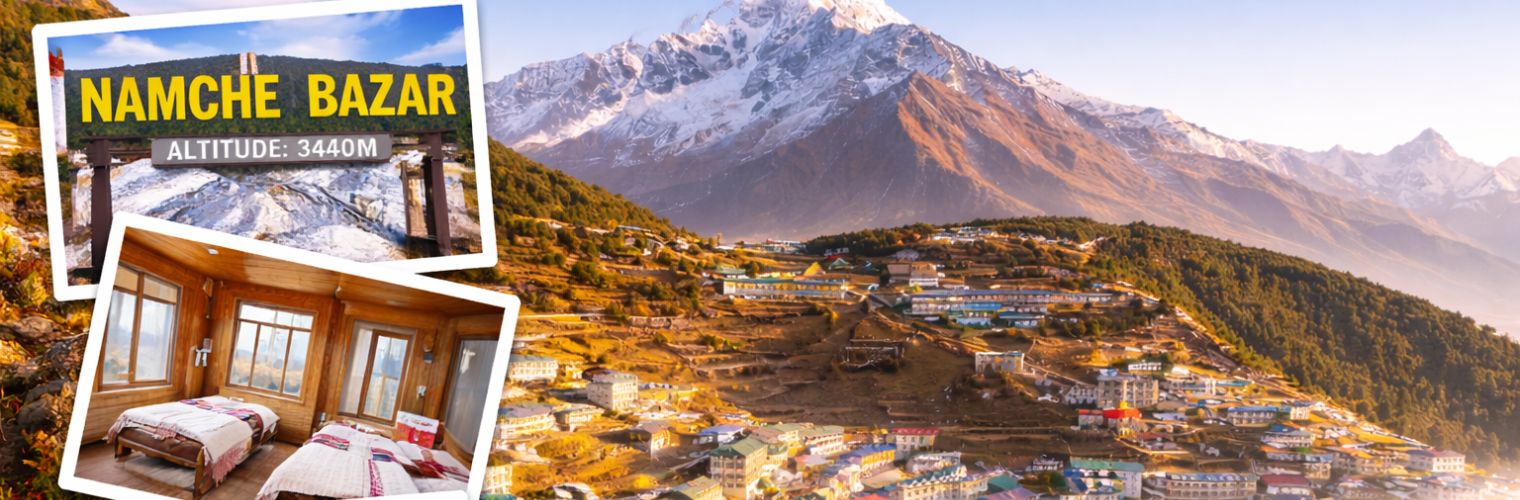
Namche Bazaar Acclimatization, Weather, And Accomodation Guide
Did you know that nearly every Everest region trek includes a mandatory acclimatization day in Namche Bazaar? And it’s not a break, but rather a proven safety strategy.
Every trekker arriving in Namche has already passed through Lukla, the region’s only operational air gateway. By the time you reach Namche, the trek stops feeling introductory and starts feeling serious. The climb from the river after Jorsalle is long, the oxygen is thinner than it was in Lukla, and although you may still be moving steadily, your breathing tells you something has changed.
Namche Bazaar acclimatization is not scheduled for comfort. Whether you are on the classic Everest Base Camp Trek, a shorter version of the route, or combining valleys toward Gokyo, this is the altitude checkpoint that shapes the rest of the journey. It is scheduled because this is the first altitude checkpoint at which your body must properly adjust.
You arrive at 3,440 meters, and although you might feel strong during the afternoon, symptoms usually appear later. In fact, most trekkers do not feel altitude while walking. They feel it when they lie down.
In fact, here are things that will happen:
- Headaches often begin during the first night.
- Sleep becomes lighter.
- Your heart rate feels higher than expected.
Because of this delayed response, two nights are built into the itinerary. The first night allows your body to react. The second night confirms that it is stabilizing. However, if you push forward after just one night, symptoms frequently worsen at Tengboche or Dingboche, and so the decision made in Namche determines how the rest of the trek unfolds.
Quick Summary
- Namche Bazaar sits at 3,440 meters (11,286 ft) and marks the first major high-altitude overnight stay on the Everest trekking route.
- Most Everest region itineraries include two nights in Namche for acclimatization, as altitude symptoms often appear 6–24 hours after arrival.
- Trekkers gain nearly 800 meters from Phakding to Namche in a single day, making this the first serious altitude checkpoint of the trek.
- Mild altitude symptoms affect approximately 60–70% of trekkers here, including headaches, light sleep, and elevated heart rate.
- Namche Bazaar weather follows a mountain pattern, with clear cold mornings, strong midday sun, and rapid temperature drops after sunset.
- Accommodation ranges from basic tea houses to mid-range lodges, but bedrooms are rarely heated and nighttime temperatures often approach freezing.
Understanding Namche Bazaar Altitude, Elevation, and Height
Namche Bazaar altitude sits at 3,440 meters and in feet equals 11,286 ft. Namche Bazaar’s elevation is therefore well inside what mountaineers classify as high altitude.
The altitude of Namche Bazaar matters because it marks the first sleep above 3,000 meters for most trekkers.
Furthermore, it is at this elevation range where oxygen availability drops to roughly 65 percent of sea level pressure.
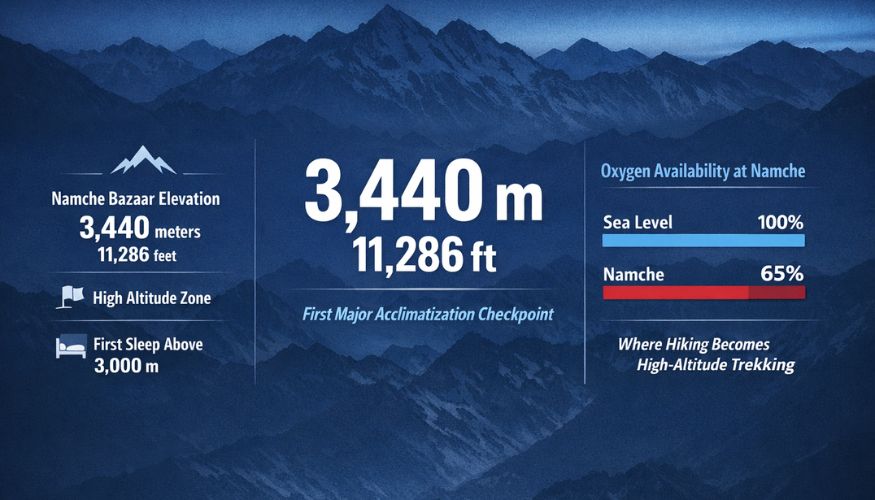
Namche’s altitude is not extreme compared to Everest Base Camp; it is high enough to trigger physiological adaptation.
In fact, the height of Namche Bazaar surprises many trekkers because the village itself feels developed and lively. How high it becomes clear the moment you try to climb stairs inside your lodge.
Altitude namche bazaar nepal defines the transition from hiking to high-altitude trekking.
To understand its position, compare the stages below.
| Location | Altitude (m) | Altitude (ft) |
| Lukla | 2,860 m | 9,383 ft |
| Phakding | 2,652 m | 8,699 ft |
| Namche | 3,440 m | 11,286 ft |
| Tengboche | 3,860 m | 12,660 ft |
You gain nearly 800 meters from Phakding to Namche in a single day. Because this gain happens quickly, your body has limited time to adapt gradually.
Symptoms typically appear between 6 and 24 hours after arrival. So, although you might arrive at 2 PM feeling fine, the first night often tells the real story.
Things to remember: Before reaching Namche, trekkers pass through Monjo, where the Everest Base Camp Trek Permit is checked at the national park entrance.
In fact, around 60 to 70 percent of trekkers experience mild symptoms here, including headache, poor sleep, and shortness of breath. However, severe altitude sickness remains less common at this stage.
This is precisely why Namche functions as the acclimatization anchor of the Everest route. Many who ignore this adjustment period become part of the statistics discussed in Why 60% Trekkers Fail to Complete EBC. In fact, ignoring acclimatization in this region will make the Everest Base Camp dangerous.
Concerned about altitude risk?
Talk to our local experts and plan safely.
Namche Bazaar Weather and Climate Explained Simply
Namche bazaar weather feels moderate on paper, but it behaves differently in practice.
The weather at Namche Bazaar follows a predictable mountain rhythm, although small changes can feel dramatic because of the altitude.
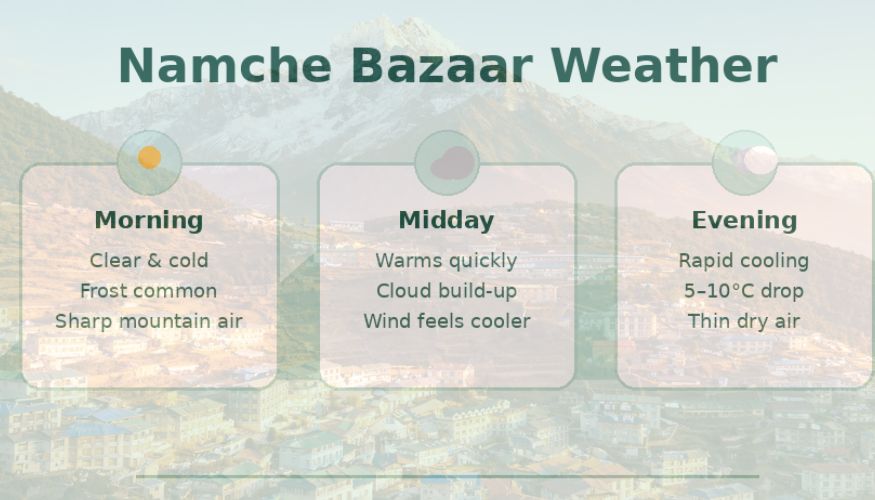
In fact, Namche’s weather in the early morning is often clear and cold. Frost is common, and the air feels sharp. However, by late morning, sunlight warms the amphitheater-shaped valley quickly.
But here is a difference: Namche’s weather forecast might show 10 degrees Celsius, yet the wind exposure makes it feel significantly cooler.
Furthermore, the weather in this region changes throughout the day because the village sits inside a bowl. As warm air rises from lower valleys, clouds often begin forming around late morning.
The weather in Namche Bazar between 11 AM and 3 PM can shift from clear to partly cloudy in less than an hour.
Namche bazaar climate is defined by contrast. Mornings are calm and cold. Midday is bright and intense. Evenings cool rapidly after sunset.
Because the air is dry and thin, temperatures can drop 5 to 10 degrees within a single hour after the sun disappears.
Namche Bazaar Weather by Month
Namche Bazaar weather by month reveals a clear seasonal structure. These patterns directly influence the Best Time for Everest Base Camp Trek, especially for those sensitive to cold or crowd density.
Below is a full breakdown of the temperature in namche bazaar nepal by individual month.
| Month | Day Temp (°C) | Night Temp (°C) |
| January | 3 to 4 | -15 to -14 |
| February | 3 to 4 | -15 to -14 |
| March | 7 to 8 | -10 to -8 |
| April | 8 to 10 | -8 to -6 |
| May | 12 to 13 | -2 to 0 |
| June | 15 | 3 to 5 |
| July | 15 to 16 | 4 to 5 |
| August | 15 | 3 to 5 |
| September | 14 | 2 to 0 |
| October | 11 to 14 | -5 to 2 |
| November | 8 | -10 to -8 |
| December | 6 to 8 | -13 to -10 |
The temperature in Namche Bazaar during peak seasons, such as April and October, offers comfortable walking conditions during the day. However, the temperature in Namche Bazaar at night remains cold even in those months.
Namche Bazaar in winter becomes very cold after sunset, and while skies are often clear, indoor conditions can be challenging without proper insulation.
But here is a difference: the temperature in Namche changes each day; in this article, we only provided you with the average weather for each month. If you are interested in real-time weather tracking and wind patterns, you check it here:
- Windy Live Temperature of Namche Heliport
- Ventusky Live Weather Patterns of Namche Bazaar
- AccuWeather Daily Weather of Namche Bazaar
- Zoom Earth Live Wind Patterns Of Namche Bazaar
What Clothing You Actually Wear in Namche
Namche Bazaar clothing depends less on heavy expedition gear and more on smart layering. Understanding what to pack for the Everest Base Camp Trek becomes critical once you experience how quickly temperatures drop after sunset.
During the day, most trekkers wear a base layer, a fleece, trekking pants, and sunglasses because UV exposure at altitude is strong. However, as wind builds during midday, a windproof shell becomes necessary.
In the evening, the situation changes quickly.
Dining halls are heated for a few hours, but bedrooms are rarely heated. So you change into thermals, wear a down jacket, and keep a beanie on even indoors.
Gloves are often worn indoors during colder months.
Laundry is technically possible. However, because water is cold and drying time is long, many trekkers rotate two base layers instead of washing daily.
Cotton is discouraged because it retains moisture, while synthetic or merino performs better in thin, dry air.
What Staying in Namche Feels Like During the Day and Night
Staying in Namche feels structured but slower than expected.
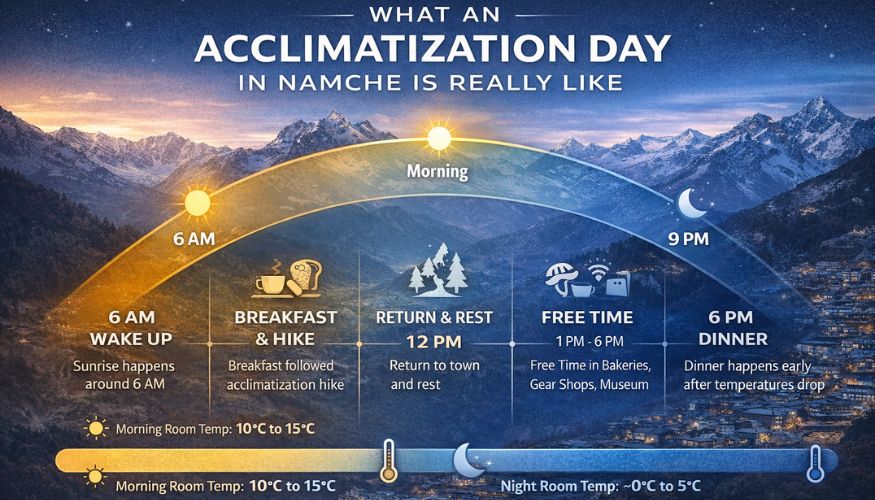
You wake early because sunrise happens around 6 AM, and because trekkers tend to align with daylight.
After breakfast, you begin your acclimatization hike, usually toward Everest View Hotel. You walk slowly, and although the distance is short, the elevation gain reminds you that you are already high.
By midday, you return to town and rest.
Afternoons are quieter than expected. People sit in bakeries, drink tea, and use WiFi. Others browse gear shops or visit the museum.
Dinner happens early because temperatures drop quickly after sunset.
The dining hall becomes a temporary gathering space. Conversations revolve around how everyone is feeling, whether headaches are present, and what the weather might look like tomorrow.
However, once the heater turns off, the temperature falls sharply. By 9 PM, most trekkers retreat to their rooms.
Inside bedrooms, temperatures often hover around 0°C to 5°C. In colder months, it can drop below freezing.
Sleep may be fragmented. Altitude affects breathing rhythm, and frequent waking is common.
Namche at night becomes quiet. There is no traffic, and there are few distractions. The silence reinforces the realization that you are in the high Himalaya.
Accommodation Types in Namche Bazaar
Namche Bazaar accommodation ranges from simple tea houses to upgraded lodges.
Tea houses in Namche Bazaar typically provide twin beds, shared bathrooms, and no bedroom heating. Rooms are basic, and comfort depends largely on your sleeping bag.
A Namche Bazaar tea house operates on the expectation that guests eat meals there. In return, room prices remain low. In fact, accommodation pricing here contributes directly to the overall Everest Base Camp Trek Cost, especially during peak April and October windows.
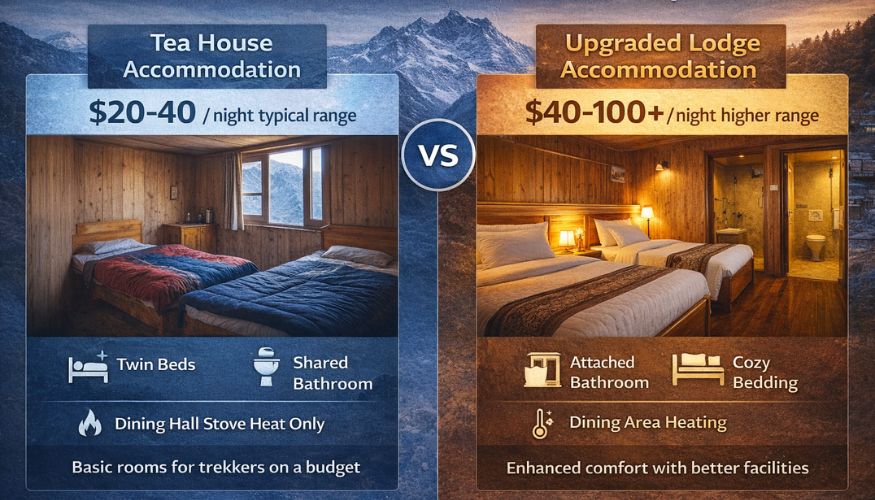
Namche Bazaar hotels offer improved facilities, including attached bathrooms and sometimes better insulation. However, heating remains limited to dining areas.
Mountain lodges of nepal namche may include better construction quality and slightly thicker mattresses, but altitude remains the defining factor of comfort.
Prices vary as follows.
| Category | Approx Price |
| Budget | 5 to 15 USD |
| Mid-range | 20 to 50 USD |
| Higher-end | 60 to 150+ USD |
Rooms fill quickly between noon and mid-afternoon. Therefore, arriving early improves your options.
Planning your Everest trek?
Talk to our local experts and plan clearly.
This is one reason many trekkers choose to hire a guide and Porter for the Everest Base Camp Trek, as guides secure rooms ahead of late arrivals.
Notable Lodges in Namche
- Panorama Lodge Namche Bazaar is frequently chosen because of its consistent service and good terrace views. It attracts independent trekkers who prefer mid-range reliability.
- Khumbu lodge Namche Bazaar is centrally located and historically established, although it can feel busy during peak seasons.
The best hotel in Namche Bazaar depends on your tolerance for cold rather than luxury expectations.
Everest View Hotel Namche is located above the town at 3,880 meters.
Everest View Hotel in Namche Bazaar is visited primarily for acclimatization hikes rather than as a main overnight base.
Namche Bazaar to Everest View Hotel
Namche Bazaar to Everest View Hotel distance measures approximately 1.5 to 2 kilometers one way. The round trip is about 3 to 4 kilometers. Elevation gain is roughly 440 meters from 3,440 m to 3,880 m.
Because this follows the climb high, sleep low principle, it supports acclimatization effectively.
Most trekkers spend 30 to 45 minutes at the hotel before descending.
However, staying too long at a higher elevation can increase fatigue, so the purpose remains adaptation rather than leisure.
What Namche Teaches You Before You Go Higher
Namche is where trekking becomes high-altitude trekking, whether you are continuing toward Tengboche on the classic route, attempting the Everest Three High Passes Trek, or branching toward the quieter Gokyo Lake Trek.
Namche bazaar altitude demands respect.
Namche bazaar weather shifts daily between cold mornings and bright afternoons.
Namche Bazaar accommodation is comfortable compared to the higher villages, but still cold at night.
And because adaptation begins here, two nights are not indulgent. They are essential.
FAQ
How high is Namche Bazaar?
Namche Bazaar sits at 3,440 meters or 11,286 feet above sea level.
At this altitude, oxygen availability drops to roughly 65 percent of sea level pressure. Most trekkers sleep here for the first time above 3,000 meters, which is why acclimatization becomes necessary.
What is the altitude of Namche Bazaar in feet?
Namche Bazaar altitude in feet is 11,286 ft.
Because this is high altitude, mild symptoms such as headache or poor sleep are common during the first night.
Why do trekkers stay two nights in Namche?
Trekkers stay two nights for Namche Bazaar acclimatization.
The first night allows the body to react to altitude. The second night confirms that symptoms are stable before ascending to Tengboche or higher villages.
Is altitude sickness common in Namche?
Yes, mild symptoms are common at Namche.
Around 60 to 70 percent of trekkers report headache, fatigue, or disrupted sleep. Severe altitude sickness is less common, but Namche is where early warning signs appear.
How cold does Namche Bazaar get at night?
Night temperatures in Namche can drop below freezing even in peak trekking season.
Inside rooms, temperatures often sit between 0°C and 5°C, and in winter they fall much lower.
What is the weather like in Namche Bazaar?
Namche bazaar weather follows a clear daily pattern.
Mornings are cold and often clear. Afternoons are warmer but windier. Evenings cool rapidly after sunset.
What is the temperature in Namche Bazaar during trekking season?
During spring and autumn, daytime temperature in namche bazaar usually ranges between 8°C and 14°C.
Night temperatures typically fall between -5°C and 2°C.
What clothes should I wear in Namche Bazaar?
Namche Bazaar clothing should focus on layering.
During the day, a base layer and fleece are usually enough. At night, a down jacket, thermals, warm socks, and a beanie are necessary because rooms are unheated.
Are there good hotels in Namche Bazaar?
Yes, Namche Bazaar hotels range from basic tea houses to higher-end lodges.
Rooms are generally simple, but some lodges offer attached bathrooms and hot showers. However, bedroom heating is rare.
What is the best hotel in Namche Bazaar?
The best hotel in Namche Bazaar depends on comfort expectations.
Panorama Lodge and Khumbu Lodge are well-known options, while Everest View Hotel is visited during acclimatization hikes rather than used as a standard overnight stop.
How far is Namche Bazaar to Everest View Hotel?
The distance from Namche Bazaar to the Everest View Hotel is about 1.5 to 2 kilometers one way.
The hike gains roughly 440 meters in elevation and takes about 3 to 4 hours round-trip.
Is Namche Bazaar cold in winter?
Namche Bazaar in winter is very cold, especially at night.
Daytime skies are often clear, but night temperatures can drop to -15°C.