
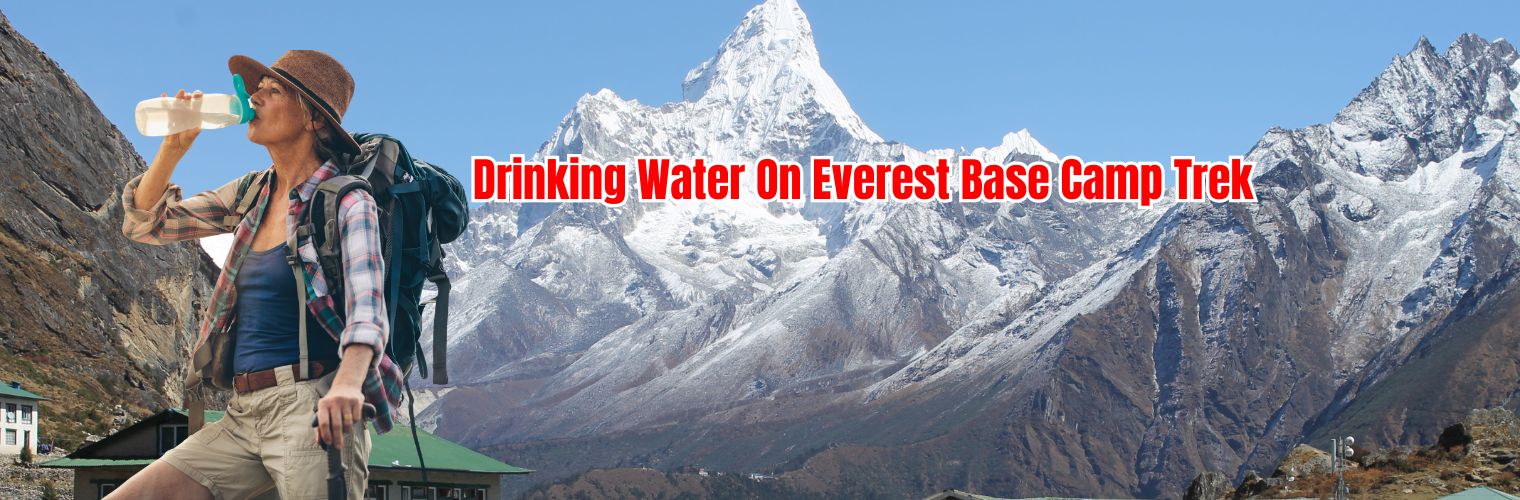
Drinking Water On Everest Base Camp Trek
When you are trekking to Everest Base Camp, hydration is key, as you will find yourself gaining altitude where the air above 4000 m tends to be dry, and your body works harder due to the increased difficulty of walking at those altitudes.
There are many sources of drinking water along the primary trekking trail between Lukla and Mount Everest Base Camp, such as teahouses, lodges, water stations, bottled water, and local water.
Natural spring and tap water, on the other hand, can be unsafe to drink without treatment, as the water may carry microorganisms. Practical options for the majority of trekkers are sterilized refill water, properly filtered or purified water, or sealed bottled water.
In this guide, you will learn where water is available, how to treat unsafe water for safe drinking, common locations of water along the route, and tips for staying hydrated while trekking.
Can You Get Drinking Water on Everest Base Camp Trek?
Yes, you can get drinking water along the Everest Base Camp Trek at teahouses, lodges, local water stations, and refill points. In villages such as Phakding, Namche Bazaar, Tengboche, Dingboche, Lobuche, and Gorak Shep, trekkers can refill their bottles.
There is also bottled water, but prices tend to go up the higher you get due to transportation and supply costs.
Even the cleanest-looking water from untreated sources like natural springs or taps cannot be trusted and is not to be assumed safe for drinking.
Before drinking untreated water, trekkers are recommended to treat it with a water filter, purification tablets, or a UV purifier. Water is scarcer at Everest Base Camp than in the lower villages, so it’s feasible to carry enough water with you from Gorak Shep for the journey to Base Camp, Kala Patthar and back.
Different Drinking Water Options on the Everest Base Camp Trek
There are several options for drinking water available to the trekkers along this route:
- bottled water
- boiled from teahouses or filtered if you own a filtration system
- natural spring water
- refill stations
Bottled water is a savings in these cases, but is a higher cost at elevation. One common alternative is boiled water, usually obtained from teahouses by paying money. Some lodges and refill stations have filtered and treated water, but you may need to purify natural spring water before drinking it. No need to haul a stack from Kathmandu; just settle for a reusable bottle or hydration bladder and refill along the path. To limit plastic waste along the way, you should also make use of refill and purification options.
How to Purify Water During the Everest Base Camp Trek
Water purification tablets, portable filters, UV purifiers, and boiling can all be used to sterilize untreated water along the Everest Base Camp Trek.
All have their own pros and cons, and the best trade-off will ultimately be dictated by your water source, how you are trekking, and what you personally prefer. The purification tablets are lightweight and easy to carry.
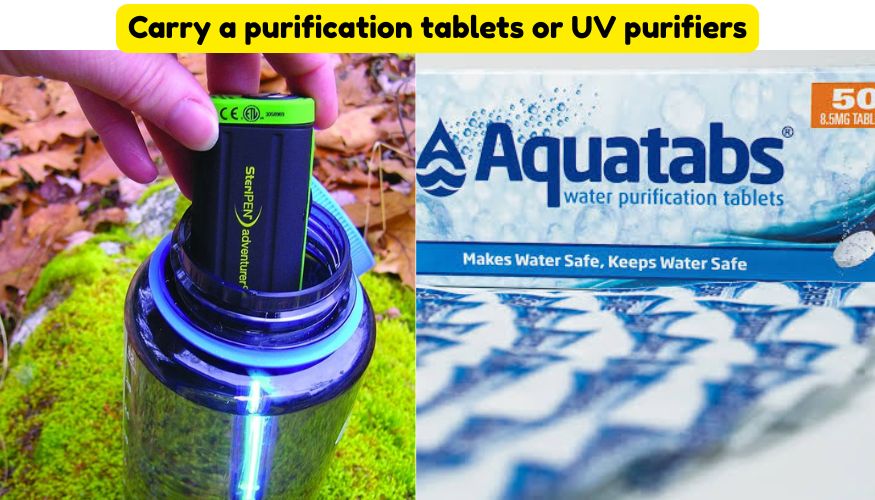
The filters that remove many contaminants with chemicals and UV purifiers work quickly in clear water, while boiling is one of the more reliable treatment methods but requires fuel & time.
If you carry a portable water filter with purification tablets, it will be functional for the whole trek; most trekkers do this. Regardless of the method, always carefully follow the manufacturer’s guidelines and treat water whenever the source is unknown or untreated.
How Much Water Should You Drink on the EBC Trek?
Trekkers require more fluid than during normal daily activity due to prolonged walking, dry mountain air, and increasing altitude. For many trekkers,
A practical target is between 3-4 liters of total fluids, i.e., water and other drinks, per day, with more fluids consumed during long or strenuous walking days.
Hydrate at higher altitudes rather than waiting until you are thirsty. Over-hydration, or over-consumption of water, leads to low precautions of sodium in the blood.
This is because the aim here is to replenish lost fluids from walking, breathing, and sweating and not to try to force huge quantities of water down.
Water and Altitude Sickness
You are also drinking a lot of water on the Everest Base Camp Trek, but just drinking won’t help prevent altitude sickness! Trekking demands exertion, and dehydration will exacerbate symptoms like headache, fatigue, dizziness, and weakness, so trekkers need to keep drinking water at regular intervals throughout the day.
The most common signs of dehydration are dark urine, dry mouth, thirst, headache, and infrequent urination. Alternatively, excessive drinking does not help acclimatization and may even cause overhydration. Practically speaking, they could engineer this through normal hydration with no excess water consumption and quality feeding.
You can read our helpful blog about altitude sickness on the Everest Base Camp Trek: Altitude Sickness During Everest Base Camp Trek
How Much Does Drinking Water Cost on the EBC Trek?
Due to the need to transport water and fuel to remote mountain villages, drinking water can become more expensive with increased altitude.
Bottled water is always easier to drink but more expensive further up the trail. Many teahouses and refill stations have boiled, filtered water available, which can be easier for trekkers carrying reusable bottles.
Prices are fluctuating based on the season, village and lodge itself, so trekkers should pack enough Nepali cash before heading off as well as budget extra for water further along the trail at altitudes above 2600-2700m.
How to Carry Water While Trekking
Carrying water in a reusable bottle or hydration bladder makes it easier to drink regularly during longer trekking days.
Hydration bladders let you sip as you run, while water bottles are less of a hassle to refill and clean. That means insulated bottles can help prevent your water from freezing on cold mornings and at altitude.
The next couple of sections are a practical water-carrying capacity of 2-3L, with extra for longer sections where reliable water sources are scarce. Wilkin really likes Porel backpacks in winter; the warmer bottles are kept inside the pack or insulated to prevent freezing.
Where Can You Refill Water on the EBC Route?
In the main settlements along the EBC route, water can be acquired from teahouses, lodges, refill points and other local sources.
However, refill locations are available in Lukla, Phakding, Namche Bazaar, Tengboche, Dingboche, and Dughla to Lobuche, and Gorak Shep.
The number of water facilities decreases as you walk toward Everest Base Camp, and thus it is a good idea to stock up some water while still in Gorak Shep for the section from there to Base Camp.
Water Availability in Different Seasons
Most places along the main EBC route have water in the trekking seasons, but due to weather and freezing conditions, some water sources can fail at times.
You have more predictable trekking conditions in spring and autumn. In monsoon, local water collection and transportation are affected by rain and cloud cover; in winter, exposed water sources and bottles can freeze.
This means that at higher altitudes, trekkers cannot rely on natural sources alone and have to think about refill points in established lodges or stations.
Best Water Purification Strategy for EBC
It all depends on your budget and trekking style, as well as how likely you are to have access to treated water. For budget trekkers, purification tablets can be used, and independent trekkers may want a small portable water filter that fits to easily refill from clean sources.
Boiled or filtered water, typically available from teahouses and lodges, is safe for use by most guided trekkers. Using the filter/purification tablets as a backup for a reusable bottle or hydration bladder to make sure you have enough water on long days of trekking actually gives a good amount of backup when planning your adventure.
Environmental Impact of Bottled Water
Plastic pollution is a space one cannot escape: desperate tourists, it turns out, will abandon empty bottles along the way; of course, this creates a vast amount of plastic waste that needs to be transported from Everest Base Camp- an actual logistics nightmare.
Using a reusable bottle or a hydration bladder coupled with purified or filtered refill water reduces the number of single-use bottles needed. Trekkers can refill at water stations and teahouses that are available, bring their own reusable containers and avoid purchasing bottled water whenever possible by refilling with treated refill water.
Common Water Mistakes on the Everest Base Camp Trek
Drinking untreated water, taking in insufficient water, & do not drinking until thirsty are the common mistakes related to water. As water structures are harder to find at higher elevations, all trekkers ought to refill before leaving major villages.
The downside of relying so heavily on bottled water is that it increases plastic waste and expenses. Simultaneously, a lot of water consumption neither prevents altitude sickness nor averts overhydration.
The healthier way to drink is to hydrate on a routine basis, bring enough water for your plans and be prepared with a trusted purification device or strategy when compared required.
Practical Water Tips for Everest Base Camp Trekkers
Each morning, we began with a full water bottle or hydration bladder to guarantee that there would be enough water for the miles ahead.
Fill up before large villages, especially those that are more distant or will be climbing to higher altitude sections. Bring purification tablets or a small filter as a backup if no treated water is available. In colder settings, a bottle with a wide mouth allows for easier cleaning and ease of handling compared to insulated bottles that keep water open at not-little degrees since they are kept on the outside in tents or backpacks.
Stay hydrated, carry your water in easy reach while walking and keep an additional supply of water on board when travelling through sections where reliable refill points are infrequent.
FAQs
Is drinking water available on the Everest Base Camp Trek?
Yes. Drinking water is available along the Everest Base Camp trek through teahouses, lodges, refill points, and water stations.
Can I drink tap water on the EBC Trek?
Tap water should not be considered automatically safe to drink. Treat untreated tap water with a filter, purification tablets, UV purifier, or boiling before you drink.
Is bottled water safe on Everest Base Camp?
Yes, bottled water is a safe drinking option. However, bottled water becomes more expensive at higher elevations and creates additional plastic waste.
How much water should I drink while trekking to Everest Base Camp?
Most of the trekkers drink around 3–4 liters of total fluids per day, depending on walking duration, weather, and individual needs.
How much does water cost on the EBC Trek?
Water prices vary by village, altitude, season, and type of water.
Can I refill my water bottle on the trail?
Yes. You can refill at teahouses, lodges, water stations, and designated refill points in villages along the route.
Do I need water purification tablets for Everest Base Camp?
They are not essential if you use reliable treated water, but purification tablets are useful as a lightweight backup when untreated or uncertain water sources are encountered.
Is boiled water safe to drink?
Yes. Boiled water is a common drinking option on the EBC Trek. Teahouses often provide boiled water for an additional charge.
Can I use a water filter on the Everest Base Camp Trek?
Yes. A portable water filter is practical for trekkers who want to refill reusable bottles from suitable untreated sources.
Can water freeze during the EBC Trek?
Yes. Water can freeze in winter and at higher elevations, particularly overnight or when exposed to very cold temperatures.
Should I carry a hydration bladder?
Yes. A hydration bladder makes it easier to drink regularly while walking without stopping to remove a bottle from your backpack.
Conclusion
Water along the main Everest Base Camp route is drinkable, but it should be purified before drinking. Depending on availability and preference, trekkers can opt for bottled water, boiled water, filtered or purified refill water. Carrying a reusable bottle or hydration bladder with an effective purification method can save you money and plastic.
For practical purposes, these means get you started each day with sufficient water, which helps top yourself up before leaving the largest villages and then gives a purification backup when sustaining stretches of greater distance. Drink water to stay hydrated on your walk, but not more than is necessary in order to avoid altitude sickness.