
How To Prepare For Everest Base Camp Trek?
Preparing for Everest Base Camp does not mean becoming an athlete. It means understanding what the mountain demands and arriving ready for it.
Every year, thousands of people attempt to trek in the Everest region without prior trekking experience. Some reach Base Camp comfortably. Many turn back early. The difference is not strength or courage. It is preparation.
Everest Base Camp is a long, high-altitude walk into the Khumbu region where the body slowly loses oxygen, sleep becomes lighter, appetite changes, and recovery matters more than speed. In fact, for beginners on Everest Base Camp, preparation starts months before you land in Nepal, not after you arrive.
This guide is written for absolute beginners. People who have never trekked. People who hike occasionally. People who are fit but have never been above 3,000 meters. It explains what preparation really looks like, using real data from the trail.
Quick Summary
- Everest Base Camp preparation focuses on endurance, altitude awareness, and consistency rather than speed or extreme fitness.
- Beginners benefit from 3–6 months of regular walking, stair climbing, and light strength training before the trek.
- Gym training can help but is optional; incline walking and stairs are more useful than running or heavy lifting.
- Acclimatization on the trail cannot be rushed, skipped, or replaced by fitness alone.
- Many trek failures result from poor preparation, fast pacing, and ignoring altitude symptoms rather than lack of strength.
What “Preparing for Everest Base Camp” Actually Means
We have said this time and again that Everest Base Camp is not technical climbing. You do not need ropes, crampons, or mountaineering skills. What makes it challenging is the combination of altitude, duration, and repetition. This means:
- You walk for 12 to 14 days.
- You sleep above 4,000 meters for several nights.
- You operate with less than half the oxygen your body is used to.
- You recover in basic teahouses, not hotels.
Most beginners expect physical pain. What surprises them is mental fatigue, sleep disruption, and how slow everything feels at altitude. In fact, even during the flight from Kathmandu to Lukla, they feel frightened due to the turbulence and term Lukla Airport as dangerous. But the reality is, while the aircraft to Lukla has crashed multiple times, Lukla airport itself isn’t that dangerous.
So, Who This Guide Is For
This guide is for:
- Complete beginners
- First-time trekkers
- People without a gym background
- People training from sea level
Note: You should pause and seek medical advice if you have unmanaged heart conditions, serious respiratory disease, or previous severe altitude illness, because for you folks, Everest Base Camp can be dangerous.
Everest Base Camp Route and Altitude Reality
Understanding where altitude hits hardest helps you prepare realistically.
Altitude by Location on the EBC Trail
| Location | Altitude (m) | Altitude (ft) | Why It Matters for Beginners |
|---|---|---|---|
| Lukla | 2,800–2,860 | 9,186–9,383 | Immediate altitude exposure |
| Phakding | 2,610–2,652 | 8,563–8,701 | First night adjustment |
| Namche Bazaar | 3,440 | 11,286 | First acclimatization stop |
| Tengboche | 3,860–3,867 | 12,664–12,687 | Sleep quality begins to drop |
| Dingboche | 4,360–4,410 | 14,304–14,468 | Critical acclimatization point |
| Lobuche | 4,910–4,940 | 16,108–16,207 | High risk zone begins |
| Gorak Shep | 5,140–5,170 | 16,863–16,962 | Very thin air |
| Everest Base Camp | 5,364 | 17,598 | Destination, not the highest point |
| Kala Patthar | 5,545–5,643 | 18,192–18,514 | Highest point of the trek |
Key beginner insight:
More than 90 percent of severe altitude illness cases begin above Dingboche, with a median onset around 4,834 meters, between Dingboche and Lobuche. This is where many trekkers realize preparation matters more than motivation.
Oxygen Levels and Why Everything Feels Harder In Everest Base Camp Trek
The air always contains 20.9 percent oxygen. What changes is air pressure. Fewer oxygen molecules enter your lungs with each breath.
Effective Oxygen Availability by Altitude
| Location | Altitude | Effective Oxygen | What You Feel |
|---|---|---|---|
| Sea Level | 0 m | 100% | Normal breathing |
| Lukla | 2,800 m | 73% | Breathless on hills |
| Namche | 3,440 m | 64% | Slower pace needed |
| Dingboche | 4,360 m | 52% | AMS risk begins |
| Gorak Shep | 5,140 m | 42% | Simple tasks feel exhausting |
| Base Camp | 5,364 m | 40% | Walking feels like sprinting |
Beginner translation:
At Base Camp, your body receives roughly 40 percent of the oxygen it gets at sea level. This is why walking 100 meters can feel harder than running a kilometer at home, and can be the major reason you return without completing the Everest Base Camp trek.
Everest Base Camp Preparation Timeline
How Long You Should Prepare
- 6 months: Ideal
- 3 months: Minimum
- Less than 2 months: High risk
Prepared trekkers complete the trek at rates close to 95 percent. Rushed trekkers account for the majority of turnbacks. Furthermore, they also minimize the price they pay on trail.
Month-by-Month Preparation Plan
| Timeline | Weekly Focus | Minimum Standard |
|---|---|---|
| 6–4 months | Walking habit | Comfortable 5 km walk |
| 3–2 months | Hills and stairs | 10 km with elevation |
| 1 month | Backpack training | 15 km back-to-back days |
| Final 2 weeks | Rest and taper | Arrive recovered |
Stair target:
30–50 floors per session, 2–3 times weekly. Build to 60–80 floors with light pack weight.
How To Train For Everest Base Camp Trek?
You do not need speed to reach Everest Base Camp. You need the ability to keep moving, day after day, without breaking down.
This trek is not about how fast you can walk. It is about whether your legs, lungs, and mind can handle repeated effort for nearly two weeks, often while sleeping poorly and eating less than usual. Many beginners fail not because they are unfit, but because their bodies are not used to consistency.
What matters most is your ability to wake up, walk for several hours, recover overnight, and do it again the next day.
What Fitness Actually Matters on the Everest Base Camp Trek
Strong legs matter because you will be descending just as much as climbing, and downhill walking at altitude is what quietly destroys knees and thighs. Healthy lungs matter not because of sprinting or power, but because oxygen availability drops sharply after Namche Bazaar, forcing your body to work harder for every step. A steady heart matters because long, slow days at altitude strain your cardiovascular system more than short bursts of effort.
Most importantly, your body must tolerate repetition. The Everest Base Camp trek rewards people who can walk at a steady, unhurried pace for hours, stop when needed, and recover overnight without accumulating exhaustion.
Gym Training For Everest Base Camp Trek: Reality Vs Myth
You do not need a gym membership or complex training plans. The most effective preparation for beginners is walking, done consistently.
If you can walk four to five days a week, even at a relaxed pace, your body begins adapting in the same way it will on the trail. Add stair climbing whenever possible, because stairs simulate the constant uphill and downhill stress of the Khumbu trail better than flat walking ever will. If you can climb stairs for 30 to 45 minutes without stopping, you are building the exact endurance Everest Base Camp demands. Furthermore, this also decreases the risk of getting injured during the trek.
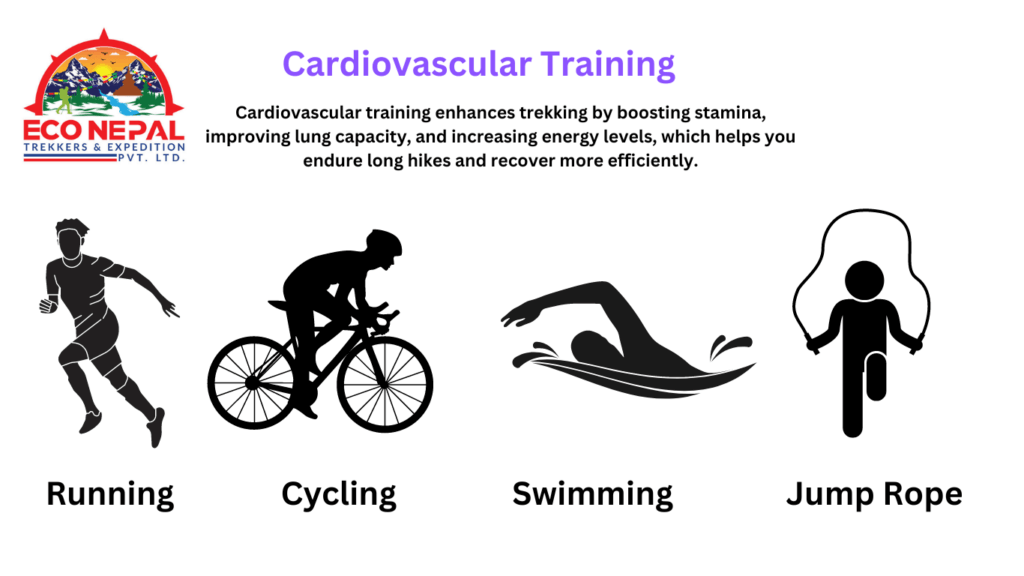
Carrying a light backpack during training is equally important. Your shoulders, hips, and lower back must get used to the weight moving with you, not against you. Even a five to eight kilogram pack during training teaches your posture and balance, how to cope on uneven trails.
Light strength training helps not to build muscle size, but to prevent injury. Simple bodyweight movements strengthen knees, hips, and core so that fatigue does not turn into pain halfway through the trek.
What to train in the gym for the Everest Base Camp Trek?
But let’s say you do have access to a gym, then here are the details on what to train in the gym.
1. Treadmill Walking (Most Important Gym Exercise)
If you do only one thing in the gym, do this.
Set the treadmill to an incline, not speed.
- Walk, do not run
- Incline: start at 5–7%, build to 10–15%
- Duration: 30–60 minutes
- Pace: slow enough to hold a conversation
Why this matters for Everest Base Camp
The trek is hours of uphill walking at a controlled pace. Running trains speed. Incline walking trains exactly what you will do every day from Lukla onward.
If you can walk on an incline for an hour without stopping, your legs are learning endurance, not explosiveness.
2. Stair Machine or Stair Climbing (Second Priority)
Stairs replicate the most punishing part of the Everest Base Camp trail: continuous elevation gain.
How to train:
- 20–30 minutes per session
- Add a light backpack after a few weeks
- Focus on rhythm, not speed
Why this matters for Everest Base Camp
Most beginners underestimate how tiring it is to climb continuously for long periods while breathing thinner air. Stair training conditions your legs and lungs for that exact stress.
A good benchmark:
If you can climb stairs continuously for 30–45 minutes without feeling destroyed, you are on the right track.
3. Leg Strength Training (Injury Prevention, Not Muscle Building)
Your legs do not fail on Everest Base Camp because they are weak.
They fail because they are fatigued and unstable.
Focus on controlled, moderate weights.
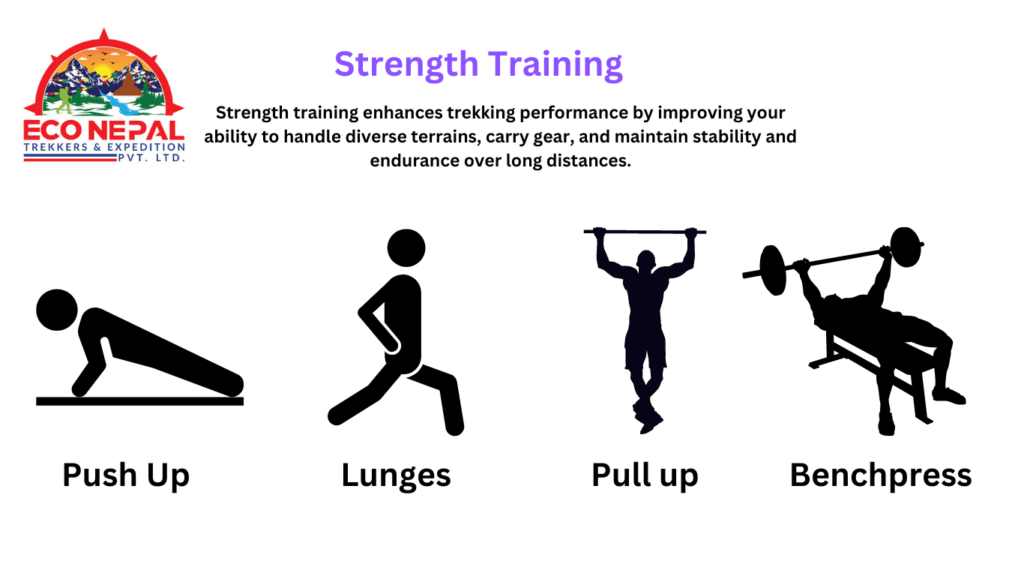
Key exercises:
- Squats (bodyweight or light barbell)
- Lunges (especially walking lunges)
- Step-ups (onto a bench or box)
- Leg press (moderate weight, high reps)
How to train:
- 2–3 sets per exercise
- 10–15 repetitions
- 2 times per week
Why this matters for Everest Base Camp
Downhill walking destroys quads and knees. Strong legs absorb shock and reduce injury risk, especially after Dingboche when fatigue sets in.
4. Core Training (Stability Over Strength)
A strong core keeps your posture stable when you are tired, cold, and carrying weight.
Focus on:
- Planks
- Side planks
- Dead bugs
- Back extensions (light)
Avoid:
- Heavy sit-ups
- Aggressive twisting movements
Why this matters for Everest Base Camp
At altitude, poor posture increases fatigue and breathing effort. A stable core keeps walking efficient when oxygen is limited.
5. Cardio Machines (What to Use and What to Avoid)
Use:
- Treadmill (incline walking)
- Stair machine
- Elliptical (moderate resistance)
Limit:
- High-intensity spin classes
- Sprint intervals
- Short, all-out cardio sessions
Why this matters for Everest Base Camp
Everest Base Camp is slow cardio for many hours, not fast cardio for short bursts. Training your body to stay comfortable at lower intensity for longer periods is far more valuable.
Weekly Gym Training Structure (Beginner-Friendly)
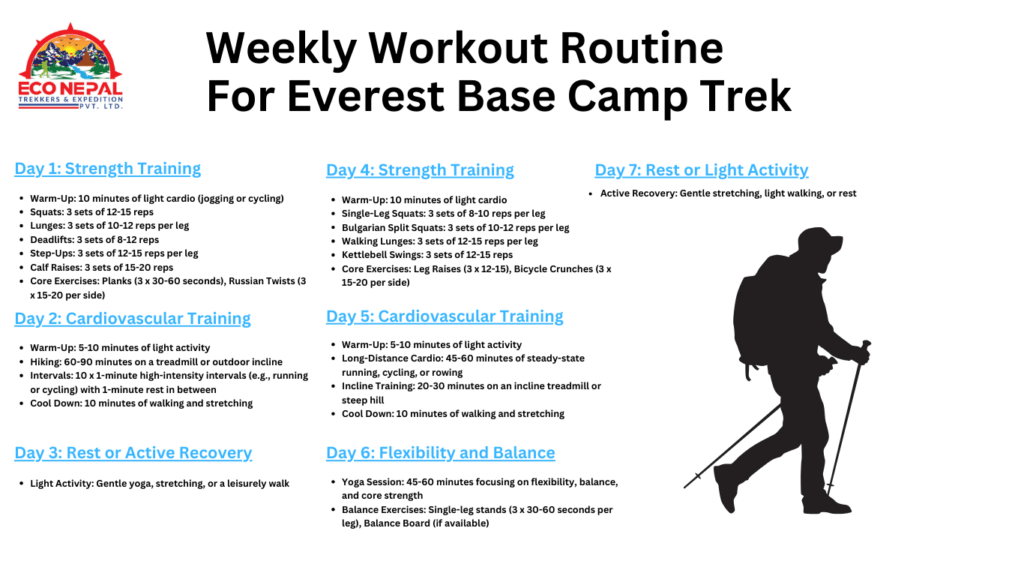
A realistic gym schedule for Everest Base Camp looks like this:
- 3–4 gym days per week
- 60–90 minutes per session
- At least 1 full rest day between hard sessions
Example focus split:
- Day 1: Incline treadmill + core
- Day 2: Stair machine + leg strength
- Day 3: Incline treadmill + light legs
- Optional Day 4: Long slow cardio + mobility
Consistency beats intensity. Missing sessions hurts you more than training lightly.
When Gym Training Becomes More Important Than Hiking
If you live in:
- Flat cities
- Coastal regions
- Areas without hills
Gym incline and stair training become essential, because you cannot simulate uphill stress outdoors.
This is especially relevant for trekkers from:
- The United States (coastal cities)
- Australia
- Lowland Europe
Your legs can be strong, but without incline exposure, the trail will feel far harder than expected.
International Reality Check: What Past Hikes Actually Prepare You For Everest Base Camp Trek
Many beginners ask the same question in different ways: “I’ve done some tough hikes at home. Does that mean I’m ready?”
The honest answer is: it depends on what kind of ‘tough’ you’ve done.
If You Are From the United States
If you have completed demanding hikes like Half Dome or the Grand Canyon rim-to-river, your legs are likely ready for Everest Base Camp. Those hikes prove you can handle long days, elevation gain, and mental fatigue.
What they do not prepare you for is altitude. Half Dome and the Grand Canyon sit thousands of meters lower than Everest Base Camp. Your muscles may feel confident, but your lungs have never experienced functioning with 50 to 60 percent of normal oxygen availability.
Mount Whitney is the closest comparison in the US, not because it is harder, but because it introduces your body to true altitude stress. Even then, Whitney is still lower than Dingboche, where many Everest trekkers begin struggling. But hey, completing this trek can mean that you will be able to complete a comparatively easy journey in the Everest region, like the Pikey Peak Trek.
If You Are From the United Kingdom
UK hikers are often exceptionally resilient. Wind, rain, cold, and long-distance routes like the West Highland Way build excellent mental toughness and endurance.
What is new on Everest Base Camp is not discomfort, but thin air. British “damp cold” feels harsher on the skin, but Himalayan “dry cold” quietly dehydrates you, disrupts sleep, and amplifies fatigue. Many UK trekkers feel surprised not by weather, but by how breathing itself becomes work after 4,000 meters.
By the way, if your plan is just to see Mount Everest, then you can also choose to hike to the Everest View hotel, which is less demanding in comparison.
If You Are From Australia
Australian trekkers are often physically fit and mentally strong, especially those who have completed routes like the Overland Track or Larapinta Trail.
The challenge is altitude exposure. Australia simply does not have terrain high enough to trigger meaningful acclimatization. Even Mount Kosciuszko sits far below the elevation where altitude sickness begins. This means Australian trekkers often arrive very fit, but physiologically unprepared for thin air.
Fitness helps. It does not replace acclimatization.
In fact, these are one of the main reasons why many Australian mates find it difficult to complete the Three High Passes Trek or the Gokyo Lake Trek.
Acclimatization Strategy in the Everest Base Camp
Acclimatization is the single most misunderstood part of the Everest Base Camp trek.
Many beginners assume that if they feel fine today, they will feel fine tomorrow. Altitude does not work that way.
What Acclimatization Really Means
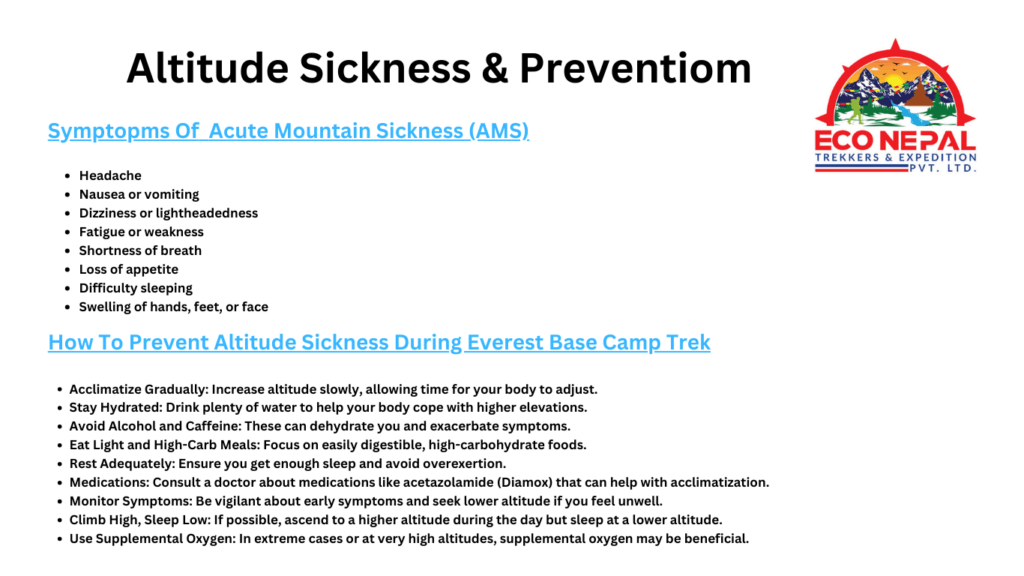
As you ascend, air pressure drops. Your body must adapt by producing more red blood cells and changing how it uses oxygen. This process takes time, not effort. Being fitter does not make it faster. In fact, fit trekkers sometimes suffer more because they push harder, thinking fitness protects them.
Skipping acclimatization days is dangerous because symptoms often appear one or two days later, not immediately.
How Acclimatization Works on the Everest Base Camp Route
Namche Bazaar is the first real test. This is where your body begins adjusting to altitude, whether you feel it or not. Dingboche is even more critical. Most serious altitude issues begin after Dingboche, not before it.
The principle of “climb high, sleep low” exists for a reason. Short acclimatization hikes during rest days stimulate adaptation without overwhelming your system. Skipping these hikes removes a key safety mechanism. In fact, this is one of the main reasons why you should hire a professional guide for your trek, as they follow the proper protocols and are the first ones who will help you if something goes wrong during the trek.
Warning Signs You Must Never Ignore
Altitude sickness does not always feel dramatic. It often begins quietly. A persistent headache that does not respond to hydration. A sudden loss of appetite. Breathlessness while resting. Confusion or imbalance that feels subtle but wrong.
Ignoring these signs does not build toughness. It leads to evacuation.
Why So Many Trekkers Do Not Reach Everest Base Camp
Despite its popularity, Everest Base Camp has a high turnaround rate among beginners.
Most trekkers who turn back do so before reaching Base Camp. The most common reasons are altitude sickness, illness, cumulative exhaustion, and time pressure caused by weather delays.
The most dangerous misconception is that failure happens near the destination. In reality, most turnbacks occur around Lobuche or Gorak Shep, where oxygen levels drop sharply and fatigue peaks.
Prepared trekkers succeed at very high rates. Underprepared trekkers account for the majority of failures.
Pack Weight and Gear Reality Of Everest Base Camp Trek
Nothing ruins a trek faster than carrying too much weight.
Beginners often pack for fear rather than reality. Extra clothing, backup electronics, and “just in case” items seem comforting in Kathmandu and feel unbearable above 4,000 meters.
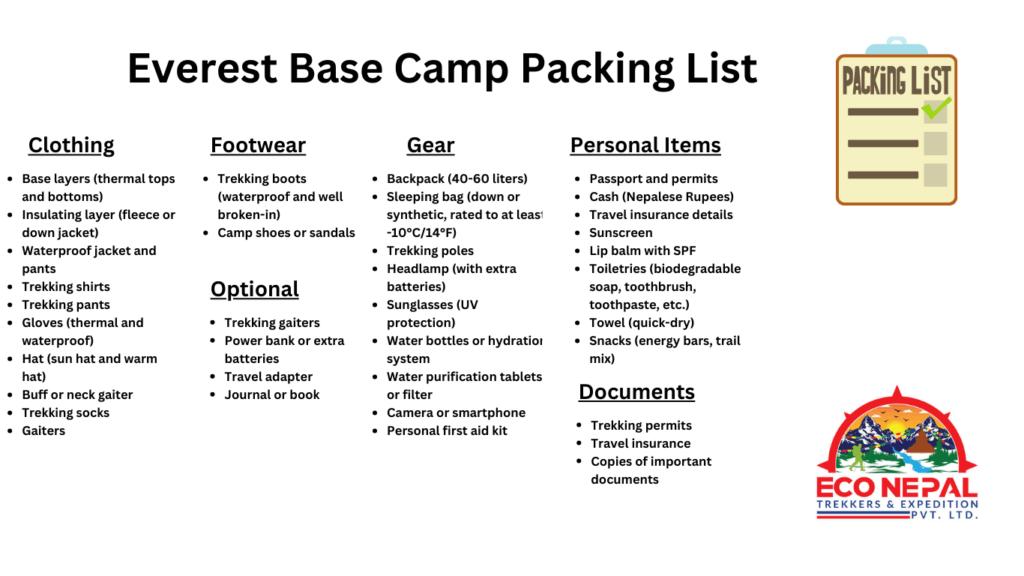
If you are using a porter, your daypack should feel light and manageable. If you are not, your total pack weight must stay within a strict limit, or fatigue will accumulate rapidly.
Most regrets on the trail come from overpacking, not underpacking.
Insurance and Evacuation Reality Most Beginners Discover Too Late
Helicopter evacuation from the Everest region is expensive but possible. But without proper insurance, costs can reach several thousand dollars very quickly.
Insurance must explicitly cover trekking to at least 5,500 meters and include helicopter rescue. Many standard travel or credit-card policies do not.
This is not a technical detail. It is a financial and safety decision that should be confirmed before booking flights.
Cold, Sleep, and the Reality of Nights at Altitude
Cold affects beginners more at night than during the day.
Daytime walking often feels warm. Nights in villages like Dingboche and Gorak Shep regularly drop well below freezing. Wind can make it feel far colder. Cold disrupts sleep, reduces appetite, and slows recovery.
Layering correctly matters more than having the most expensive jacket. Staying warm at night is part of staying healthy.
Mental Preparation Most First-Time Trekkers Ignore
Altitude amplifies emotion.
Doubt feels heavier. Progress feels slower. Comparing yourself to others becomes tempting and dangerous.
The trekkers who succeed are not the strongest. They are the ones who walk their own pace, stop competing, and redefine success as staying healthy rather than reaching a number on a map.
Final Pre-Departure Reality Check
Before leaving for Nepal, ask yourself one honest question:
“Can I walk steadily for several hours, accept discomfort, slow down when needed, and prioritize health over ego?”
If the answer is yes, Everest Base Camp is achievable.
FAQs
How to Physically Prepare for the Everest Base Camp Trek?
Cardiovascular endurance and leg strength are essential for physical fitness before the Everest Base Camp trek; therefore, it is recommended to prepare by hiking regularly and doing strength training. Introduce long walks and altitude emulation into your training schedule to help you prepare for the demands of the trek.
Can Beginners Do the Everest Base Camp Trek?
Yes, beginners can complete the Everest Base Camp journey, but only if they prepare thoroughly and train regularly beforehand. Before beginning the journey, they should be fit enough to continue to the next stage, which is endurance and strength to complete the walk.
Can a Normal Person Do the Everest Base Camp Trek?
Indeed, an average, healthy, and fit trekker can complete the Everest Base Camp Trek. It requires decent preparation and physical fitness, but anyone can make the trek if they prepare well and have the strong willpower to complete it.
How Physically Fit Should I Be for the Everest Base Camp Trek?
Candidates should be physically fit and have good cardiovascular fitness and leg strength. Regular cardiovascular activity, strength training, and long hikes will help prepare you for the hardships of the trek.
How Much Money is Needed for the Everest Base Camp Trek?
The cost of the Everest Base Camp journey varies and can range from $1,500 to $4,000, depending on the degree of service and facilities used during the trip. This includes the cost of permits, guides, lodging, food, and other incidental fees.
How Crowded is the Everest Base Camp Trek?
Because of the high traffic during the two main trekking seasons, spring and autumn, one is likely to encounter many other trekkers on the Everest Base Camp Trek. It is common to meet many other trekkers along the trek, particularly near the key vantage points and hiking hotel facilities.
Can I Go Solo to the Everest Base Camp Trek?
It is perfectly safe to go alone on the Everest Base Camp Trek; however, it’s not recommended because few trekkers do so. The majority of trekkers opt to hire a guide or join a large group for additional aid and security.
What Level of Difficulty is the Everest Base Camp Trek?
The Everest Base Camp Trek is rated moderate; however, it involves long days of hiking and significant elevation gain. Good fitness and endurance are required, but most people can acquire them with proper training.