
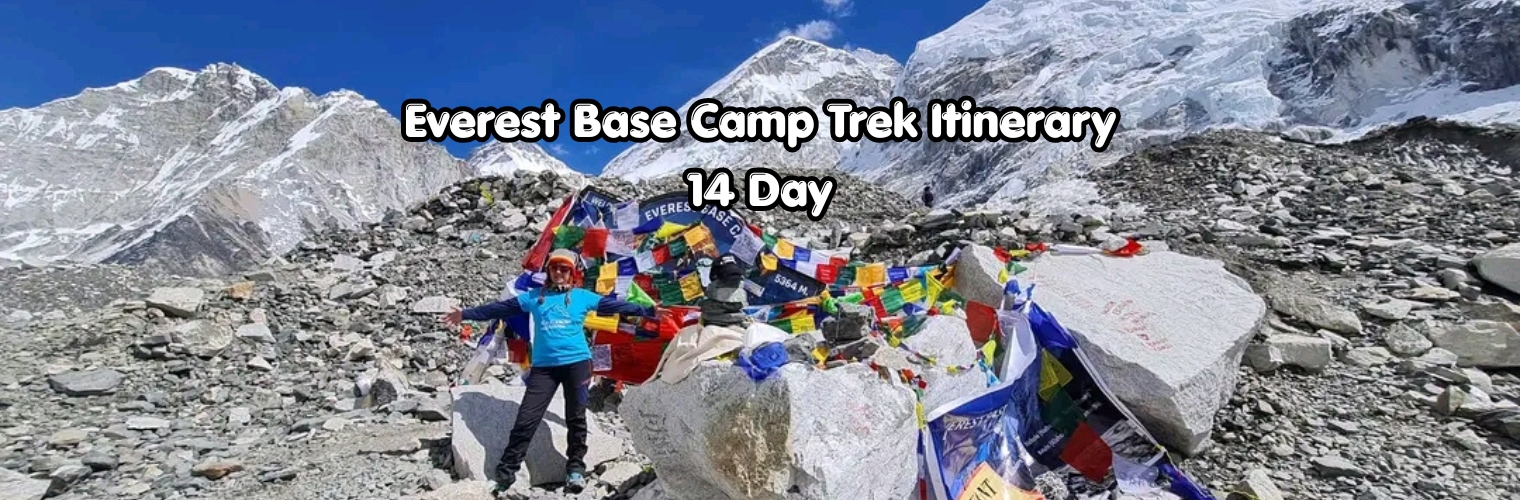
Everest Base Camp Trek Itinerary
If you are planning to go on the Everest Base Camp Trek but are confused about which itinerary to follow before you go, this is for you. Or are you looking for the perfect itinerary?
All your answers are here. It all depends on your available time, physical fitness, and whether you need to acclimatize.
A proper itinerary is very important because you need to allow your body to acclimatize as you gain altitude, and you avoid the risk of high-altitude sickness.
If proper acclimatization is not applied, the journey will not be pleasant, and even worse could happen.
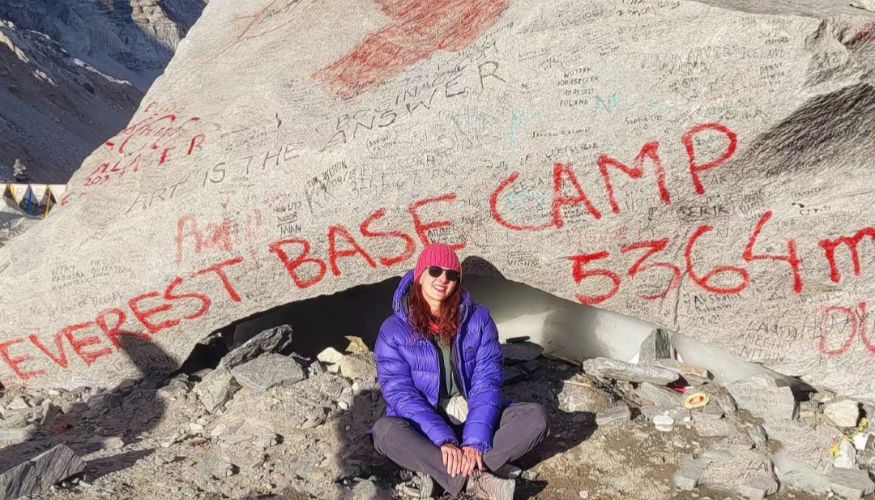
The EBC Trek lasts 12 to 16 days for most people and includes acclimatization days in Namche Bazaar as well as Dingboche, followed by the ascent to even higher altitudes.
This provides the greatest trade-off between progressing along the trek, views of mountains, and acclimatization to altitude.
This complete itinerary guide outlines the Everest Base Camp trekking route day-by-day, daily walking distances and elevation gains, acclimatization stops, highlights along the way, and several options for how to do your Everest Base Camp trek so you can choose the best one for your Himalayan adventure.
Everest Base Camp Trek Overview
It is of utmost importance that you understand the route, trekking distance, height, difficulty level, and what time is best before starting the Himalaya Trekking Everest Base Camp.
Such major facts are useful for trekkers in packing properly and selecting an itinerary based on their stamina as well as their travel schedule.
Everest Base Camp is one of Nepal’s highest walking expeditions, journeying through the main Khumbu Valley to arrive at base camp on the highest mountain on Earth. Along the way,
You will experience stunning mountain views, Sherpa culture, ancient monasteries, and remember what it feels like to be at the foot of Everest.
| Feature | Details |
| Location | Khumbu Region, Sagarmatha National Park, Nepal |
| Where Is Everest Base Camp? | At the foot of Mount Everest on the southern (Nepal) side |
| Trek Duration | 12 to 15 Days |
| Trekking Distance | 130 km (80 miles) round trip |
| Maximum Altitude | Everest Base Camp 5,364 m (17,598 ft), Kala Patthar 5,545 m (18,192 ft) |
| Trek Difficulty | Moderate to Challenging |
| Daily Walking Time | 5 to 8 hours |
| Best Time for the Trek | Spring (March to May) and Autumn (September to November) |
| Starting Point | Lukla (2,860 m) |
| Ending Point | Lukla (2,860 m) |
| Major Highlights | Lukla, Namche Bazaar, Tengboche Monastery, Dingboche, Lobuche, Gorak Shep, Everest Base Camp, Kala Patthar |
The majority of trekkers then continue to hike to Kala Patthar (5,545 m) for the best panoramic sunrise views over Mt. Everest, Nuptse, Lhotse, and Ama Dablam, as well as many Nepalese Himalayan peaks before heading back toward Lukla.
Everest Base Camp Trek Route Map
The Everest Base Camp Trek is a famous trekking route through Nepal, where it follows an established path across the Khumbu region, starting from a picturesque flight to Lukla and weaving its way through quaint Sherpa villages before reaching Everest Base Camp.
The trekkers slowly gain height, stopping at intervals along the way to acclimatize, which helps reduce the chance of altitude sickness.
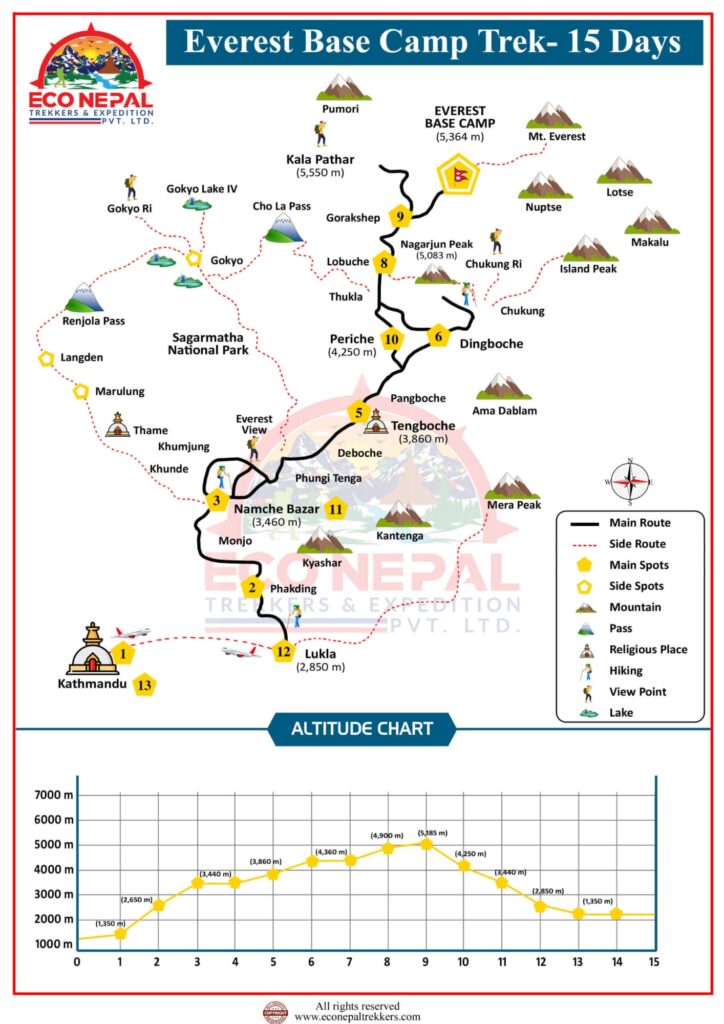
The trek traverses parts of the Everest area, visiting a portion of its most acclaimed goals, including Namche Bazaar, Tengboche, Dingboche, Lobuche, and Gorak Shep, and at long last arrives at Everest Base Camp.
Many itineraries add a trek to Kala Patthar for terrific panoramic views of Mount Everest.
Everest Base Camp Trek Itinerary
| Day | Route | Elevation | Walking Distance | Walking Time |
| Day 1 | Arrival in Kathmandu | 1,350 m/4,429 ft | N/A | N/A |
| Day 2 | Fly from Kathmandu to Lukla, 35 mins; Trek to Phakding | 2,850 m/9,350 ft | 8 km | 3-4 hrs |
| Day 3 | Trekking from Phakding to Namche | 3,440 m/11,286 ft | 10 km | 5-6 hrs |
| Day 4 | Acclimatization Day in Namche | 3,440 m/11,286 ft | ||
| Day 5 | Trekking from Namche to Tengboche | 3,860 m/12,664 ft | 9.2 km | 5-6 hrs |
| Day 6 | Trekking from Tengboche to Dingboche | 4,410m | 10.5 km | 4-5 hrs |
| Day 7 | Acclimatization Day in Dingboche | 4,410m | ||
| Day 8 | Trekking from Dingboche to Lobuche | 4,900 m/16,076 ft | 10 km | 4-5 hrs |
| Day 9 | Trekking from Lobuche to EBC, Trek back to Gorak Shep | 5,364 m/17,598 ft | 4.5 km | 8-9 hrs |
| Day 10 | Morning hike to Kala Patthar, descend to Pheriche | 5,550 m/18,209 ft | 9.6 km | 7-8 hrs |
| Day 11 | Trekking from Pheriche to Namche Bazaar | 3,440 m/11,286 ft | 14.3 km | 5-6 hrs |
| Day 12 | Trekking from Namche to Lukla | 2,850 m/9,350 ft | 17.7 km | 5-6 hrs |
| Day 13 | Fly from Lukla to Ramechhap and drive to Kathmandu | 1,350 m/4,429 ft | 138 km | 35-40 mins |
| Day 14 | Final Departure | 1,350 m/4,429 ft |
Everest Base Camp Trek 14 Day Itinerary
The Everest Base Camp Trek 14-day itinerary is the best-selling trek in the Everest Region for trekkers. This offers slow height gain, two acclimatization days, and ample time for a safe trek to Everest Base Camp and Kala Patthar. This itinerary is the right combination of trekking, acclimatization, and stunning views of Himalayan scenery.
Day 1: Arrival in Kathmandu
As you arrive at Tribhuvan International Airport, our representative will welcome
you and drive and escort you to your hotel. Finally, you head to a trek briefing where they explain the itinerary, safety regulations, and how to prepare for trekking. The final equipment check just makes sure you’re covered with everything you need before you step out into the Himalayas.
Day 2: Fly from Kathmandu to Lukla, Trek to Phakding
To begin your adventure, you will fly early on the next morning to Lukla, one of the most beautiful mountain airports in the world. On meeting up with your trekking team, you start your trek from the Sherpa villages and forests to Phakding.
Here is the flight information: Kathmandu to Lukla Flight Information
Day 3: Phakding to Namche Bazaar
You walk today along the Dudh Koshi River, crossing many a postcard-perfect suspension bridge before entering Sagarmatha National Park. A succession of steady uphill climbs will then take you to Namche Bazaar, the access point for the Everest region.
Day 4: Namche Bazaar (rest and acclimatization day)
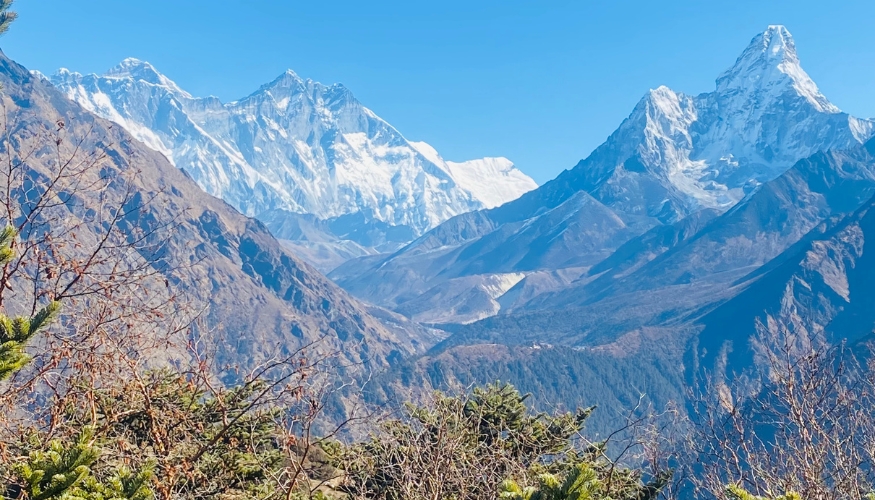
Gaining altitude is an important acclimatization. You can take a quick hike to Everest View Hotel and other viewpoints around, making it easier for your body to get used to the height while providing wonderful views of Mount Everest, Ama Dablam, Lhotse, and other peaks.
Day 5: Namche Bazaar to Tengboche
The trail is stunning, climbing over 3,600 meters with Everest peeking out on the left side of the valley and Ama Dablam to our right, descending to cross the Dudh Koshi River and climbing through rhododendron forests to Tengboche. Have a tour of the well-known Tengboche Monastery, which is the largest monastery located in the Everest region.
Day 6: Tengboche to Dingboche
As you leave behind the forests, the landscape gradually morphs into alpine terrain. You’ll go through several more traditional Sherpa villages and open valleys before finally reaching Dingboche, an important acclimatization point as you start to head higher.
Day 7: Acclimatization Day at Dingboche
This is a second acclimatization day to prepare your body for trekking above 5,000 meters. Occasional short hikes to places with a higher perspective not only assist acclimatization but also bring stunning high-altitude Himalayan views.
Day 8: Dingboche to Lobuche
Today’s trail takes you through the high Alps with magnificent glacier scenery. You will also pass memorial sites dedicated to climbers who perished on the way up Mount Everest before arriving at Lobuche.
Day 9: Lobuche to Gorak Shep and Base Camp Everest
The day between is definitely the most thrilling during the trek. From Gorak Shep, trek across rocky and sandy ground next to the Khumbu Glacier until you finally reach Everest Base Camp. Spend a night back at Gorak Shep to celebrate your achievement.
Day 10: Sunrise at Kala Patthar Summit and Trek to Pheriche
Get up early and head to Kala Patthar (5550m)for the best sunrise view of Mount Everest. From here, you will enjoy sweeping views of Everest, Nuptse, Lhotse, and Pumori before descending through Gorak Shep and Lobuche to reach Pheriche.
Day 11: Pheriche to Namche Bazaar
Departing the High Himalayas, descend through Pangboche and Tengboche, paired with dense forest on your way back to Namche Bazaar. This is a far more comfortable walk because it is at a lower altitude.
Day 12: Namche Bazaar to Lukla
The last day of your trek will follow the Dudh Koshi River past Sherpa villages before finally reaching Lukla, where you can celebrate the end of your Everest Base Camp expedition with your group.
Day 13: Fly Ramechhap to Kathmandu
Fly from Lukla to Ramechhap early in the morning (during the trekking high season), and then drive back to Kathmandu. You are free to relax or roam around the city for the rest of the day.
Day 14: Final Departure
Today marks the end of your trip to Everest Base Camp, which you will never forget. You will be transferred to Tribhuvan International for your flight back, carrying home memories of a lifetime about the Himalayas, depending on your flight schedule.
Why Acclimatization Days Are Included
One of the most critical segments of your Everest Base Camp Trek itinerary is acclimatization. The higher you go, the less oxygen there is, so taking it slow ticks another box in terms of beating altitude sickness. Most regular itineraries contain two acclimatization days so as to help the trekkers acclimatize slowly and securely before heading off to higher elevations.
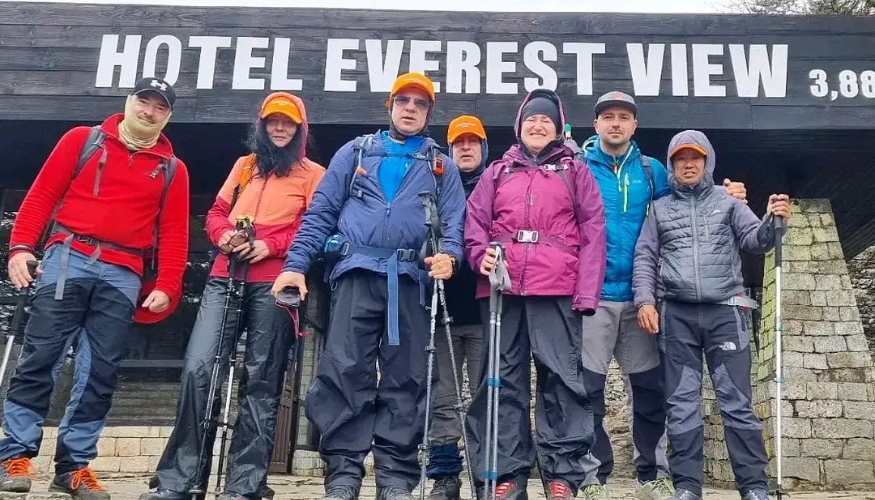
The first day of acclimatization is at Namche Bazaar (3,440 m), with short hikes to higher places to sleep at the same altitude. The acclimatization day is in Dingboche (4,410 m). It prepares your body to trek above 5,000 meters.
It is based on the familiar principle of climbing high during the day and sleeping low overnight. They train you so that the acclimatization is better and there are chances of achieving the height of Everest Base Camp.
Everest Base Camp Trek Alternative Itineraries
The Everest Base Camp Trek is available in several itinerary options, allowing trekkers to choose a route that matches their available time, fitness level, and adventure goals.
| Itinerary | Duration | Best For |
| Everest Base Camp Trek | 12 Days | Experienced trekkers with limited time |
| Everest Base Camp Trek | 15 Days | Most popular and recommended itinerary |
| Everest Base Camp Trek | 16 Days | Relaxed pace with extra acclimatization |
| Everest Base Camp Trek with Helicopter Return | 10 to 12 Days | Luxury and time-saving experience |
| Everest Base Camp via Gokyo Lakes | 15 to 18 Days | Trekkers seeking additional Himalayan scenery |
| Everest Three Passes Trek | 18 to 22 Days | Experienced adventure trekkers |
What to Expect Each Day
During the Everest Base Camp Trek, every day is unlike the previous one as the trail ascends steadily through forests, Sherpa settlements, alpine landscapes, glaciers, and high mountain terrain. Trekking to Everest Base Camp takes about one and a half weeks, with trekkers staying in teahouses along the way, being served freshly prepared meals, and experiencing the distinct culture of the Khumbu region.
It combines stone staircases to follow vertical slopes, suspension bridges spanning deep river valleys, rocky trails hidden in dense forests, and glacial landscapes above 5000 meters. The higher we go, the colder it gets, but lodging is comfortable, and many villages have specific facilities.

You will generally be served meals like Dal Bhat, noodles, soups, rice dishes, potatoes, eggs, and other trekking accessible foods. Many of the teahouses offer free Wi-Fi and charging; some will give you a hot shower for a fee.
Read More: Internet & Wi-Fi on Everest Base Camp
Best Time to Follow This Itinerary
Though the Everest Base Camp Trek can be done at any time of the year, weather and trail conditions change with the seasons. Spring and autumn provide ideal weather conditions for trekking; however, they also give the clearest views of the mountains around Gangotri, making this itinerary very popular.
Spring (March to May)
Spring is one of the best seasons for the Everest Base Camp Trek. It offers stable atmospheric conditions, moderate temperatures, blossoming rhododendron backwoods, and top visibility of the Himalayan peaks.
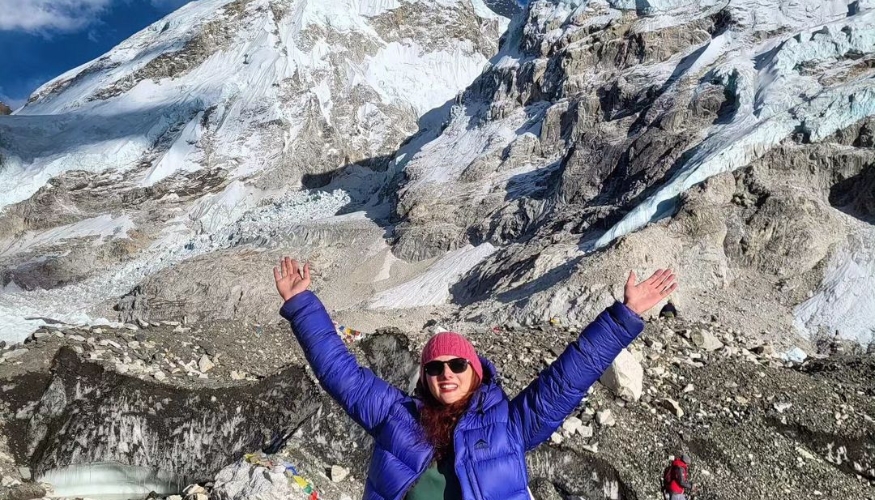
Autumn (September to November)
Some, however, will argue that the best season for trekking is autumn because of the clear skies, dry trails, stable weather, and superb air quality, which produce amazing views of the mountains. It creates perfect circumstances for trekking and photography.
Winter (December to February)
Winter has fewer crowds and lovely snowy scenery. Definitely colder temperatures, but the trek is great for any well-prepared trekkers seeking a quieter trail.
Monsoon (June to August)
The monsoon season comes with lots of rain in most parts of the country and cloudy skies, which make trails slippery and also close airports in Lukla for flights. It is possible to hike, but the best time overall is still spring and autumn.
You can read our best time guide here: Best Time For Everest Base Camp Trek, Everest Base Camp Trek in October
Tips for Following the Everest Base Camp Itinerary
One of the biggest factors dictating a safe and successful Everest Base Camp trek is following the itinerary correctly. With multiple long walking days, high altitude, and changeable mountain weather, it is vital to prepare in advance.
Your body can slowly acclimatize; there will be fewer chances of altitude sickness, and you could also make your trek easier by walking at a slow, steady pace, drinking plenty of fluids, taking healthy meals with only the needed gear in your backpack, and having children follow directions from their guides.
These few simple practices will go a long way in ensuring that you enjoy your trek and eventually make it to Everest Base Camp safely.
Common Mistakes During Everest Base Camp Trek
This EBC Trek is one of the most popular treks among trekkers, and unfortunately, many of them suffer needlessly due to simple mistakes. The most frequently skipped are acclimatization days, trekking too quickly, an overladen backpack, and phones ringing before the peak. And those missteps could exacerbate weariness, limit acclimatization, and elevate the possibility of altitude sickness.
If you are aware of these typical mistakes even before you start your trek, you will be able to prepare wisely, hike safer, and really make the most out of a smooth and fulfilling Everest Base Camp experience.
Read More: 10 Common Injuries on the Everest Base Camp Trek, What Happens When A Trekker Gets Injured On Everest Base Camp Trek?, Reasons Why 60% Trekkers Fail to Complete the Everest Base Camp Trek, Evacuation Process on the Everest Base Camp Trek.
FAQs
How Many Days Do I Need for the Everest Base Camp Trek?
Most trekkers will need between 12 and 16 days to complete the EBC Trek; again, this largely depends on the itinerary along with the acclimatization schedule.
Is 14 days enough?
Yes. The most common is a 14-day trip that allows for two acclimatization days to make the trek safe and comfortable.
Is the Everest Base Camp Trekking doable for beginners?
Yes. This trek can be completed by physically fit beginners who have taken the proper preparation steps.
Which day is the hardest?
The most difficult day is typically the 8th one, from Lobuche to EBC and back down to Gorak Shep, due to high altitude and hours of walking.
Why are there two acclimatization days?
To adapt slowly, you will do some acclimatization days at Namche Bazaar and Dingboche because your body needs time to get used to the growing altitude in order not to suffer from mountain sickness.
What is the average walking duration per day?
Each day of trekking includes 5 to 8 hours of walking, again varying based upon the route and itinerary.
Can I customize the itinerary?
Yes. Depending on your Fitness Level, Travel Period, and Trekking Experience, the itinerary can be customized.
What happens if Lukla flights are delayed?
However, weather conditions can change and may cause cancellations or delays in flights from Lukla. It’s better to keep 1 or 2 extra buffer days in your travel plan.
Conclusion
A properly planned Everest Base Camp Trek itinerary is the key to a safe and enjoyable adventure experience in the Himalayas. They are the ideal mix of trekking days, acclimatization, and sightseeing to help get you to Everest Base Camp & Kala Patthar successfully, so long as you stick with the standard 14-day itinerary.
Acclimatization will reduce your risk of altitude sickness and increase your chances of a successful trek. Plan an itinerary that suits your fitness level, trekking experience, and available travel time to make the most of your trek to Everest Base Camp.