
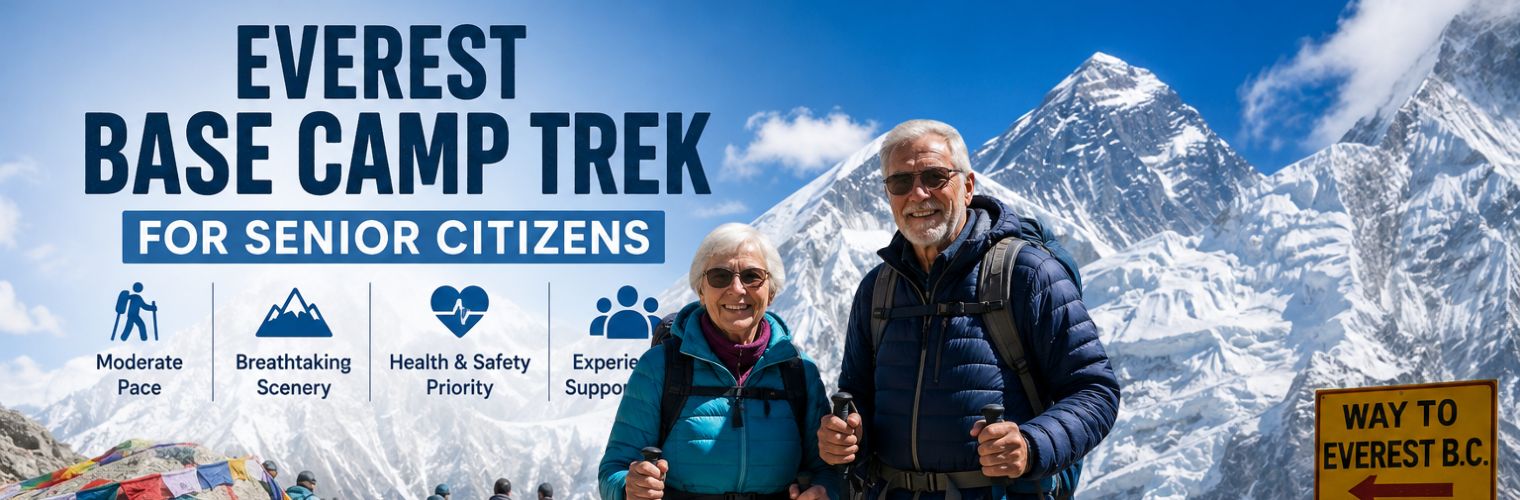
Everest Base Camp Trek For Senior citizen
If you are a senior citizen and willing to go on the Everest Base Camp Trek, of course you can.
Your age alone does not automatically make you able or unable to complete the trek. Physical condition, ability to walk, preparation, acclimatization and overall health are the vital lines.
The Everest Base Camp Trek maximises out at an elevation of 5364m above sea level and contains very long walking days, steep bits, not-so-steep bits over uneven footpaths with high altitude gain.
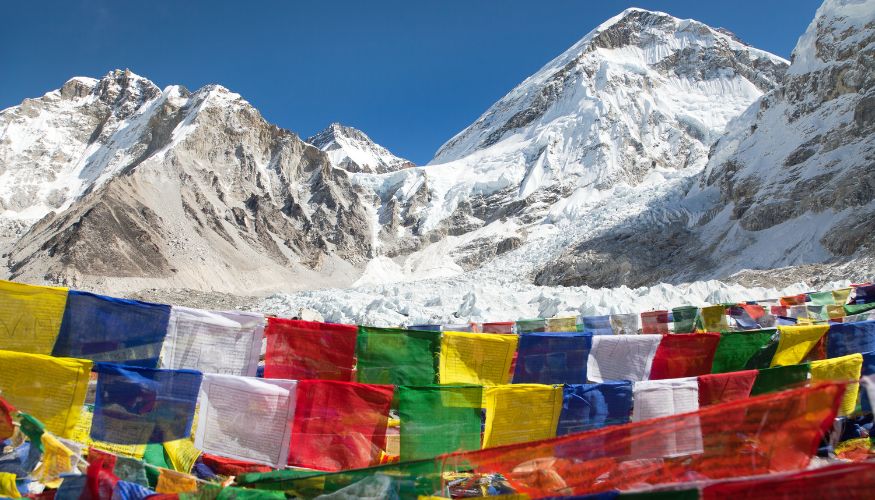
Older trekkers, in particular, need to prepare well with a draft itinerary that includes plenty of time for acclimatization.
This blog guides senior citizens planning the Everest Base Camp Trek on things to consider before doing this trek, such as fitness, preparation, acclimatization to walk at a certain pace without having a cardiac arrest because of thin air, accommodations & food, well-packed lists and trekking tips that come in handy.
Can Senior Citizens Do Everest Base Camp Trek?
Yes, the Everest Base Camp Trek can do senior citizens.
Trekking is about fitness, previous trekking experiences, how long they can walk without complaining, whether they cope with high altitude, and when to go. When to leave?
Trekkers must be healthy medically, too; age does not matter! It takes a few hours of walking on steep, rocky and uneven ground to attain the tree line at 5,364 (17,598 ft).
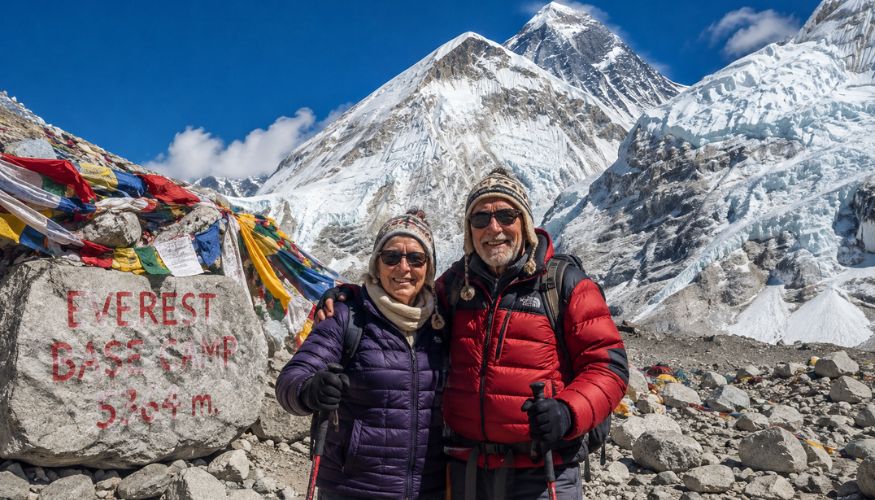
The trek is appropriate for seniors who are able to hike for long days with slow elevation gain, and seniors who have difficulties doing prolonged physical activity or steep terrain, as well as those vulnerable to altitude sickness, should select shorter or lower-altitude treks.
How Difficult Is Everest Base Camp Trek for Senior Citizens?
The EBC Trek is not the easiest trek, and it can be difficult for senior citizens as the trail includes many hours of walking a day, long uphill and downhill sections, high-altitude conditions where less oxygen is available, cold temperatures and uneven rocky trails.
At higher altitudes, less oxygen makes it tiring to walk; also, the terrain tends to be steep and rough. Pace yourself and take it easy. Slow, steady & with breaks is preferable for seniors as opposed to a quick rush over trek routes where you may tire out faster.
Everest Base Camp Trek Altitude for Seniors
One of the biggest considerations for senior citizens on Everest Base Camp Trek is altitude. The path steadily climbs from Lukla (2,860 metres) to Everest Base Camp (5,364 metres), with Kala Patthar measuring around 5,545 metres.
The higher we go, the more deprived our bodies are of oxygen, which can make simple walking feel much harder and increase the risk of developing altitude sickness. Headache, dizziness, feeling sick, a loss of appetite, extreme tiredness and problems sleeping are some common symptoms.
It is necessary for senior trekkers to have a steady itinerary, to give room for suitable acclimatization and to avoid flying high when their symptoms are worsening. If serious symptoms develop or if the condition worsens, an immediate return to a lower altitude is essential instead of going higher.
| Location | Elevation |
| Lukla | 2,860 m |
| Namche Bazaar | 3,440 m |
| Tengboche | 3,860 m |
| Dingboche | 4,410 m |
| Lobuche | 4,900 m |
| Gorak Shep | 5,164 m |
| Everest Base Camp | 5,364 m |
| Kala Patthar | 5,545 m |
Everest Base Camp Trek Itinerary for Seniors
This itinerary is designed with gradual altitude gain, acclimatization days, moderate walking stages, and sufficient rest in mind. It includes rest days in Kathmandu, Namche Bazaar, and Dingboche before continuing toward the higher sections of the Everest region.
| Day | Itinerary | Altitude | Walking Time |
| Day 01 | Arrival in Kathmandu and transfer to hotel | 1,350 m | |
| Day 02 | Rest day in Kathmandu | 1,350 m | Rest |
| Day 03 | Drive to Ramechhap, fly to Lukla, trek to Phakding | 2,610 m | 30-min flight + 2–3 hrs walk |
| Day 04 | Phakding to Namche Bazaar | 3,440 m | 6–7 hrs |
| Day 05 | Rest and acclimatization in Namche Bazaar | 3,440 m | Rest |
| Day 06 | Namche Bazaar to Tengboche and visit Tengboche Monastery | 3,860 m | 5 hrs |
| Day 07 | Tengboche to Dingboche | 4,410 m | 5–6 hrs |
| Day 08 | Rest and acclimatization in Dingboche | 4,410 m | Rest |
| Day 09 | Dingboche to Lobuche | 4,900 m | 6 hrs |
| Day 10 | Lobuche to Gorak Shep, Everest Base Camp and back to Gorak Shep | 5,164 m / 5,365 m | 8 hrs |
| Day 11 | Gorak Shep to Kala Patthar and trek to Pheriche | 5,643 m / 4,370 m | 8 hrs |
| Day 12 | Pheriche to Namche Bazaar | 3,440 m | 7 hrs |
| Day 13 | Namche Bazaar to Lukla | 2,860 m | 7 hrs |
| Day 14 | Fly from Lukla to Ramechhap/Kathmandu | 1,350 m | Flight |
| Day 15 | Airport transfer for departure | – | – |
For senior trekkers, the itinerary provides two major acclimatization stops at Namche Bazaar and Dingboche. The higher-altitude days toward Lobuche, Gorak Shep, Everest Base Camp, and Kala Patthar are the most demanding parts of the itinerary and require a steady pace, regular breaks, and careful attention to altitude symptoms.
Medical Preparation Before the Trek
As the Everest Base Camp Trek is a high-altitude trek and you are on your feet for hours every day, senior trekkers should prepare medically.
Getting a medical check-up may be useful to determine if high-altitude trekking is appropriate, whilst discussions on existing medical conditions and regular medications with your doctor assist in proper preparation.
In Nepal, individuals need to be aware of their own limits physically and arrange travel insurance that covers the relevant helicopter evacuation arrangements.
Acclimatization for Senior Trekkers
You need to acclimatize, which is why the route up to Everest Base Camp takes people slowly through over 5,364 meters (17,598ft) in elevation. Forcing a slower ascent increases the time for acclimatisation as one spends additional nights in Namche Bazaar and Dingboche, only going higher when absolutely necessary.
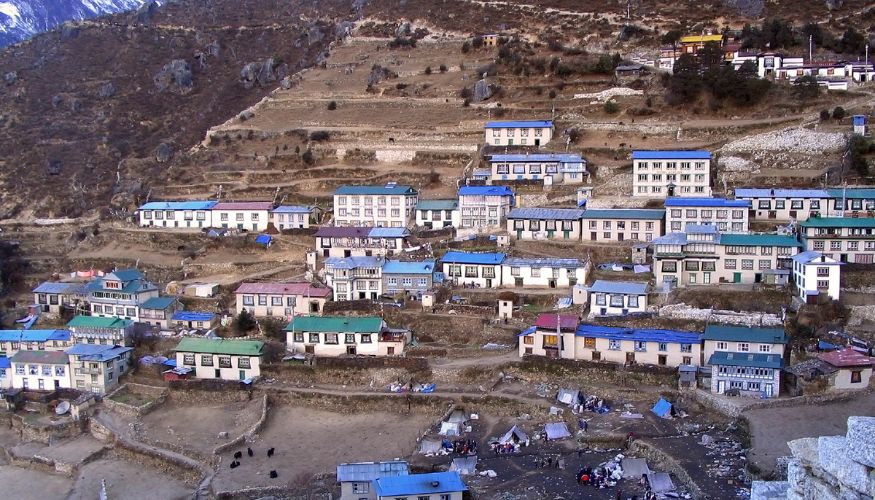
During the acclimatization process, results are obtained not only through regular hydration and balanced food. Never Ascend More Quickly With Any Altitude Sickness Symptoms.
Guide and Porter for Senior Citizens
It will be much easier for folks in the elderly age group if you hire an experienced guide and a porter to carry these packages on the Everest Base Camp Trek.
A guide keeps walking at an appropriate pace, watches for signs related to altitude, helps with accommodation and meals and gives help when things go wrong. This is where a porter can help, carrying the main luggage whilst the trekker walks with only a small daypack.
Private treks typically offer increased flexibility in walking speed, rest stops, itinerary changes, and personal attention, whereas group treks can be more social but adhere to a set group schedule and pace.
Can Senior Citizens Trek to Everest Base Camp Without a Porter?
If senior citizens can carry their own heavy backpacks on longer travel days, which cause fatigue and physical strain, they may trek to Everest Base Camp without a porter. By using only a small daypack, trekkers can carry their essentials while carrying less load on their backs.
It is always more comfortable to hire a porter because they carry the heavy load of luggage, allowing senior trekkers to walk with less weight and maintain a steady pace.
What Should Senior Citizens Pack for Everest Base Camp?
Senior trekkers put the focus on warmth, comfort and safety, while all confidence for young and senior hikers alike is keeping the weight of your backpack down.
Other essentials are layered warm clothes, comfortable hiking shoes, trekking poles, a sleep bag suitable for the conditions, a water bottle or hydration system, personal medication, a basic first-aid kit for acute injuries, a blister-care kit, sunscreen cream or lotion and headlamps.
Some other useful essential electronics like a phone, power bank and charging accessories. Light luggage, as well as ensuring you have the items required for changing weather and high-altitude conditions, is especially crucial.
Best Hiking Boots and Trekking Poles for Seniors
Comfortable, well-fitted boots that offer ankle support with cushioning and good traction are some of the most needed types of footwear if you go trekking on the rocky and uneven EBC trail.
For seniors, choose the best hiking boots or shoes: Your boots need to have been broken in prior to arriving in Nepal. Trekking poles add stability on steep climbs or descents, up stone steps and over uneven sections of trail while also decreasing the strain on knees and legs.
Accommodation for Senior Citizens
Accommodations on the route at teahouses and lodges are modest and accommodate senior trekkers well near the base of Everest, but these taper off as you start heading into high altitudes.
Private rooms bring more comfort and privacy, but during high seasons, they tend to put you in shared rooms. You may have to share a bathroom, but hot showers and electricity are generally available for an extra fee.
Finding a clean lodge with a proper dining hall, comfortable beds, good bathrooms and other facilities can make the trek slightly easier.
Food and Drinks for Senior Trekkers
Senior hikers should opt for healthy, low-mess foods that give sufficient fuel for long walking days. There are often dal bhat, rice, noodles, potatoes, vegetables and soups depending on where you are, but along the route they will have eggs or porridge.
Adequate drinking of safe water is crucial; meanwhile, you can eat snacks like nuts, dried fruits, energy bars and chocolates between meals to add an additional source of energy. Limit consumption of alcohol, as well as very heavy fried foods and excess sugary drinks at high altitude.
Read More: Food and Drinks on Everest Base Camp Trek, Drinking Water On Everest Base Camp Trek
Everest Base Camp Trek Safety for Seniors
For older trekkers, safety is a paramount concern due to high altitude, long days of walking, subzero temperatures and variable terrain.
Maintaining a comfortable, steady pace, taking breaks, getting warm, staying hydrated and keeping an eye out for altitude-related symptoms all help to reduce extraneous physical exertion.
Use caution in the rocky or slippery sections, but be careful not to overexert yourself. The trekking team should arrange appropriate assistance and emergency evacuation in the case of serious altitude symptoms or another medical emergency.
Best Time for Senior Citizens to Trek Everest Base Camp
The best trekking time in Everest Base Camp for senior persons is usually the spring season (March-May) and the autumn season (September-November), when weather conditions are more stable, trails are often drier, and mountaintops can be seen more clearly.
Winter sets in, and we could see snow fall and the rain god will visit every now & then ( monsoon season), leading to rain, clouds, low visibility, and delays in flight schedules. Stable weather is particularly beneficial for older trekkers; it contributes to more predictable walking conditions and fewer complications from cold, wet, slippery, or snow-covered trails.
Cost of Everest Base Camp Trek for Senior Citizens
The Cost of the Everest Base Camp Trek for mature trekkers is mostly according to the everyday trekking services that are required by the different prepared trekkers.
However, the final budget may be boosted if additional help is likewise required. Accommodation, meals, permits, transportation and guide & porter services are included in a standard package.
However, a high cost is paid for private treks because of the high degree of personalization in arrangements. Supplementing these are costs incurred by Senior trekkers for travel insurance, extra accommodation or buffer days, guide/porter backup and the unexpected expenses of emergency-related issues.
Everest Base Camp Trek for Seniors vs Easier Alternatives
The Everest Base Camp Trek is just one option for senior citizens to enjoy the Himalayas.
Alternatively, trekkers who dread long walking days or high-altitude activity can look towards short alternative treks through the Everest View Trek, Ghorepani Poon Hill Trek, or Annapurna Base Camp Trek.
Full of cultural experiences and mountain views, these routes provide varying altitudes and land coverage. Age is not the only factor to consider during this decision; however, physical fitness, trekking experience level and stamina vs altitude tolerance are also important.
Tips for Senior Citizens Trekking to Everest Base Camp
Senior members ought to start preparing for quite some time before the journey by working on their walking endurance, leg strength, and overall fitness.
While trekking, managing energy and reducing fatigue can be done by going at a slow pace, taking frequent rest, carrying a light daypack, hydrating regularly and eating often.
Senior trekkers should prioritize guidance from their guide as well as being aware of their physical state and not insisting on carrying on when struggling hard under exhaustion or signs of altitude sickness. Since sometimes, due to weather/delays/challenges in flights or simply your physical health may require a twist in the planned itinerary, keeping extra travel days is of value.
FAQs
Can a 60-year-old trek to Everest Base Camp?
Yes. A 60-year-old can trek to Everest Base Camp if they have suitable fitness, walking ability, preparation, and medical suitability for high-altitude trekking.
Can a 70-year-old trek to Everest Base Camp?
Yes, some 70-year-olds may be able to complete the trek, but individual fitness, medical suitability, altitude tolerance, and previous trekking experience become especially important.
Is Everest Base Camp safe for senior citizens?
Yes, Everest Base Camp is safe for senior citizens who are properly prepared and medically fit for high-altitude trekking.
What is the biggest challenge for seniors on the EBC Trek?
High altitude is one of the biggest challenges, particularly as the route rises above 4,000 meters.
How fit should a senior be for Everest Base Camp?
A senior should be able to walk for several hours on consecutive days, including uphill and downhill sections.
How many days should seniors take for the EBC Trek?
A longer itinerary is generally more suitable because it allows additional time for acclimatization, rest, and recovery.
Do senior citizens need a guide?
A guide is strongly recommended for senior trekkers. An experienced guide can help with walking pace, navigation, accommodation, altitude symptoms, meals, and itinerary adjustments.
Should seniors hire a porter?
Hiring a porter can make the trek more comfortable because the senior trekker can carry only a light daypack.
Is altitude sickness more dangerous for older trekkers?
Altitude sickness can affect people of different ages, and being older does not automatically mean someone will develop it.
What is the best time for seniors to trek Everest Base Camp?
Spring and autumn are generally the preferred seasons, particularly March to May and September to November, because conditions are usually more stable, trails are generally drier, and mountain visibility is better.
Is there an easier alternative to Everest Base Camp for seniors?
Yes. Options such as the Everest View Trek, Ghorepani Poon Hill Trek, Annapurna Base Camp Trek, and shorter Khumbu treks provide Himalayan scenery with different levels of altitude and physical difficulty.
Conclusion
Everest Base Camp Trek can be undertaken by senior citizens, and old age itself is not simply a hindrance to whether one can finish the trek, as opposed to an exceptionally aged individual. More relevant predictors would be some combination of physical fitness, medical clearance, acclimatization, preparation and walkability.
An easier and more leisurely itinerary, as well as local support from experienced professionals, guides, and a porter, also allows for a more doable trek. Older trekkers should make a careful personal assessment of their own situation and plan accordingly, based on fitness and preparation for the individual, not an age-based rule.